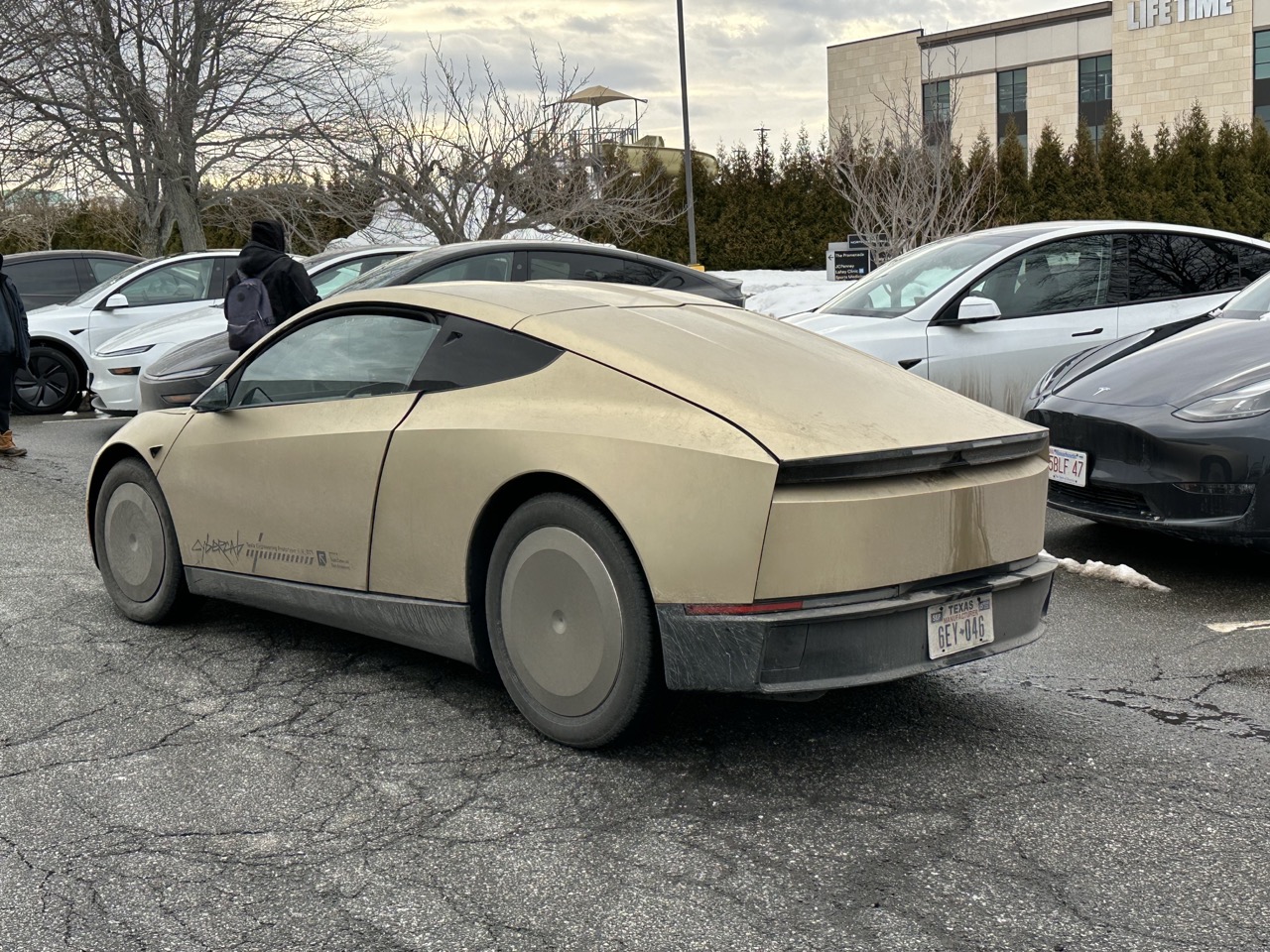
As Tesla's self-driving ambitions face intense scrutiny, a fleet of mysterious vehicles navigating the snowy, complex streets of Boston has sent a clear, visual signal: the Robotaxi program is accelerating. High-resolution footage circulating on social media shows not one, but an estimated 10 Cybercab prototypes undergoing rigorous real-world validation in the challenging winter conditions of Massachusetts. This coordinated, multi-vehicle testing phase marks a critical and aggressive step forward as Tesla targets the start of mass production for its autonomous ride-hailing vehicle in April 2026.
Winter Forges the Final Product: Testing Beyond Fair Weather
The Boston sightings are strategically significant. Testing in a dense, historic Northeast city with unpredictable weather, narrow roads, and aggressive traffic patterns is a stark departure from the sun-drenched, grid-like streets often associated with early autonomous vehicle trials. For Tesla, proving the Full Self-Driving (FSD) system's reliability in snow, sleet, and on icy roads is non-negotiable for a commercial robotaxi service meant to operate year-round across diverse climates. These prototypes are stress-testing sensor cleaning systems, traction control algorithms, and the neural net's ability to interpret obscured lane markings and navigate around snowbanks—a vital validation milestone no simulation can fully replicate.
A Fleet, Not a One-Off: Scaling the Validation Process
The presence of approximately ten vehicles indicates a shift from isolated prototype builds to a fleet-scale validation process. This allows Tesla's engineers to gather exponentially more data on edge cases, system performance consistency, and fleet management logistics in a compressed timeframe. Each prototype acts as a data-generating node, feeding information back to improve the core autonomous driving stack. This multi-car approach in a single, difficult environment suggests Tesla is in a crucial phase of de-risking the technology and refining the final Cybercab design and software before production tooling is locked in.
This public testing campaign also serves a secondary, yet vital, purpose: managing market and investor expectations. Following recent concerns over Tesla's growth trajectory and EV demand, tangible evidence of progress on its next-generation "moonshot" is crucial. The visual proof of a working prototype fleet in a demanding urban setting is a powerful counter-narrative, aiming to reaffirm confidence in Tesla's long-term vision beyond traditional car manufacturing and its potential to unlock a massive new revenue stream from autonomous mobility services.
For Tesla owners and investors, the Boston footage is a pivotal data point. It demonstrates a concrete, capital-intensive push toward a product that has long been a pillar of Tesla's valuation. Successful validation under these conditions would significantly de-risk the April 2026 production target. For owners, it's a live preview of the technology that may one day transform their own vehicles into revenue-generating assets. However, the clock is ticking. This public testing also sets a new benchmark for public and regulatory scrutiny, with every maneuver of these prototypes being closely analyzed as the industry watches to see if Tesla can deliver a safe, scalable robotaxi where others have faced immense challenges.