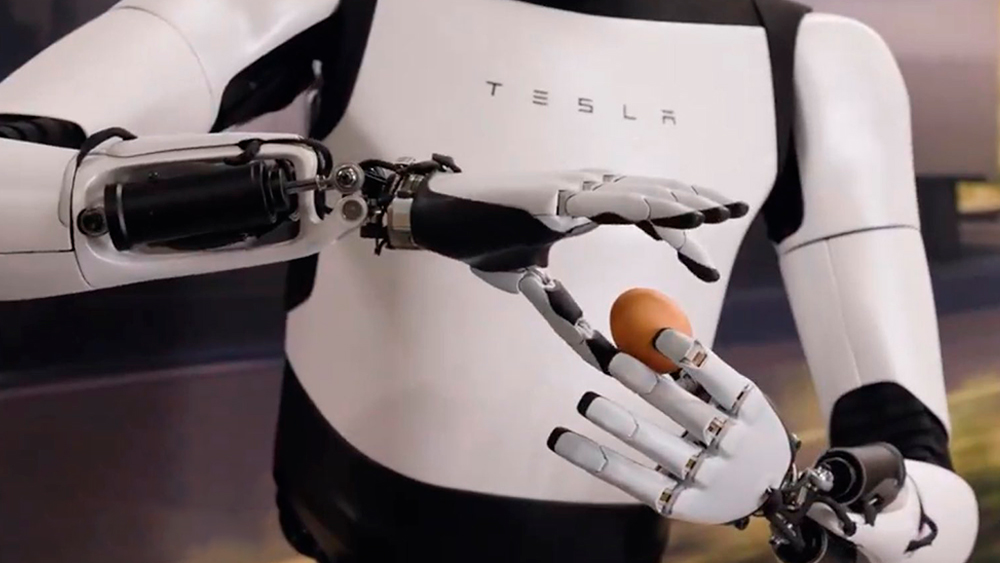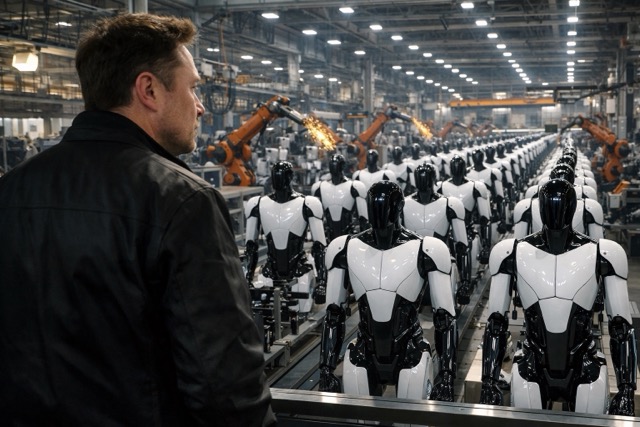
While the automotive world remains fixated on Cybertruck deliveries and Model 3 updates, Tesla is quietly laying the physical foundation for what could be its most audacious venture yet. New construction data and drone footage reveal a staggering industrial project underway in Austin, Texas, one that moves the Optimus humanoid robot from a lab-bound prototype to the centerpiece of a manufacturing moonshot. This isn't mere R&D expansion; it's the first concrete step toward a future where Tesla builds robots on a scale rivaling its cars.
A Factory of Staggering Scale
The numbers associated with the new Optimus factory are difficult to comprehend. Construction is underway on a facility encompassing approximately 5.2 million square feet of space. To put that in perspective, it represents a massive expansion of Tesla's Gigafactory Texas footprint, dedicated explicitly to robotics. The long-term target, as indicated by planning documents, is a production capacity of 10 million Optimus units per year. This target, which many initially dismissed as science fiction, is now being etched into steel and concrete, signaling a profound commitment from Tesla's leadership to dominate the nascent humanoid robotics market before it even fully exists.
From "Proof of Concept" to Production Line
The scale of this investment fundamentally changes the narrative around Optimus. For years, the project existed as a series of impressive but carefully choreographed demonstrations, showing robots folding shirts or walking slowly across a stage. The Texas factory shifts the focus from capability to cost and scalability. Tesla's core competitive advantage has never been inventing entirely new technology first, but rather engineering and manufacturing it at a volume and price point that renders competitors obsolete. They are applying the same brutal logic to robotics, betting that by solving the immense challenges of precision actuator manufacturing, AI training compute, and final assembly at this scale, they can achieve an unassailable cost advantage.
The implications of a successful, mass-produced Optimus extend far beyond Tesla's own factories. While initial deployments will focus on automating repetitive, dangerous, or tedious tasks within Tesla's manufacturing and logistics operations, the company has consistently framed Optimus as a general-purpose robot for the global economy. A low-cost, highly capable humanoid platform could address acute labor shortages in industries from agriculture and construction to healthcare and retail. Tesla is effectively building the hardware platform, with the Tesla-designed AI and neural networks serving as the evolving "driver" for millions of physical robots.
For Tesla investors, this move is a high-stakes doubling down on Elon Musk's vision of Tesla as an AI and robotics company first, and a car company second. The capital expenditure is enormous, and the timeline for meaningful revenue is long-term and uncertain. However, success would open a total addressable market that dwarfs the automotive sector. For Tesla owners and enthusiasts, the advancements in real-world AI, sensor fusion, and mechanical efficiency required for Optimus will inevitably cascade back into vehicle software and hardware, accelerating the path to more advanced autonomy and vehicle intelligence. The race isn't just for the roads anymore; it's for the global workforce, and Tesla is building the starting line.