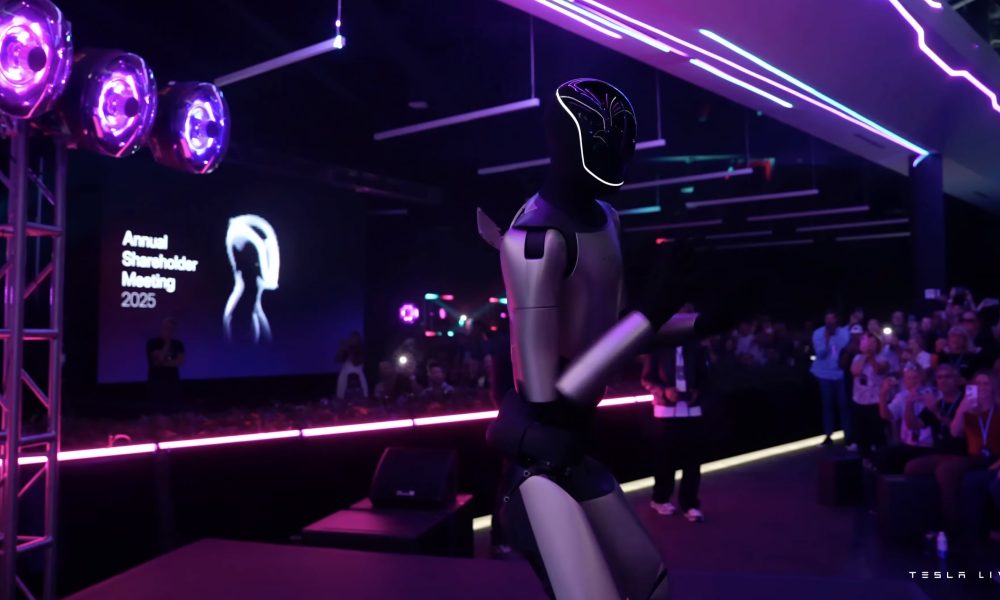
In a move that underscores its evolution from an electric vehicle pioneer to a broader robotics and artificial intelligence company, Tesla has taken the stage at the AWE 2026 electronics expo in Shanghai with a live demonstration of its next-generation Optimus humanoid robot. The showcase marks a significant moment for Tesla's ambitions beyond the automotive sector, bringing its most advanced bipedal automaton directly to one of the world's largest and most competitive tech markets. This appearance isn't just a product display; it's a strategic statement aimed at industry watchers, potential partners, and a global audience keen to see if Optimus has moved beyond proof-of-concept into tangible, real-world utility.
Optimus Takes Center Stage in a Key Market
The choice of Shanghai for this high-profile demonstration is deliberate. China represents not only Tesla's largest EV production hub but also a global epicenter for advanced manufacturing and automation. By showcasing Optimus at AWE, Tesla is directly engaging with the industrial ecosystem that could first adopt such robots for factory and logistics work. The demonstration reportedly focused on the robot's improved dexterity, balance, and ability to perform precise manipulation tasks, moving beyond the walking and waving of earlier prototypes. This suggests Tesla is honing in on commercially viable applications, presenting Optimus as a potential solution for labor-intensive and repetitive roles within complex supply chains.
From Concept to (Potential) Reality
The journey of the Tesla Bot, first unveiled in 2021 as a dancer in a spandex suit, has been met with equal parts skepticism and fascination. The AWE 2026 exhibit represents a critical step in transitioning from a visionary project to a market-ready platform. Analysis of the event indicates Tesla is emphasizing practical AI integration and sensor fusion, allowing Optimus to perceive and interact with its environment autonomously. The underlying technology shares a symbiotic relationship with Tesla's Full Self-Driving (FSD) and AI stack, leveraging the same neural networks and real-world data processing capabilities. This shared architecture is a core competitive advantage, accelerating Optimus's development by building on billions of miles of real-world driving data.
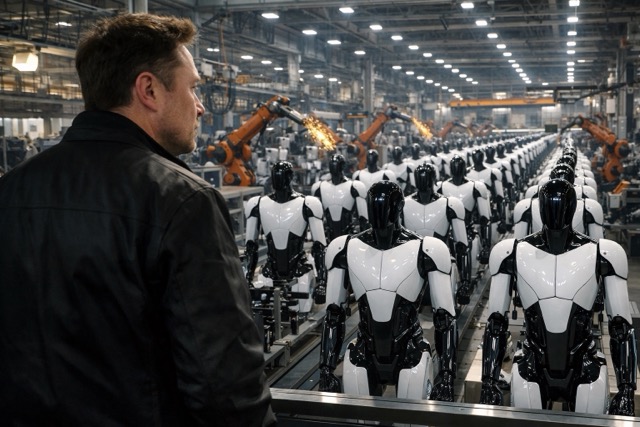
For Tesla investors, the Shanghai showcase is a tangible milestone that validates continued R&D expenditure in robotics. It signals that the company is methodically building a potential multi-billion dollar business unit that could eventually dwarf its automotive revenue. For the global automation industry, a commercially viable Optimus would represent a seismic shift, introducing a general-purpose humanoid robot from a company with a proven track record of mass manufacturing and vertical integration. The pressure is now on established robotics firms to match Tesla's pace and ambition.
The implications for Tesla's future are profound. Success with Optimus could diversify the company's revenue streams, making it less susceptible to the cyclical nature of the automotive industry. For Tesla owners and enthusiasts, the advancements in Optimus directly reflect the improving AI that powers their vehicles' features. More immediately, the demonstration serves as a powerful recruitment tool, attracting top AI and engineering talent to Tesla's mission. The road ahead still involves significant challenges in cost reduction, reliability, and proving large-scale operational safety, but with AWE 2026, Tesla has made it clear that its robot is no longer a side project—it's a central pillar of the company's future.