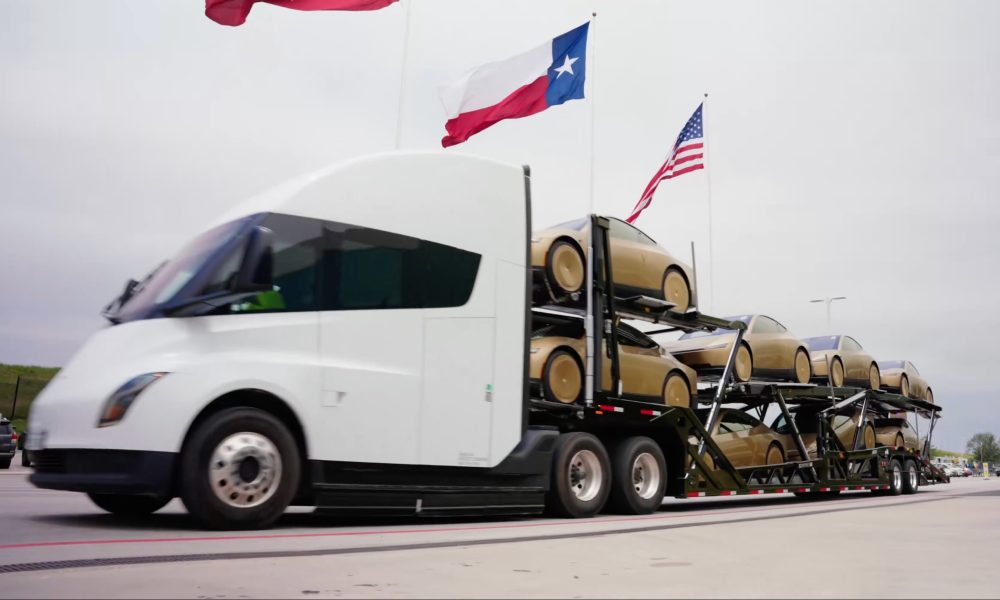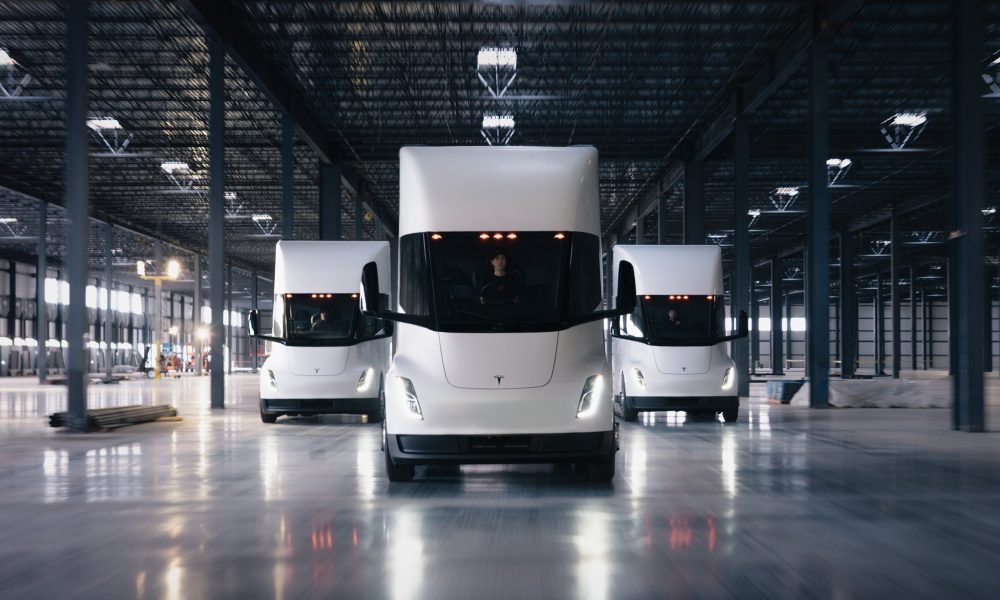
The veil of speculation has finally been lifted. In a move that has sent ripples through the electric trucking industry, a California regulatory filing has inadvertently confirmed the exact battery capacity of the Tesla Semi. The document, filed with the California Air Resources Board (CARB), reveals the precise kilowatt-hour (kWh) ratings for both variants of the all-electric Class 8 truck, putting an end to years of educated guesses and unofficial estimates. For an industry that has been waiting for a definitive technical benchmark, this leak is nothing short of a watershed moment.
The Leaked Numbers: A Deep Dive into the Semi's Pack
According to the leaked CARB documentation, the Tesla Semi will be offered with two distinct battery configurations. The standard-range version is equipped with a pack rated at 500 kWh, while the long-range variant—the one capable of achieving the vaunted 500-mile range on a single charge—houses a massive 1,000 kWh battery. This confirms that the long-range Semi carries a megawatt-hour of energy storage, a figure that dwarfs the 100 kWh packs found in the flagship Tesla Model S and Model X. The sheer scale of this battery underscores the enormous energy demands required to move 82,000 pounds of gross vehicle weight across state lines.
Why This Matters for the Tesla Ecosystem
This confirmation is more than just a trivia point for enthusiasts; it has profound implications for the broader electric vehicle (EV) landscape. The 1,000 kWh pack immediately validates the necessity of the V4 Supercharger and the Megacharger network, which Tesla has been quietly deploying for commercial use. Charging a battery of this size from 10% to 80% in under an hour requires power levels exceeding 1 MW—a feat no current passenger vehicle can match. Furthermore, the data provides a critical baseline for fleet operators calculating total cost of ownership (TCO). With such a massive battery, the Tesla Semi’s energy cost per mile will be significantly lower than diesel, but the initial capital expenditure for the battery itself will be a primary factor in fleet adoption rates.
The leak also sheds light on Tesla’s internal engineering priorities. The company has long been secretive about battery chemistry, but a pack of this size strongly suggests the use of 4680 cells in a structural battery pack configuration. This design not only saves weight—a critical factor for payload capacity—but also improves thermal management. For Tesla investors, this confirms that the company’s battery production ramp at Giga Texas and Giga Nevada is not just for passenger cars; it is directly feeding the Semi’s high-volume production line. The 500-mile range target, now linked to a specific energy density, gives analysts a tangible metric to model Tesla’s future revenue streams from commercial transportation.
Implications for Tesla Owners and Investors
For current Tesla owners, the Semi’s confirmed specifications signal a maturing ecosystem. The 1,000 kWh battery pack means that the Megacharger network will likely expand rapidly, potentially offering new high-power charging locations that could also benefit Cybertruck owners and future Roadster drivers. Investors, however, should pay close attention to the production cost. A 1,000 kWh pack at current battery prices would cost roughly $100,000 to $140,000 just for the cells. If Tesla can achieve its stated goal of $70 per kWh with the 4680 dry-cell electrode process, that cost drops to $70,000, making the Semi’s base price—rumored to be around $180,000 for the long-range variant—highly competitive against diesel trucks that cost $150,000 plus fuel. The regulatory filing has turned a rumor into a roadmap, and the road ahead for electric trucking just became a lot clearer.