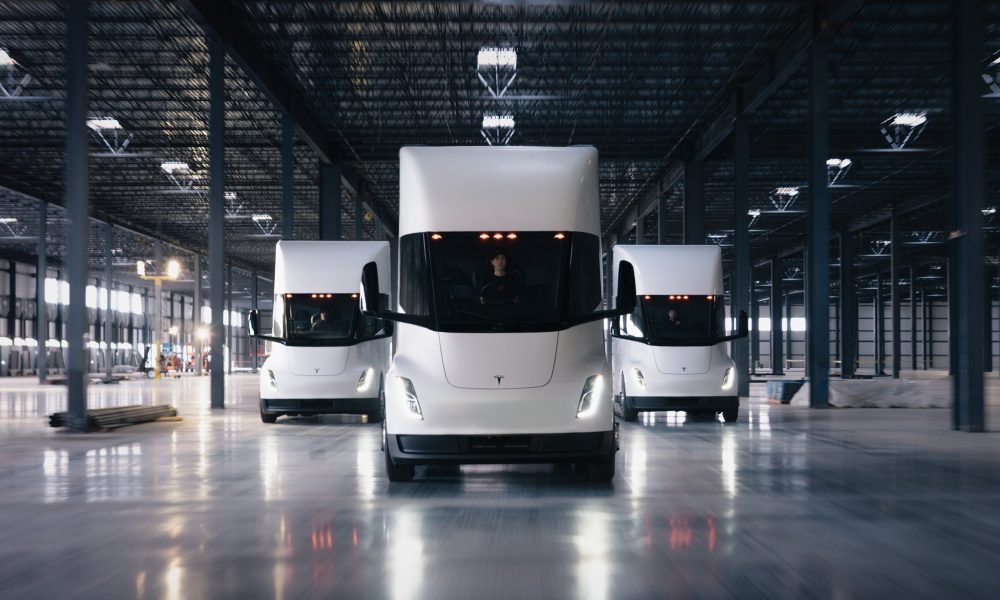
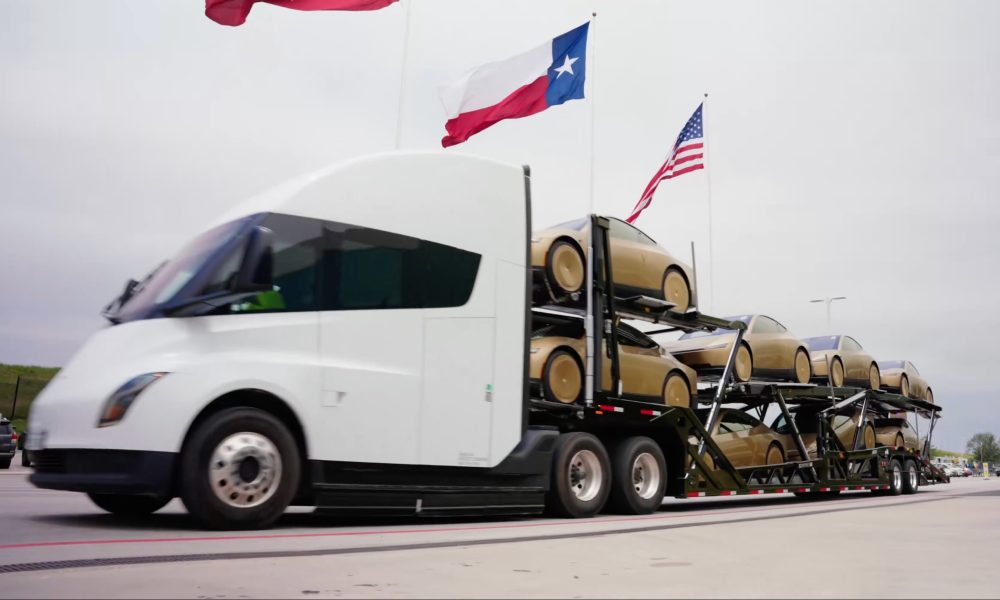
New regulatory filings have ripped the veil off the Tesla Semi’s battery specifications, confirming what many analysts suspected: the electric truck is not just a viable alternative to diesel—it is a direct economic threat to the entire freight industry. The documents, submitted to environmental agencies, detail two distinct battery pack configurations that promise to reshape the cost calculus for fleet operators. For years, the promise of the Tesla Semi has been shrouded in speculation. Now, with hard numbers on the table, the battle between electric and diesel trucking economics has entered a decisive new phase.
Two Battery Configurations, One Clear Economic Advantage
The filings reveal that the Tesla Semi will be offered with two battery pack sizes: a 500 kWh variant and a larger 1,000 kWh unit. These figures directly correlate to the truck’s previously announced range targets of 300 miles and 500 miles, respectively. Critically, the energy density and total usable capacity appear to be optimized for heavy-duty cycles, not passenger car metrics. For a fleet manager, this translates into a per-mile energy cost that undercuts diesel by a significant margin—often by 30% to 40% depending on regional electricity rates. The 1,000 kWh pack, in particular, enables long-haul routes that were previously considered impossible for battery-electric trucks, directly challenging the operational range of diesel rigs that dominate 80% of the freight market.
Regulatory Clues and the Real-World Threat
The battery details emerged from a California Air Resources Board (CARB) filing, which required Tesla to disclose the exact chemistry and capacity for compliance credits. What stands out is not just the size, but the efficiency. Tesla’s proprietary powertrain, combined with a drag coefficient of 0.36 (the lowest of any production truck), means the Semi can move more cargo with less energy. The filing confirms that the 500 kWh pack is likely aimed at regional distribution—routes under 300 miles—while the 1,000 kWh pack targets the lucrative long-haul market. For diesel truck owners, the threat is twofold: lower fuel costs and drastically reduced maintenance. A diesel engine requires oil changes, exhaust aftertreatment, and transmission service. The Tesla Semi’s electric drivetrain has roughly 20 moving parts compared to a diesel’s 2,000. This simplicity slashes total cost of ownership over a 1 million-mile lifespan.
Implications for Tesla Owners and Investors
For current Tesla investors, these battery revelations validate the company’s long-term bet on commercial transportation. The 1,000 kWh pack alone represents a massive demand driver for Tesla’s 4680 battery cells, which are produced at Gigafactory Texas and the upcoming Giga Nevada expansion. This creates a vertically integrated supply chain that competitors like Daimler and Volvo have yet to match. For Tesla owners, the Semi’s success indirectly strengthens the entire ecosystem. Higher volume of battery production will lower costs for passenger vehicles, and the Semi’s Megacharger network—capable of adding 70% charge in 30 minutes—will eventually be shared with future Cybertruck owners. The bottom line is clear: diesel’s decades-long dominance in freight is facing its most credible challenger yet. The Tesla Semi, armed with its newly confirmed battery specs, is not just a product—it is the tipping point for the electrification of global logistics.