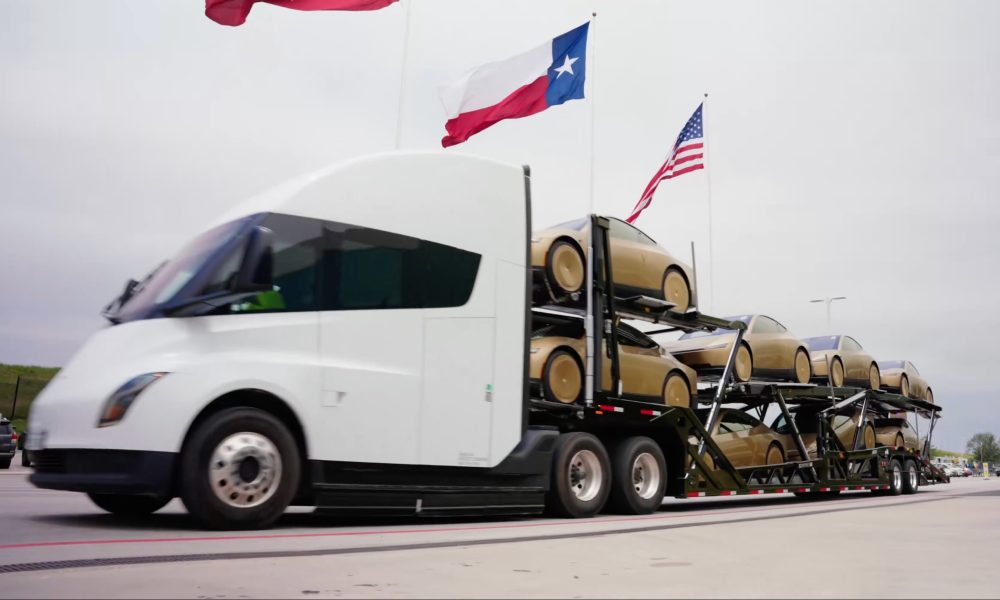
The sight of a Tesla Semi hauling a fresh batch of Cybercab prototypes out of Giga Texas is no longer just a logistical milestone—it is a visual declaration that the Robotaxi era is accelerating into production reality. For the first time, the all-electric Class 8 truck was captured on film towing multiple Cybercab units, signaling that Tesla is moving beyond concept reveals and prototype testing into the early stages of fleet assembly. This convergence of two ambitious vehicle programs under one electric roof underscores the company’s relentless push to dominate both freight and autonomous passenger transport.
From Giga Texas to the Open Road: A Logistics Breakthrough
The footage, shared across social media, shows a Tesla Semi leaving the sprawling Giga Texas facility with several Cybercab units in tow. This is the first documented instance of the Semi being used to transport the company’s dedicated robotaxi vehicle. The choice to use the Semi—itself a revolutionary electric truck—for this task is both practical and symbolic. It demonstrates the vehicle’s real-world utility as a heavy-duty hauler while reinforcing Tesla’s vertically integrated ecosystem. The Cybercabs, designed without a steering wheel or pedals, are destined for Tesla’s internal testing grounds and potentially early deployment hubs.
Cybercab Production Ramps as Autonomy Targets Tighten
The Cybercab represents Tesla’s boldest bet yet: a purpose-built, two-seat electric vehicle optimized for autonomous ride-hailing. With production now visibly ramping at Giga Texas, the company is on track to meet its goal of 2026 for commercial Robotaxi operations. The Semi’s involvement in the transport chain hints at a mature supply chain strategy—using Tesla’s own electric trucks to move its own robotaxis reduces carbon footprint and operational costs. For investors, this signals that Tesla is not just building a car; it is building a self-sustaining, electrified logistics network that could redefine manufacturing efficiency.
Implications for Tesla Owners and Investors
For current Tesla owners, the sight of Cybercabs being shuttled by Semis is a powerful reminder that the company’s long-promised autonomy future is materializing. As the Robotaxi fleet grows, expect over-the-air software updates to begin integrating Full Self-Driving (FSD) improvements that will eventually enable owners to earn passive income by adding their vehicles to the network. For investors, the simultaneous scale-up of the Semi and Cybercab programs validates Tesla’s ability to execute on multiple fronts. The company is no longer just an EV maker; it is becoming a vertically integrated transportation and energy giant. Watch for upcoming earnings calls to reveal production targets for both vehicles—they could be the catalysts that push Tesla’s stock beyond its current valuation ceiling.