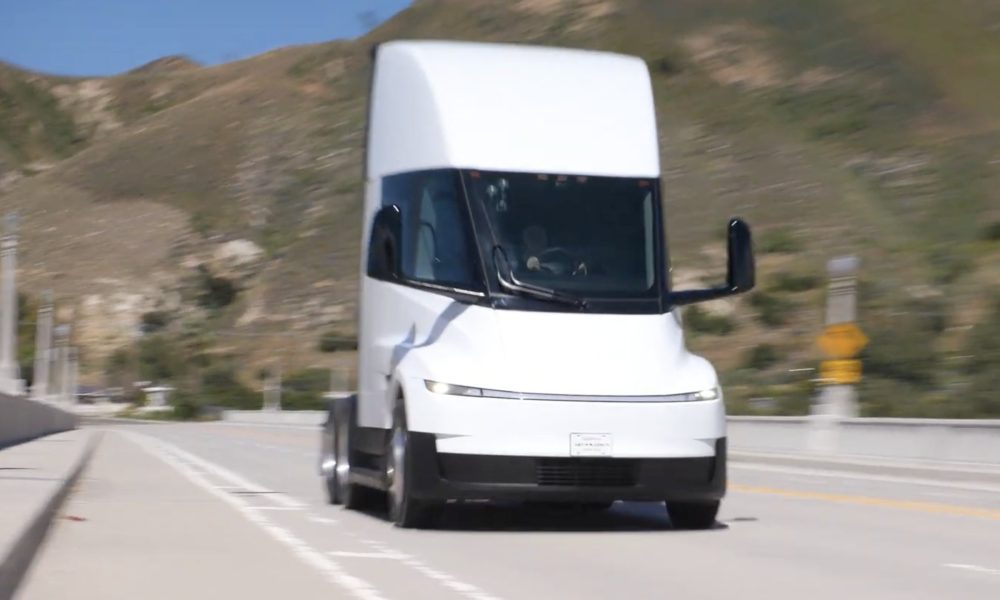
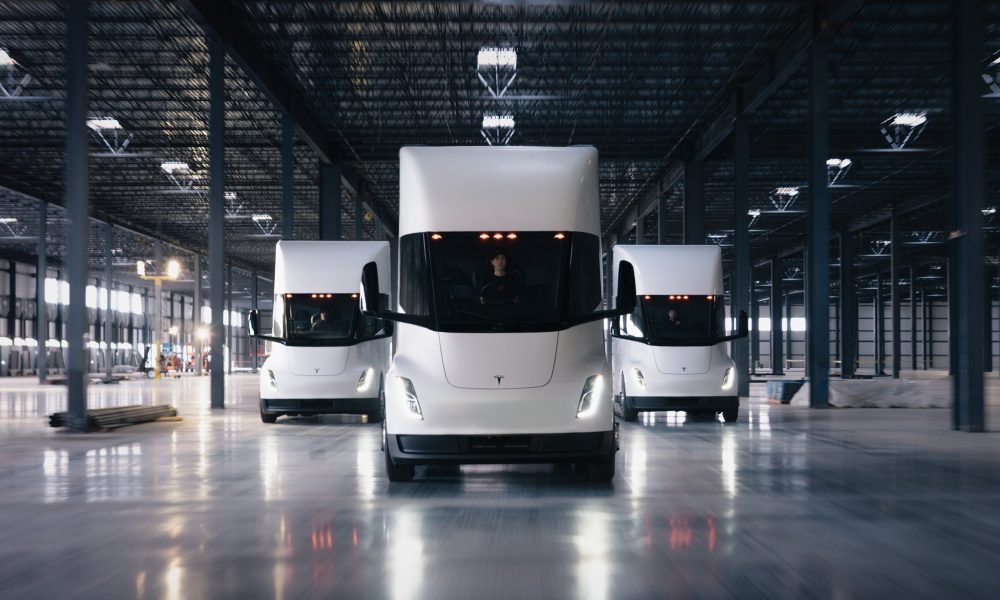
Tesla has finally crossed the Rubicon with its long-delayed Class 8 electric truck. In a terse but seismic social media post, the company declared, “First Semi off high volume line,” signaling the end of years of production purgatory. This milestone, shared on X (formerly Twitter), marks the moment the Tesla Semi transitions from a niche, hand-built experiment to a factory-scale reality. For an EV industry watching Tesla’s every move, this is not just a truck rolling off an assembly line—it is a proof point that the company can industrialize heavy-duty electric transport.
From Vaporware to Volume: The Long Road to Nevada
The journey to this moment has been anything but smooth. Initially unveiled in 2017, the Semi faced repeated delays as Tesla grappled with battery supply constraints and the monumental challenge of scaling production at its Giga Nevada facility. For years, only a handful of customer units existed, primarily used for internal logistics at Tesla’s own factories. The new high-volume line, reportedly located at a dedicated expansion of the Nevada complex, changes the calculus entirely. By moving to a conveyor-belt approach, Tesla can now target the 50,000-unit annual production rate CEO Elon Musk once promised, though realistic near-term output will likely start in the thousands. This ramp is critical for fulfilling massive pre-orders from fleets like PepsiCo, Walmart, and DHL, who have been waiting for a viable electric alternative to diesel-powered rigs.
Why This Matters: The Electric Trucking Paradigm Shift
The Semi’s high-volume production is more than a corporate win; it is a watershed moment for the entire commercial EV sector. Class 8 trucks account for a disproportionate share of transportation emissions, yet battery-electric options have struggled to gain traction due to range anxiety and charging infrastructure gaps. Tesla’s Semi, with its claimed 500-mile range on a single charge, directly attacks these barriers. The high-volume line also allows Tesla to leverage its 4680 battery cells and structural battery pack technology, driving down costs per kilowatt-hour. This economies-of-scale effect could make the Semi price-competitive with diesel trucks within a few years, accelerating fleet electrification across North America.
Implications for Tesla Owners and Investors
For existing Tesla owners and investors, this development carries significant weight. First, the Semi’s production ramp is a bellwether for Tesla’s manufacturing prowess—if they can master heavy-duty truck assembly, it bodes well for the Cybertruck and next-generation platforms. Second, fleet operators using the Semi will likely deploy Megapack-based charging depots, indirectly boosting Tesla Energy’s revenue stream. Finally, investors should watch the gross margin on each Semi sold; if Tesla can achieve the 20%+ margins Musk hinted at, it opens a new profit center beyond passenger EVs. The Semi is no longer a futuristic concept—it is a production vehicle, and that changes the competitive landscape for freight, energy, and Tesla’s bottom line.