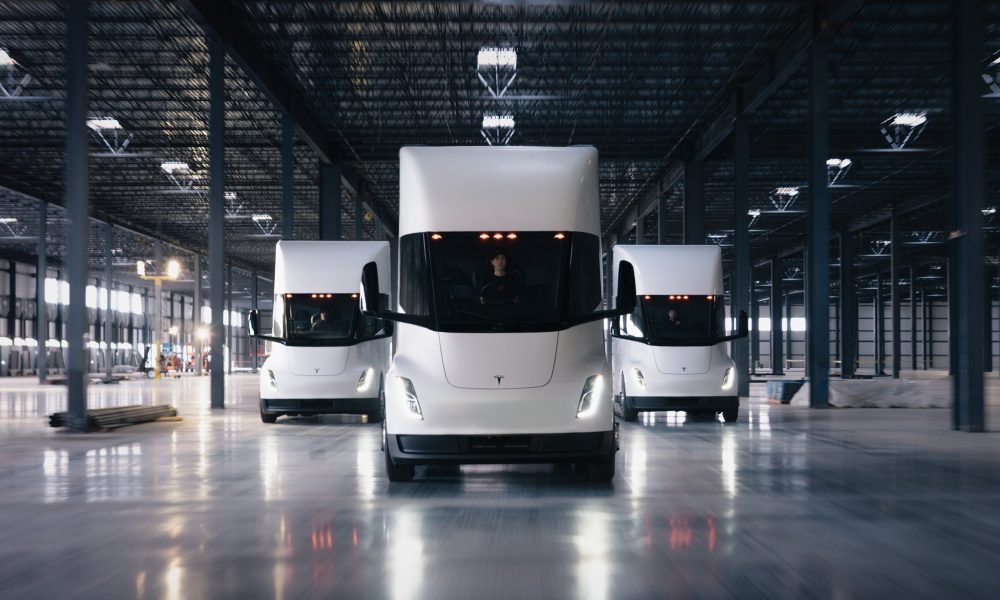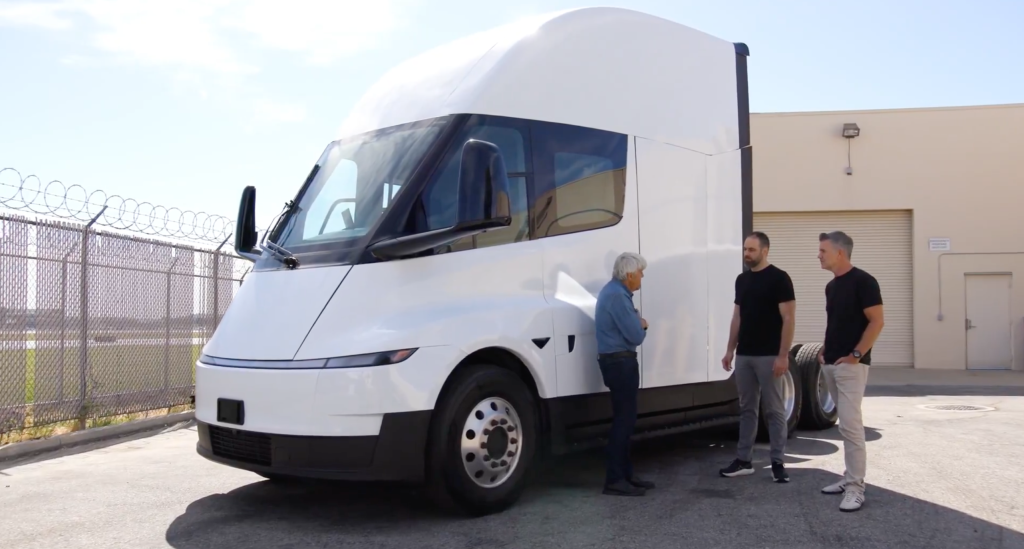
For years, the Tesla Semi has existed as a formidable silhouette on the horizon of the trucking industry—a promised revolution in heavy transport. Now, in a new episode of Jay Leno’s Garage, the veil has been pulled back to reveal a production-intent vehicle brimming with significant refinements. This detailed walkthrough, hosted by one of Tesla's most prominent advocates, offers the clearest public look yet at the engineering philosophy and practical upgrades defining the final push to bring this electric behemoth to market at scale.
From Prototype to Production: A Cabin and Chassis Reimagined
Jay Leno’s access highlighted a Semi that has matured substantially since its 2017 unveiling. The most dramatic changes are found in the cabin, which has undergone a complete redesign centered on the driver. Gone is the dual-screen setup; in its place, a single, massive central display—akin to the one in the refreshed Tesla Model S—dominates the cockpit. This consolidates all vehicle controls, navigation, and camera views into one intuitive interface. Furthermore, Tesla has added a traditional driver’s side window, a crucial practical feature absent from early prototypes, enhancing safety and convenience for real-world docking and maneuvering.
Engineering for Efficiency and Unmatched Performance
Beyond the cabin, the video underscored the Semi’s core engineering marvels. Leno reiterated the truck’s staggering performance credentials, including the ability to haul an 82,000 lb gross combination weight from 0-60 mph in just 20 seconds—a feat impossible for any diesel counterpart. The discussion also focused on efficiency, with Tesla’s signature focus on aerodynamics and a low center of gravity provided by the skateboard battery pack. Perhaps most impressive is the energy consumption rate of less than 2 kWh per mile, a figure that translates into substantial operational cost savings and a compelling economic argument for fleet operators.
The analysis of the Semi’s tri-motor setup revealed a clever "two-mode" operation. During normal cruising, only one of the rear motors is engaged for maximum efficiency. When full power is demanded for climbing a grade or acceleration, the other two motors instantly engage. This intelligent power management is key to achieving both the vehicle’s remarkable range—estimated at up to 500 miles—and its durability, with Tesla claiming a 1,000,000-mile battery lifespan.
For the broader EV industry, the Semi’s progress is a bellwether. Its success would validate the feasibility of electric long-haul transport, forcing competitors to accelerate their own programs. The detailed focus on driver ergonomics and cost-per-mile metrics, rather than just horsepower, signals Tesla’s serious approach to meeting the gritty demands of commercial logistics, not just winning headlines.
For Tesla investors, the Semi represents a nascent but potentially massive revenue stream in the commercial sector. Each successful delivery to high-profile clients like PepsiCo serves as a rolling testament to the technology, likely catalyzing further fleet orders. For Tesla owners and enthusiasts, the Semi’s advancements—particularly in powertrain efficiency and ultra-fast charging supported by Megachargers—often trickle down to passenger vehicles, reinforcing the company’s overarching technological lead. The truck is no longer a concept; it is a tangible, upgraded machine poised to disrupt one of the world’s most entrenched industries.