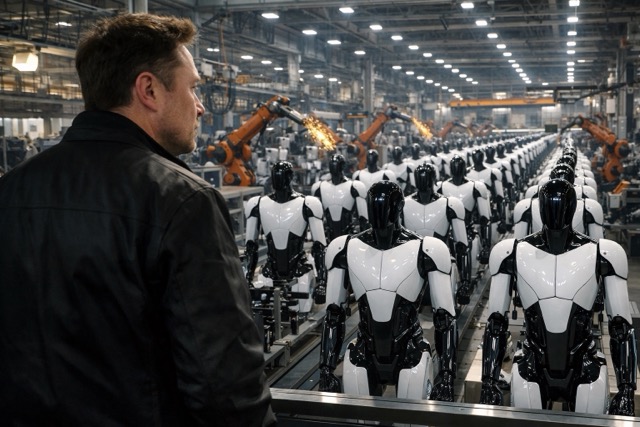
In a move signaling a major acceleration of its most ambitious project, Tesla has secured a massive new research and development facility in Fremont, California, dedicated solely to its Optimus humanoid robot program. This expansion, reported by the Silicon Valley Business Journal, represents a significant capital commitment and a clear statement of intent from Elon Musk's company, moving Optimus from a conceptual showcase to a core pillar of Tesla's long-term strategy.
A Decade-Long Commitment to Robotic Futures
Tesla has signed a 10-year lease for the new R&D space, a duration that underscores the scale and long-term nature of the Optimus endeavor. This isn't a short-term experiment but a foundational investment in what Musk has repeatedly called a potential multi-trillion dollar market. The expansion adds critical square footage adjacent to Tesla's primary vehicle assembly plant, creating a dedicated hub where engineers can focus on the unique challenges of bipedal mobility, dexterous manipulation, and artificial intelligence required for a general-purpose robot. Securing this space in the heart of its manufacturing nerve center allows for tighter integration of real-world production insights into Optimus's development.
From Prototype to Production: Scaling the "Tesla Bot"
The new facility is a direct response to the rapid progression of the Optimus program. Since the first stumbling prototype was revealed, Tesla has iterated through multiple generations, showcasing robots capable of delicate object manipulation, autonomous navigation, and learning from human demonstrations. The company is now focusing on building useful humanoid robots for its own factories, with the ultimate goal of deploying them in manufacturing roles initially, before a broader commercial release. This massive R&D investment is aimed at solving the immense challenges of reliability, cost, and mass manufacturing—the same hurdles Tesla overcame in the EV market—to make Optimus a viable product.
For Tesla investors, the Fremont expansion is a double-edged signal. It confirms the company is "all in" on a high-risk, high-reward technology that could eventually dwarf its automotive revenue, aligning with Musk's vision of Tesla as a leader in robotics and AI. However, it also represents substantial ongoing R&D expenditure for a project with an uncertain commercial timeline, potentially weighing on margins in the near term. For Tesla owners and enthusiasts, the accelerated development promises tangible benefits sooner, as breakthroughs in actuator efficiency, battery density, and vision systems for Optimus will inevitably filter back to improve vehicle performance and autonomy. The race to build a viable humanoid robot is heating up, and with this move, Tesla has secured its home-field advantage.