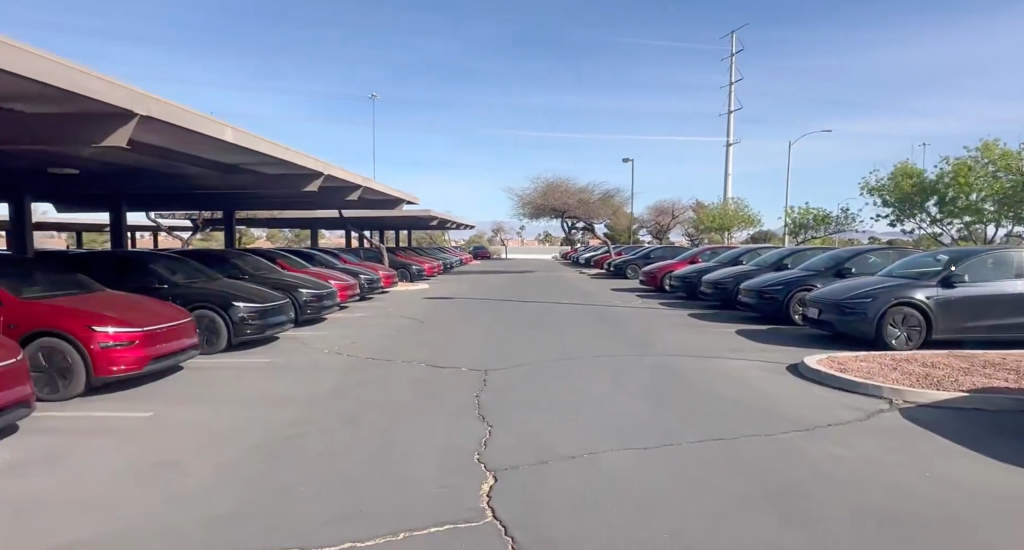
After nearly nine months of operating in a tightly controlled, invitation-only environment, Tesla's ambitious autonomous ride-hailing project is showing clear signs of breaking out of its Silicon Valley shell. Multiple sightings of Tesla vehicles equipped with the distinctive sensor suite and external branding associated with the Robotaxi program have now been reported in Las Vegas and Dallas, signaling that the long-awaited expansion of the network is finally nearing its public debut.
From California Highways to Texas and Nevada Roads
The initial phase of Tesla's Robotaxi testing has been almost exclusively confined to areas around its Palo Alto headquarters and Austin gigafactory, accessible only to a select group of employees and early testers. The appearance of these specially configured vehicles in two major, geographically distinct metropolitan hubs marks a pivotal strategic shift. Las Vegas, with its dense, predictable traffic patterns and high tourist volume, offers a unique testing ground for complex urban navigation. Dallas, a sprawling sunbelt city, presents different challenges with its extensive highway networks and varied weather conditions. This dual-city approach suggests Tesla is aggressively validating its Full Self-Driving (FSD) system across diverse American driving environments.
Decoding the Hardware and Regulatory Pathway
The vehicles spotted are not standard consumer Teslas. They are reported to feature a more prominent external sensor array and clear "Tesla Network" markings, aligning with the dedicated fleet model CEO Elon Musk has previously outlined. This expansion push follows critical software milestones, including the widespread release of FSD V12, a fundamentally AI-driven system. However, the road to a commercial launch is as much about regulation as it is about technology. Nevada and Texas are both considered relatively AV-friendly states, with regulations that could allow Tesla to deploy its service with fewer bureaucratic hurdles than in coastal states like California, providing a clearer path to a revenue-generating operation.
For Tesla, the Robotaxi network is not merely an ancillary service; it is envisioned as a cornerstone of the company's future valuation and a transformative product for the mobility industry. A successful, scaled deployment would unlock a massive new recurring revenue stream, fundamentally altering Tesla's business model from purely vehicle sales to a blend of hardware and high-margin service income. It would also serve as the ultimate validation of its FSD technology, potentially creating an unassailable moat in the autonomous driving arena. Every mile logged in these new cities generates invaluable data, accelerating the iterative improvement cycle that is central to Tesla's AI development philosophy.
Implications for the Tesla Ecosystem
For Tesla owners, a functional Robotaxi network makes the promise of adding their own vehicle to the fleet—earning passive income while idle—tangible for the first time. Investors will watch these expansion steps closely, as they are concrete progress markers toward a future that is already heavily priced into Tesla's stock. Any significant delay or operational issue in Las Vegas or Dallas could impact market sentiment. Conversely, a smooth, public-facing launch would be a powerful catalyst, proving the scalability of the system and moving Tesla one step closer to realizing its vision of a fully autonomous future. The sight of these vehicles on new city streets is more than just a test; it's the beginning of a critical new chapter.