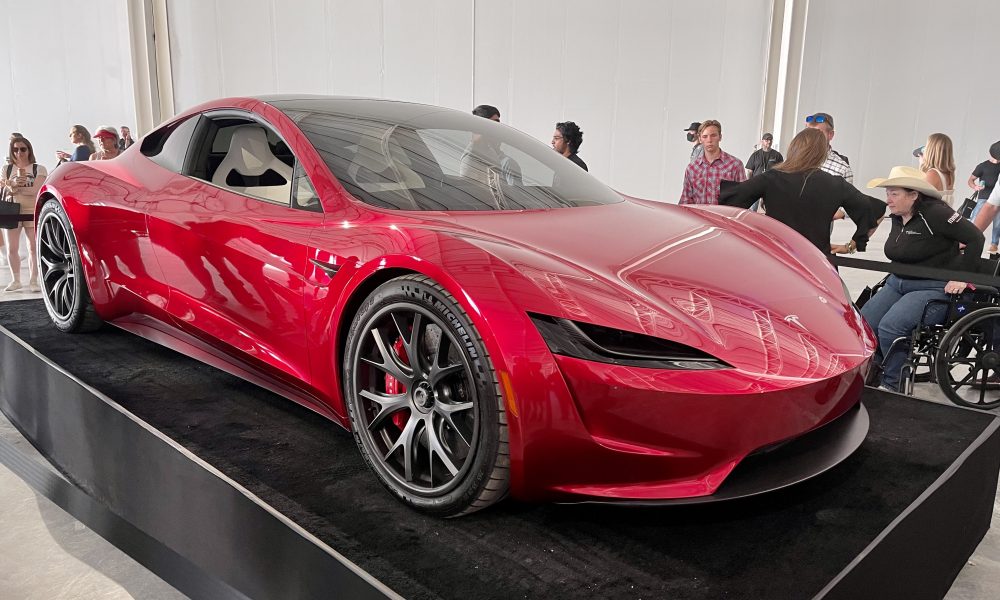
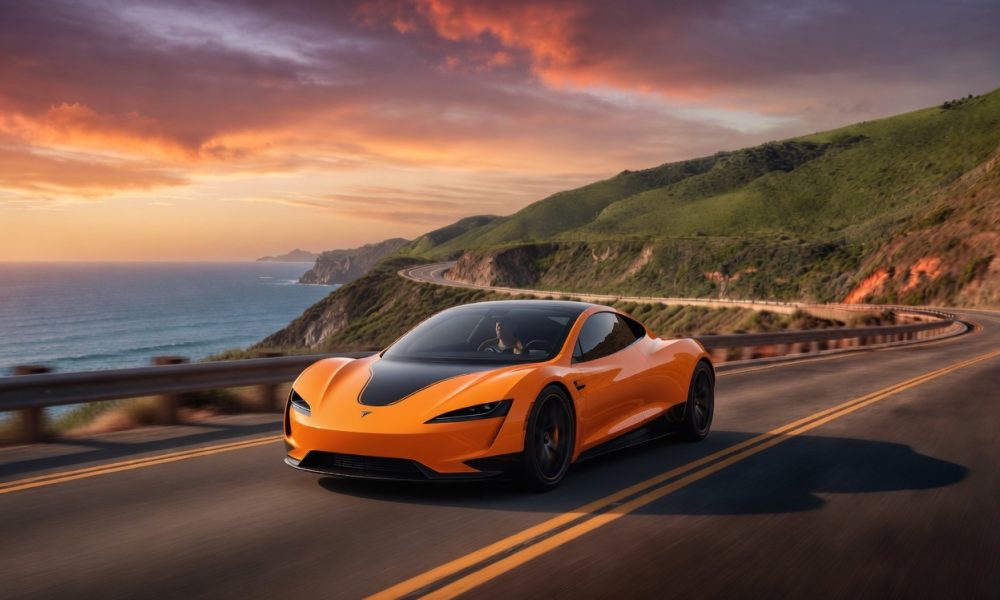
Tesla has quietly stoked the fires of anticipation once again, filing a fresh trademark application that appears to be directly tied to the upcoming next-generation Roadster. The move, submitted to the relevant intellectual property office, suggests the electric supercar is inching closer to production by securing its future branding and badge design. For a vehicle that has been teased for years, this legal step is the strongest signal yet that the Roadster’s debut is more than just a distant promise.
A Trademark That Speaks Volumes
The new filing, discovered by eagle-eyed Tesla watchers, covers a distinct logo and emblem design—likely intended for the next-generation Roadster. While Tesla has not officially confirmed the artwork, such filings typically precede a vehicle’s final reveal, protecting the brand’s visual identity before public launch. This is a deliberate move by Elon Musk’s company, which has a history of using trademarks to lock down design elements well ahead of production. The last time Tesla pursued a similar filing for the Roadster was in 2017, when the original prototype debuted. That car promised a 0-60 mph time of under 2 seconds and a range exceeding 620 miles—figures that still seem surreal today.
Why This Matters Now
The timing of the trademark is critical. Tesla has been laser-focused on scaling production of the Cybertruck, Model Y, and Semi, leaving the Roadster in a holding pattern. However, recent comments from Musk hint that the supercar’s development is accelerating, with potential use of SpaceX thruster technology for insane performance. The new trademark could be a precursor to a final design reveal, possibly at a dedicated event later this year. For the EV industry, the Roadster represents a halo car—a statement of what’s technically possible. For Tesla, it’s a branding weapon that reinforces its dominance in electric performance.
What This Means for Tesla Owners and Investors
For current Tesla owners, the Roadster’s trademark is a reminder that the company’s innovation pipeline remains robust. It signals that Tesla is not resting on its laurels with the Model 3 or Cybertruck—it’s still chasing the bleeding edge of EV capability. Investors, meanwhile, should view this as a positive catalyst. A production-ready Roadster would not only generate media buzz but also validate Tesla’s ability to deliver on decade-old promises. While no timeline has been set, the trademark filing suggests the supercar’s debut could come within 12-18 months. For now, it’s a bold statement that the Roadster is alive and, quite possibly, ready to redefine electric speed once again.