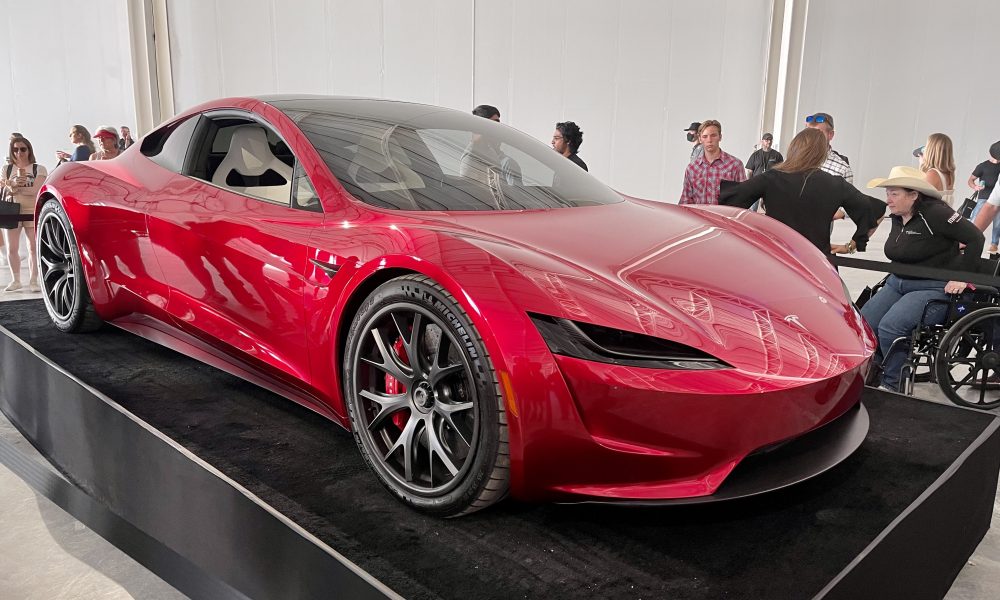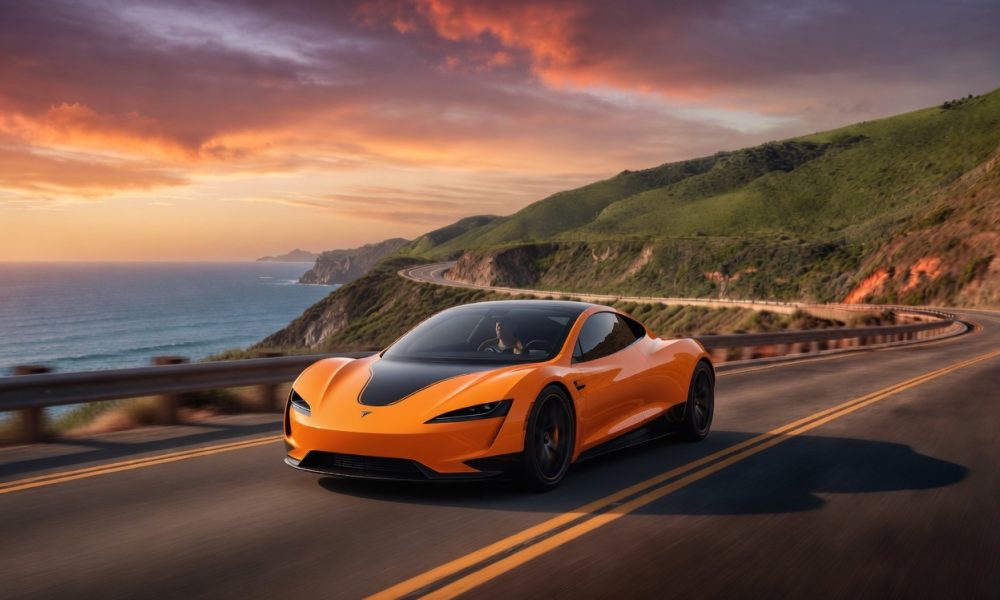
Elon Musk’s personal journey with manual driving is about to close a historic chapter, and the vehicle that bookends this era is unlike anything else on the road. The Tesla CEO recently confirmed that the next-generation Tesla Roadster will be the company's last production car to offer a traditional steering wheel and pedals. More importantly, this specific Roadster—the one Musk drives himself—will achieve something no other production car ever has: it will be the final manually driven vehicle to roll off a Tesla assembly line, marking a definitive pivot toward a fully autonomous future.
The Last of Its Kind: A Manual Driving Farewell
In a series of statements that have electrified the automotive world, Musk explicitly positioned the upcoming Roadster as the company’s final model designed for human-piloted operation. This is not a minor trim update; it is a philosophical declaration. The Roadster, expected to debut with jaw-dropping specs including a 0-60 mph time under 1.9 seconds, will serve as a swan song for those who cherish the tactile connection of steering and pedals. For Tesla, every subsequent model—from the next-generation compact car to the Cybertruck variants—will be engineered from the ground up for full self-driving, potentially even omitting manual controls entirely.
What Makes This Roadster Truly Unique
While hypercars like the Rimac Nevera and Pininfarina Battista boast blistering acceleration, none carry the same historical weight as Musk’s personal Roadster. This specific vehicle will be the last production car ever built by any major automaker to offer a manual driving experience as its primary mode. Tesla is not merely building a faster electric vehicle; it is building a monument to the end of an era. The Roadster’s engineering package, including a speculated 200 kWh battery pack and a range exceeding 620 miles, is already extraordinary. But its true legacy lies in being the final tether to the driver-centric philosophy that defined the automobile for over a century.
Implications for Tesla Owners and Investors
For current Tesla owners, this announcement signals a clear roadmap: the value of manually driven Teslas, particularly performance models like the Model S Plaid, may stabilize or even appreciate as collector’s items. The Roadster’s role as a "last of its kind" could spark a new wave of enthusiasm for pre-autonomous Tesla vehicles. For investors, the message is equally direct. Tesla is betting its future on a software-defined, robotaxi-first ecosystem. The Roadster’s manual driving capability is a deliberate, limited-edition farewell. Those looking to own a piece of automotive history—or to profit from the transition—should watch the Roadster’s debut closely. It is not just a car; it is the closing bracket on a century of human-driven mobility, and Tesla is already writing the first line of the next chapter.