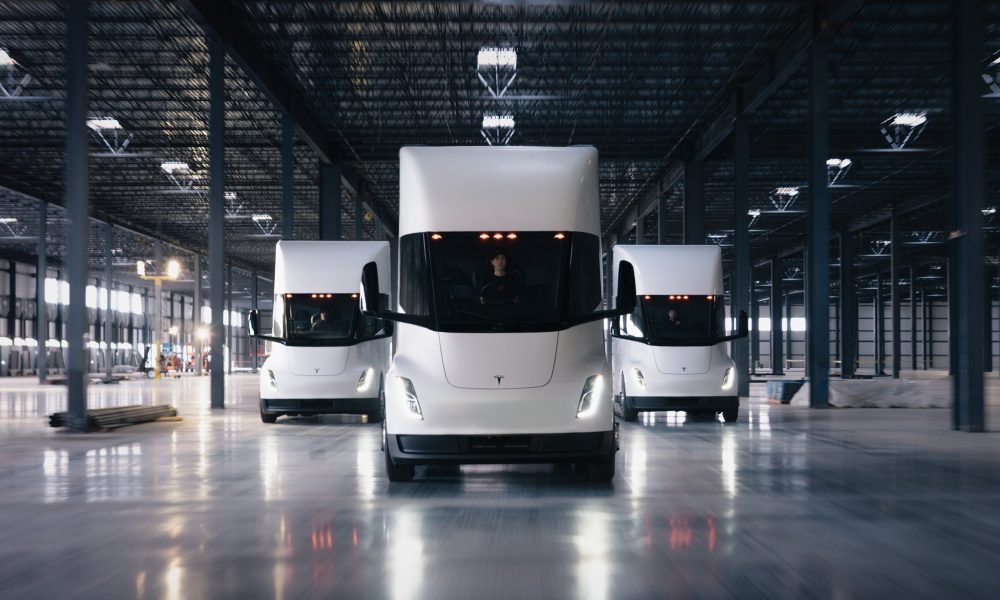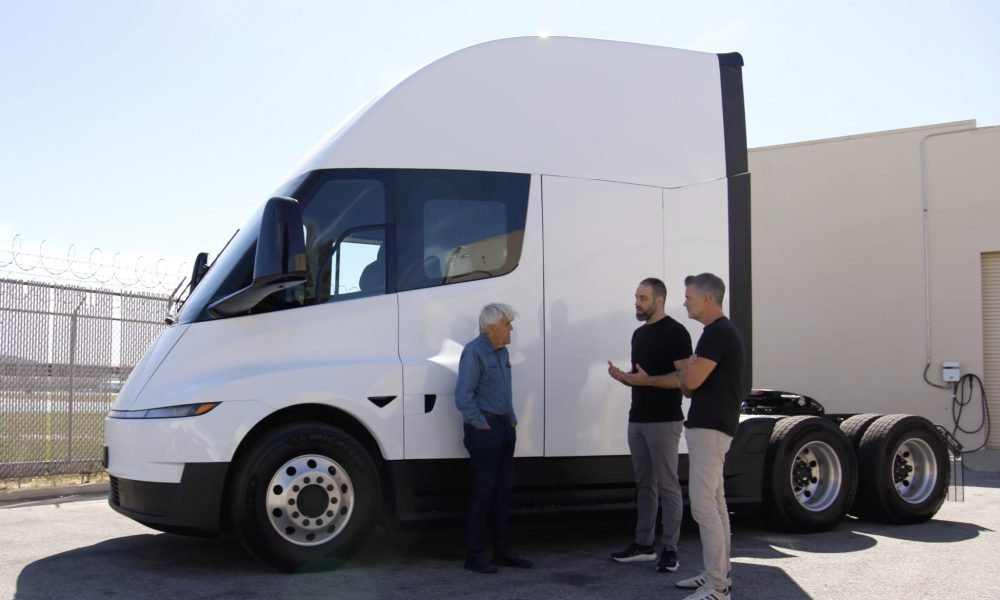
In a revealing new segment with automotive enthusiast Jay Leno, Tesla has pulled back the curtain on a suite of significant upgrades to its long-awaited Tesla Semi. The 47-minute feature, hosted on Leno's Garage, featured Tesla Chief Designer Franz von Holzhausen and Semi Program Director Dan Priestley detailing the engineering refinements made to the electric Class 8 truck as it gears up for a critical year. This deep dive offers the most comprehensive public look yet at the production-intent vehicle, signaling that Tesla is moving decisively from limited pilot programs to scaled manufacturing.
Engineering Refinements for Real-World Durability
The conversation with Leno moved beyond the Semi's headline-grabbing specs to focus on durability and serviceability. A key improvement is the new single-piece windshield wiper, a massive component designed to handle the Semi's expansive front glass area reliably. Furthermore, Tesla has redesigned the truck's door hinges and seals for enhanced robustness, addressing the wear and tear of constant use in freight operations. Perhaps most critically, the team highlighted a redesigned high-voltage connector for the trailer, engineered to prevent arcing and ensure safer, more reliable connections—a vital consideration for fleet operators.
A Driver-Centric Cockpit and Charging Evolution
Inside the cabin, Tesla's philosophy of a central driving position remains, but the details have been polished. The cockpit now features a 15-inch touchscreen display flanked by two smartphone-style charging pads, integrating the driver's experience with Tesla's intuitive software. For charging infrastructure, a major hurdle for long-haul electric trucks, Priestley confirmed the deployment of Semi-specific Megachargers at PepsiCo's facilities. These are not the familiar V3 Superchargers but are designed to deliver the immense energy needed to replenish the Semi's large battery pack efficiently, supporting the claim that the truck can recover 70% range in just 30 minutes.
The detailed walkthrough underscores that Tesla's development cycle for the Semi mirrors its approach to passenger vehicles: launch, gather data, and iterate rapidly. The changes discussed are not aesthetic tweaks but fundamental hardware improvements born from millions of real-world miles with early customers like PepsiCo. This iterative process, moving from a groundbreaking prototype to a hardened production vehicle, is crucial for meeting the relentless demands of the freight industry where uptime is paramount.
For Tesla owners and investors, the Semi's progress is a multi-layered signal. It demonstrates Tesla's expanding capability to innovate in commercial vehicle segments, potentially opening a massive new revenue stream. The advancements in durability and charging also have a trickle-down potential, informing future iterations of Tesla's Cybertruck and other products. As volume production nears, the Semi stands to validate Tesla's core thesis on a grand scale: that electrification can outperform diesel in the most demanding transportation sectors, reshaping both the company's financial future and the global logistics landscape.