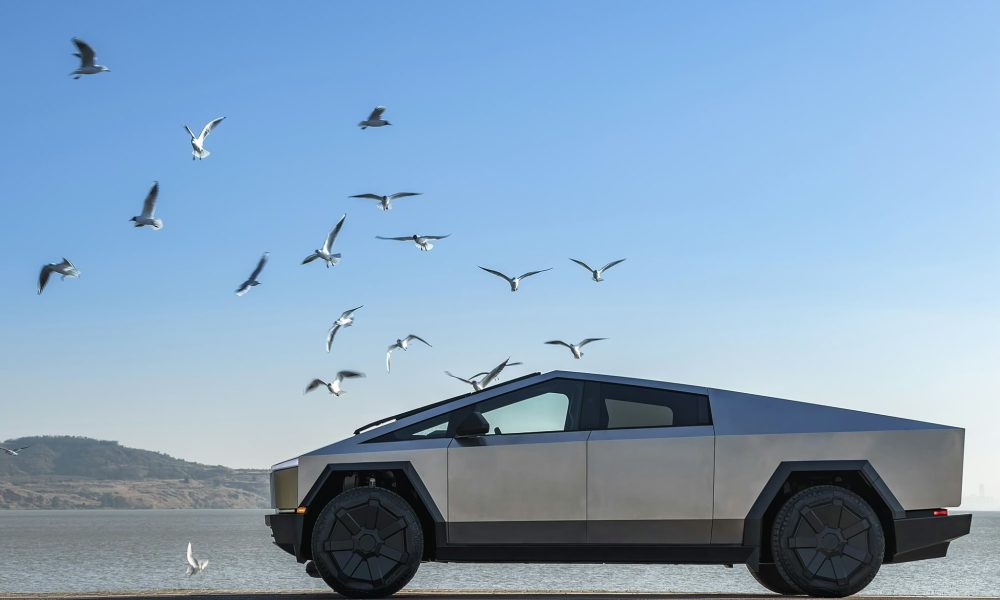
In a move that solidifies the electric vehicle as a cornerstone of the modern energy ecosystem, Tesla's Cybertruck is now officially a grid asset. The angular stainless-steel pickup has been approved for Pacific Gas and Electric Company's (PG&E) vehicle-to-grid (V2G) pilot program in California, marking a significant leap from concept to reality for bidirectional charging in Tesla's fleet. This partnership isn't just about powering homes during an outage; it's a strategic step toward transforming millions of EVs into a decentralized, responsive network that supports the broader electrical grid.
From Pickup to Power Plant: The Cybertruck's New Role
The PG&E pilot program, part of the California Electric Program Investment Charge (EPIC), is designed to test how electric vehicles can discharge energy back to a home and, crucially, to the utility grid itself. The Cybertruck, with its massive 123 kWh battery pack (on the Cyberbeast and All-Wheel Drive variants), is uniquely positioned for this role. Its capacity is equivalent to multiple home Powerwall units, meaning a single truck could power an average California home for three days or more. This approval signals that Tesla's long-anticipated bidirectional charging capability is not only operational but has passed rigorous utility interconnection standards, a major hurdle for V2G technology.
The Bigger Picture: Tesla's Strategic Energy Ambitions
This initiative is far from an isolated experiment. It represents a core pillar of Tesla's master plan, where vehicles, solar, and stationary storage converge into a unified energy system. While competitors have showcased V2G capabilities, Tesla's integration with its own Powerwall home battery and Solar Roof ecosystem creates a seamless energy management platform. For the utility, a fleet of connected Cybertrucks represents a potential virtual power plant (VPP), capable of supplying megawatts of power during peak demand periods or emergencies, thereby enhancing grid stability and reducing reliance on fossil-fuel "peaker" plants.
The technical pathway for Cybertruck owners involves a qualified bidirectional charger and enrollment in the utility program. Participants will likely be compensated for the energy their vehicle provides to the grid, turning a depreciating asset into a potential revenue stream. This model incentivizes participation and could significantly offset ownership costs. However, it also introduces new considerations for users regarding battery cycle management and daily range planning, challenges that Tesla's software will need to elegantly solve through programmable settings and smart grid signals.
Implications for Owners and the EV Market
For Cybertruck owners and reservation holders, this announcement dramatically increases the vehicle's value proposition. The truck transitions from a mere transport device to a mobile energy storage solution, offering unparalleled resilience during California's public safety power shutoffs or natural disasters. For investors, it underscores Tesla's widening moat; the company is not just selling cars but building an intelligent energy network with recurring revenue potential. As this technology proves itself, expect a rapid rollout to other Tesla models, fundamentally changing how all electric vehicle owners interact with—and profit from—the grid.