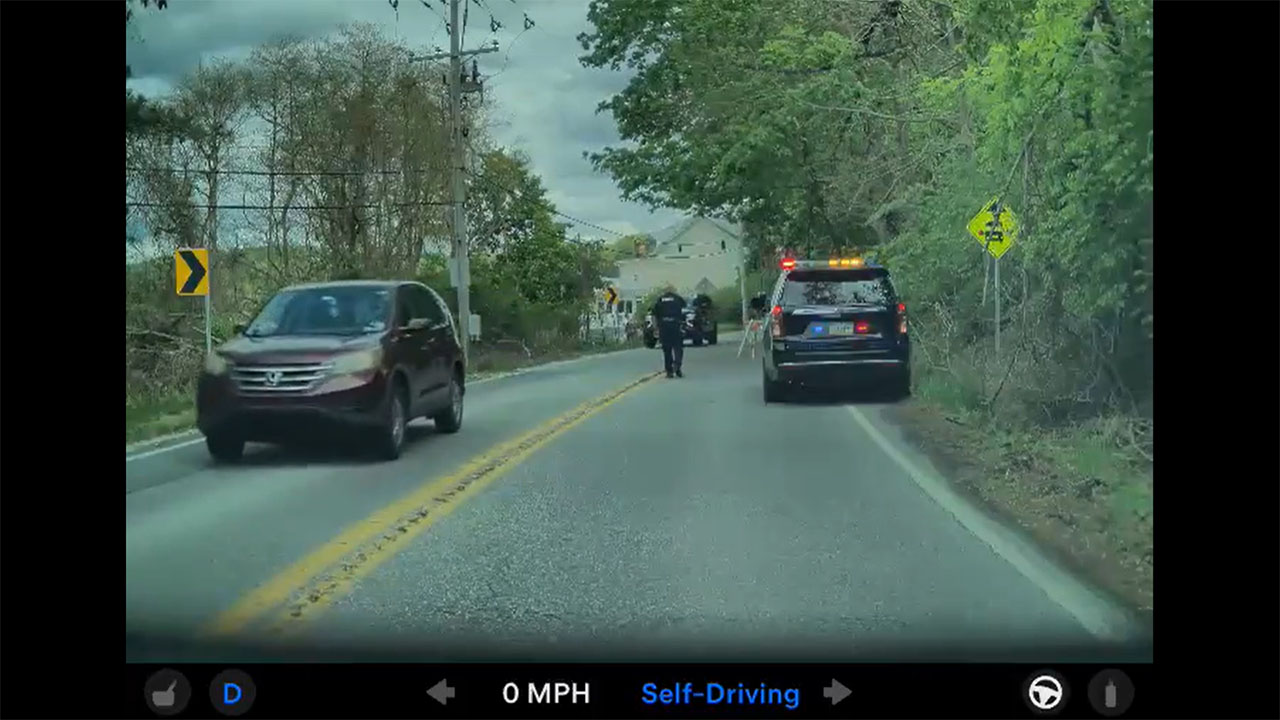
Tesla has quietly rolled out a subtle yet significant update to its Full Self-Driving (FSD) feedback system, and it could dramatically accelerate the pace at which the AI learns from its own mistakes. Instead of lumping every undefined glitch into a generic “Other” category, the company is now prompting owners to specifically flag navigation errors. This small tweak in the reporting interface represents a major shift in how Tesla’s AI team will isolate and prioritize map-related issues within their reinforcement learning models.
From “Other” to Actionable Data
Previously, when a Tesla driver intervened during an FSD session—whether for a phantom braking event, a missed turn, or a bizarre routing decision—the incident was often buried under the vague label of “Other.” This made it nearly impossible for engineers to quickly distinguish between a software bug and a map data flaw. The result was a noisy dataset where critical navigation failures were diluted among thousands of unrelated interventions. Now, by introducing a dedicated category for navigation errors, Tesla is effectively telling its fleet: “Tell us exactly when the map led you astray.” This granularity is a game-changer for the company’s data pipeline, allowing its AI team to feed specific, high-quality error cases directly into the training loop without manual sifting.
The Disagreement Problem Solved
Internally, there was reportedly considerable disagreement on how certain interventions should be reported. A driver who disengaged FSD because the car tried to turn onto a closed road might have logged it as a “Safety Issue,” while another might have chosen “Navigation Problem.” This inconsistency created a noisy signal. The new, more specific prompt standardizes that input. By forcing a binary or categorical choice at the moment of intervention, Tesla ensures that every reported navigation error is a clean, labeled data point for its neural networks. This is precisely the kind of structured feedback that reinforcement learning models thrive on, especially when training on edge cases like complex highway interchanges or ambiguous residential intersections.
Implications for Tesla Owners and Investors
For current Tesla owners, this change means that their FSD experience should improve faster and more reliably. When the AI team can pinpoint that a specific map error—not a perception failure—caused a disengagement, they can update the navigation layer without touching the core driving logic. This leads to fewer regressions and more consistent performance over time. For investors, this update signals that Tesla is maturing its data flywheel. Instead of relying on sheer volume of miles driven, the company is now focusing on data quality. A cleaner, more actionable feedback loop directly translates to faster iteration cycles on FSD, which is the linchpin of Tesla’s long-term valuation thesis. The days of vague “Other” reports are ending; the era of precision engineering has begun.