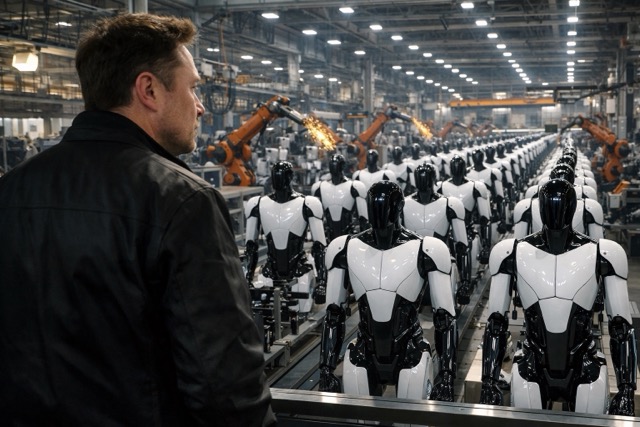
The timeline for Tesla's next-generation artificial intelligence hardware has hit a significant roadblock. The company's highly anticipated AI6 chip, the neural network processor destined for its Full Self-Driving suite, Optimus humanoid robots, and Dojo supercomputing clusters, is facing an approximate six-month delay. This postponement, pushing mass production into late 2027, is directly attributed to production challenges at a key partner: Samsung's 2-nanometer fabrication process has slipped, delaying a critical multi-project wafer run essential for prototyping and validation.
A Pattern of Semiconductor Setbacks
This is not an isolated incident for Tesla's silicon ambitions. The delay of the AI6 chip follows a similar pattern of optimistic projections followed by tangible slippage. The current-generation AI5 chip was declared "finished" by CEO Elon Musk in mid-2023, then "almost done" in January 2024, yet it has still not reached volume production. This recurring theme highlights the immense complexity and unforgiving physics of cutting-edge semiconductor manufacturing, especially at the bleeding-edge 2nm node. For a vertically integrated company like Tesla, which designs its own silicon to maintain a competitive moat in AI, these foundry delays create a cascading effect on its entire autonomy and robotics roadmap.
The Ripple Effect on Tesla's AI Ecosystem
The implications of the AI6 delay extend far beyond a simple calendar shift. This processor is designed to be the computational heart of Tesla's three-pillar AI strategy. In vehicles, it promises the step-change in processing power necessary for more advanced autonomous driving. For Optimus, it is central to real-time environmental processing and task execution. In data centers, it would fuel the training of the very AI models the hardware is built to run. A six-month pushback, therefore, risks slowing iterative progress across all these domains. It places additional pressure on the soon-to-arrive AI5 hardware to deliver substantial performance gains and may force Tesla to further optimize its software algorithms to extract maximum efficiency from current-generation silicon.
For Tesla owners and investors, the news is a mixed bag that underscores both challenge and ambition. On one hand, the delay tempers near-term expectations for a revolutionary leap in FSD capability tied to new hardware. It suggests that the evolution of Tesla's autonomy will remain more incremental in the coming years, reliant on software updates leveraging existing Hardware 4 and the forthcoming AI5. For investors, it highlights the execution risks inherent in Tesla's vertical integration strategy, where the company is now subject to the same brutal realities of semiconductor scaling as every other tech giant.
However, the very existence of the AI6 project confirms Tesla's long-term commitment to dominating through proprietary silicon. The pursuit of a 2nm chip places it in an elite group of companies designing for that process, alongside the likes of Apple and NVIDIA. The delay, while frustrating, is a symptom of operating at the frontier. The critical question will be how Tesla manages this interim period—whether it can continue to demonstrate meaningful AI progress with its current hardware stack and maintain its narrative of inevitable technological dominance until its next-generation silicon finally arrives.