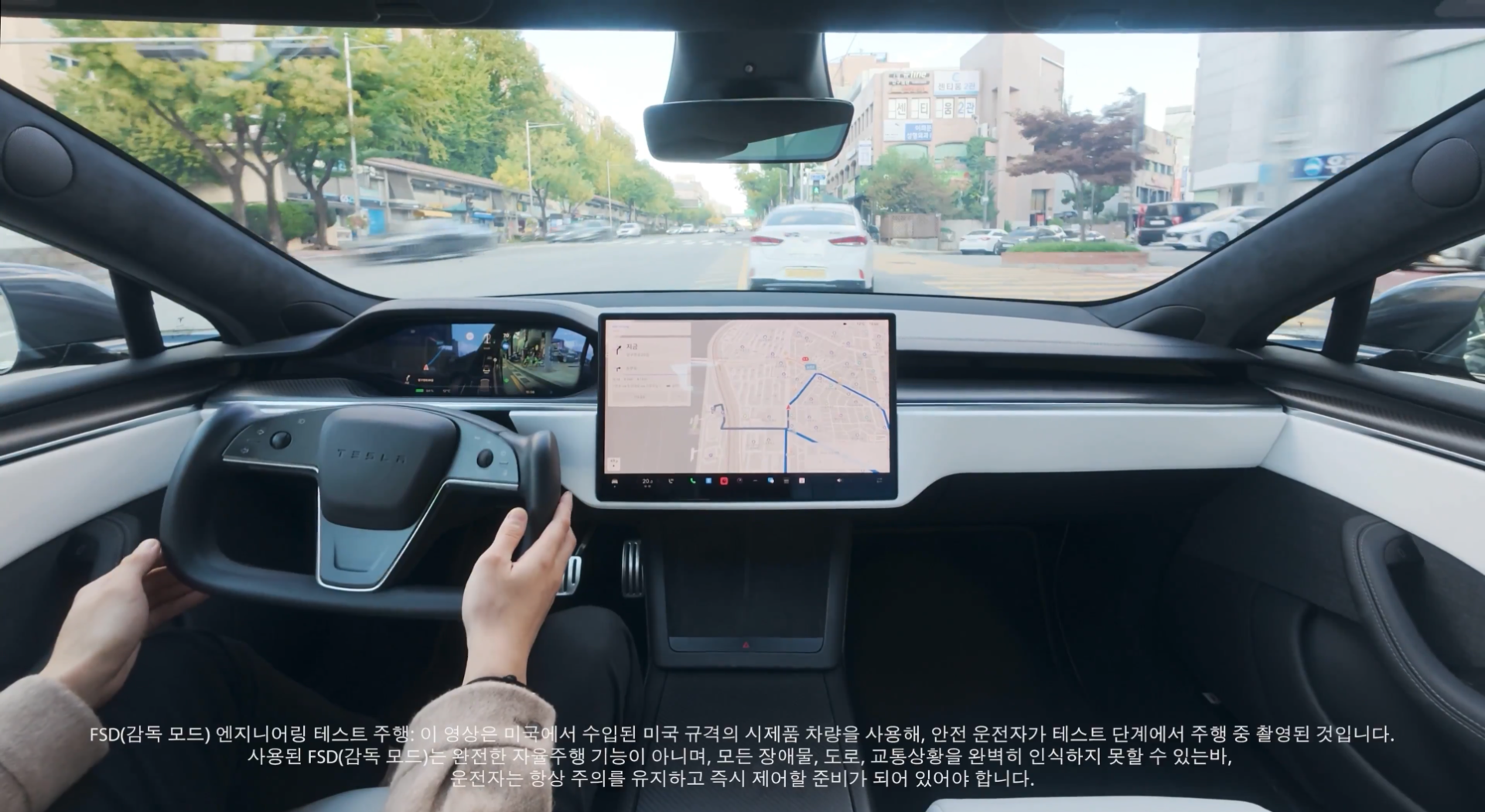
In a stark regulatory escalation, South Korean authorities have issued a direct and severe warning to Tesla owners: attempting to unlock the company's Full Self-Driving (FSD) software on vehicles not officially approved for the feature is a criminal offense that could result in imprisonment. This move by the Ministry of Land, Infrastructure and Transport (MOLIT) targets a growing gray market of third-party "jailbreaking" services and highlights the intense global scrutiny over the certification and deployment of advanced driver-assistance systems.
The Legal Crackdown on Software "Jailbreaking"
The South Korean ministry's statement clarifies that enabling FSD on a Tesla not homologated for the feature violates the country's Motor Vehicle Management Act. Specifically, it constitutes the illegal alteration of a registered vehicle's software and capabilities. While the core Autopilot suite is approved, the more advanced FSD Beta functionality, which includes features like automatic lane changes and city street navigation, has not received regulatory clearance in South Korea. Authorities have emphasized that penalties are severe, with violations carrying the potential for up to one year in prison or a fine of 10 million won (approximately $7,300 USD). This legal stance treats software modification with a seriousness previously reserved for major mechanical tampering.
Why South Korea is Drawing a Hard Line
This aggressive posture is rooted in fundamental concerns over road safety and regulatory sovereignty. South Korean officials have expressed apprehension that FSD, untested and unapproved for local road conditions, traffic patterns, and signage, could pose an unacceptable risk. The government's position is that allowing uncertified autonomous driving software to operate on public roads undermines national safety standards and certification processes. Furthermore, the crackdown serves as a deterrent against a burgeoning underground industry where vendors offer to unlock FSD for a fraction of Tesla's official subscription cost, a practice that also raises issues of software piracy and warranty voidance.
The situation underscores a broader, global tension between rapid EV software innovation and slower-moving governmental approval frameworks. Tesla, known for its over-the-air update capability, can deploy features almost instantaneously, but regulators in many markets insist on thorough, localized validation. South Korea's hardline legal warning is one of the most forceful responses to this disconnect, setting a precedent that other nations observing the FSD rollout may choose to follow.
Implications for Tesla Owners and the Broader EV Market
For current and prospective Tesla owners in South Korea, the message is unequivocal: pursuing unofficial FSD activation is a high-stakes legal gamble. Beyond the direct penalties, any modified vehicle would likely be flagged during mandatory inspections, potentially leading to deregistration. For Tesla as a company, this creates a significant market barrier, putting pressure on it to expedite the local certification process for FSD to meet consumer demand legally. Investors should watch this development closely, as it exemplifies the regulatory hurdles that can delay the global monetization of Tesla's most advanced—and profitable—software suite.
Ultimately, South Korea's warning is a landmark moment in the maturation of the electric vehicle industry. It signals that as cars become software-defined platforms, modifying that software without authorization will be treated not as a trivial hack, but as a serious infraction with real-world safety and legal consequences. The era of the "wild west" for autonomous driving software modifications is facing its first major legal showdown.