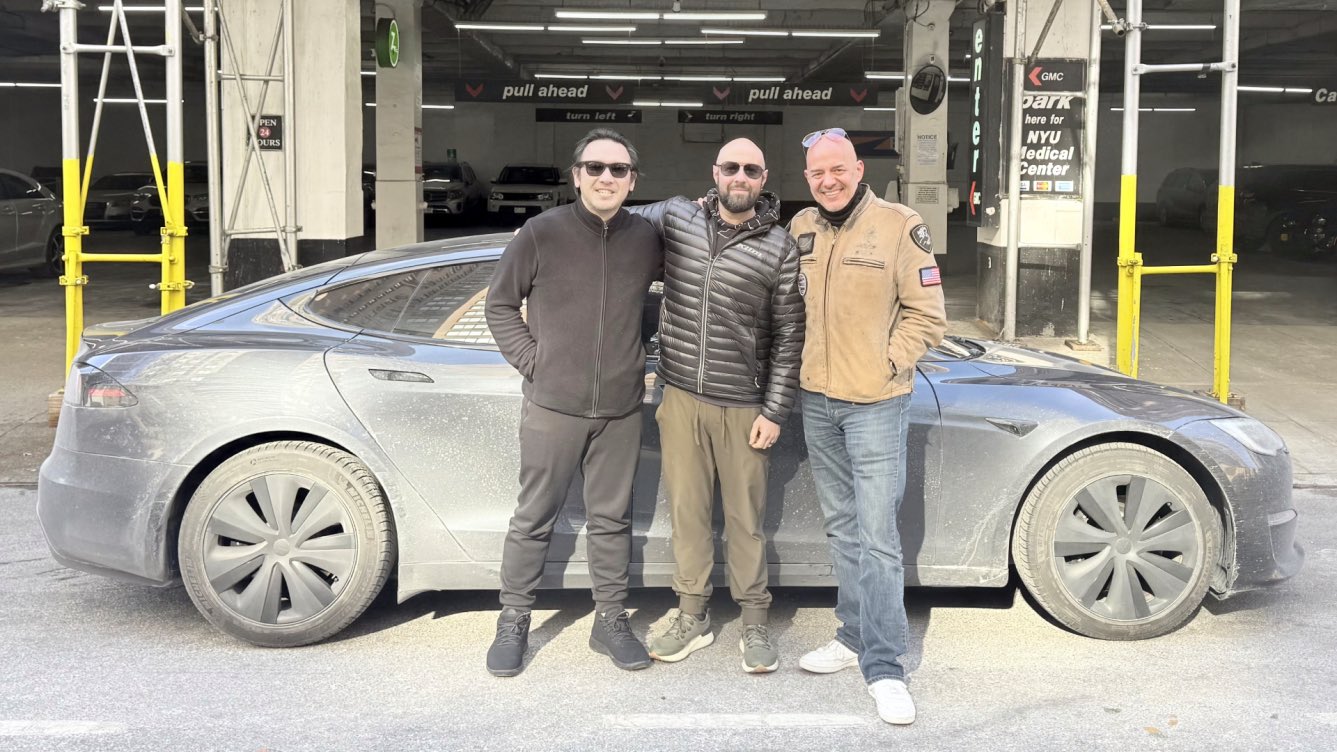
In the annals of automotive lore, few challenges carry the mystique of the Cannonball Run—the unsanctioned, high-speed dash from New York to Los Angeles. That legend has now been irrevocably rewritten, not by a daring human driver, but by silicon and software. A modified Tesla Model S has completed the first fully autonomous, zero-intervention Cannonball Run, a staggering 2,900-mile journey that marks a watershed moment for self-driving technology and its most visible pioneer.
Apocalyptic Conditions Test the Silicon Driver
The feat is remarkable not just for its completion, but for the brutal conditions the vehicle overcame. The team faced torrential rains, high winds, and even sections of snow across the heartland, a gauntlet of "apocalyptic weather" that would test the limits of any driver. The Tesla Model S, equipped with a developmental version of the company's Full Self-Driving (FSD) system and additional computing hardware, navigated this entirely on its own. Every lane change, every merge onto a busy interstate, every decision to slow for a storm was made by the AI, relying on its vision-based neural networks to interpret a chaotic and waterlogged world.
Beyond the Record: The Data Goldmine
While the elapsed time is being verified, the true victory lies in the data. This was a monumental stress test under real-world, long-distance conditions that no closed-course trial could replicate. The system had to handle the mundane—construction zones, erratic truckers, worn-out lane markings—and the extreme, all without a human hand touching the wheel. For Tesla, the terabytes of information gathered are invaluable, providing a unique feedback loop to train and refine its FSD algorithms against edge cases encountered across an entire continent.
The implications of this successful run extend far beyond a single record. It demonstrates a critical leap in reliability and endurance for autonomous systems, suggesting the technology is inching closer to handling the vast majority of driving scenarios. This directly challenges the narrative that true hands-free, cross-country travel is a distant fantasy. However, it also raises immediate questions about regulatory frameworks and the legal distinctions between a developmental test and consumer-ready technology.
For Tesla owners and investors, this milestone is a potent signal. It validates the company's contentious vision-based approach to autonomy during a period of intense scrutiny. The demonstration of such robust system resilience could accelerate regulatory confidence and, ultimately, the monetization of the FSD suite. For the broader EV market, it underscores that the future of transportation is not just electric, but increasingly automated, with Tesla aggressively staking its claim at the forefront. The Cannonball record is no longer just about speed; it's about the silent, relentless efficiency of the software driver.