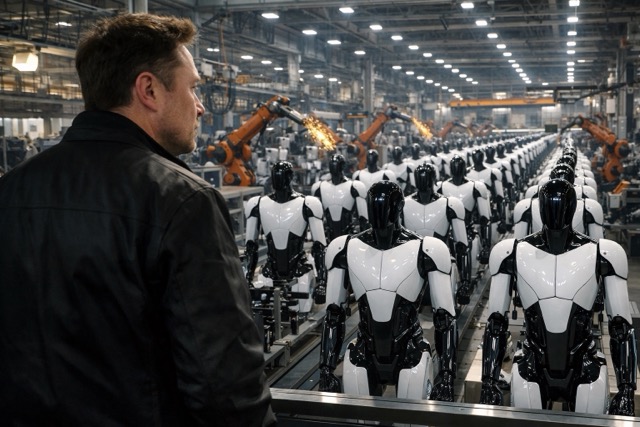
In a terse post on his social media platform X, Tesla CEO Elon Musk delivered a long-awaited—and ultimately underwhelming—update on the company's humanoid robot project, Tesla Optimus. On the final day of a crucial first quarter, a period during which many anticipated a major "Gen 3" reveal, Musk confirmed that "Optimus 3 is mobile" but still requires "some finishing touches" before a public demonstration. This muted announcement has tempered expectations for a technology that Musk himself has called more valuable than Tesla's entire car business, signaling that the path to a commercially viable robot remains longer than some investors had hoped.
A Pivotal Quarter Ends With a Whimper, Not a Bang
The timing of Musk's update is as telling as its content. The first quarter of 2024 had been circled by Tesla observers as a potential showcase moment for the next generation of Optimus. Ending this period with a brief social media post acknowledging the robot is merely "mobile" falls far short of the dramatic, choreographed reveals typical of Tesla's product launches. This suggests that the engineering challenges in creating a dexterous, useful, and affordable humanoid robot are proving formidable. The update prioritizes managing expectations over generating excitement, a strategic shift that acknowledges the complex reality of robotics development compared to the more established field of electric vehicles.
Decoding "Mobile" and "Finishing Touches"
For a project of this ambition, the specific language Musk uses is critical to parse. Stating that Optimus 3 is "mobile" indicates foundational locomotion is functional, but it leaves vast questions unanswered about its capabilities. Can it navigate complex, unstructured environments? Can it manipulate objects with human-like precision and reliability? The vague mention of "some finishing touches" could range from software refinement and safety validation to fundamental hardware redesigns. In the high-stakes world of robotics, these final steps are often the most difficult, requiring immense amounts of real-world testing and iterative improvement to move from a lab prototype to a viable product.
The broader context for this update is a Tesla at a crossroads. With increased competition in the core EV market pressuring sales and margins, the company's long-term valuation has been heavily tied to its "future tech" pillars: Full Self-Driving (FSD) software and the Optimus robot. While FSD continues to see iterative updates, Optimus represents the ultimate moonshot. A compelling demonstration could have reinvigorated the growth narrative; a delayed, subdued update instead refocuses attention on Tesla's nearer-term automotive challenges. It underscores the immense technical risk inherent in betting on a general-purpose humanoid robot, a field where countless others have failed.
Implications for the Tesla Ecosystem
For Tesla owners and investors, this Optimus update serves as a reality check. It strongly implies that any meaningful revenue from the humanoid robot is years, not quarters, away. Investors banking on a near-term catalyst from robotics may need to recalibrate their timelines, focusing more closely on Tesla's automotive execution, energy storage growth, and the commercialization of FSD. For owners, it reaffirms that the company's primary focus and resource allocation must remain on its vehicles and core software in the immediate future. While the Optimus vision is undeniably transformative, its journey from a mobile prototype to a factory-ready or consumer-ready assistant just became a longer, more deliberate march—one that will require significant patience from the Tesla community.