Elon Musk has never been shy about blurring the line between his companies, and his latest comments suggest that boundary is about to get even thinner. The Tesla CEO now says every Tesla vehicle could ship with built-in Starlink connectivity as early as next year, a move that would fundamentally reshape how the automaker's fleet stays online. The revelation lands alongside news that Tesla's AI4.5 hardware is undergoing significant changes — two developments that, taken together, point toward a future where unsupervised Full Self-Driving depends on satellite internet as much as it does on cameras and compute.
Why Starlink Inside Every Tesla Changes the Game
Tesla vehicles already rely on cellular LTE connections for navigation, streaming, over-the-air updates, and remote diagnostics. That approach works well in populated areas but falters in rural stretches, underground garages, and disaster zones where cell towers fail. Integrating Starlink directly into the vehicle would give every Tesla a persistent, high-bandwidth link to the internet regardless of terrestrial infrastructure. For Musk, the logic is characteristically ambitious: a robotaxi fleet that cannot communicate is a robotaxi fleet that cannot earn. Unsupervised FSD at scale will demand reliable telemetry, remote assistance fallbacks, and continuous software updates — all of which satellite connectivity can deliver where cellular cannot.
The timing matters. Musk's claim of next year is aggressive even by Tesla standards, and it raises immediate questions about antenna design, power draw, and regulatory approval. Starlink terminals have historically been bulky and energy-hungry, though SpaceX has steadily miniaturized the technology. Fitting a dish — or a phased-array equivalent — into a vehicle roof without compromising range or aesthetics is a genuine engineering challenge. Tesla has not confirmed pricing, hardware specifics, or whether existing owners could retrofit their cars.
AI4.5 Signals a Hardware Refresh in Motion
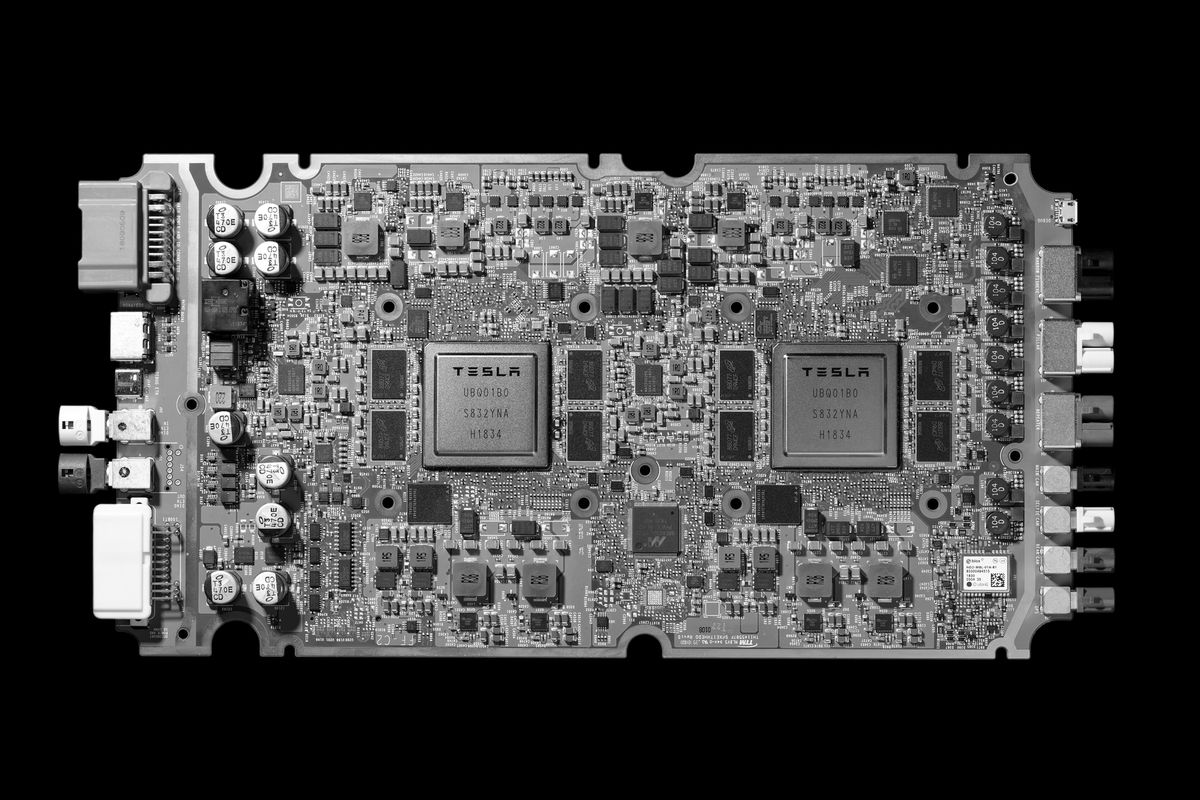
The Starlink news arrives as Tesla quietly evolves its onboard compute. Reports indicate that AI4.5 represents a transitional step between the current AI4 hardware and the eventual AI5 platform, with changes that could affect sensor fusion, processing headroom, and how vehicles handle the massive data loads of unsupervised driving. A car that streams high-resolution video and decision logs to the cloud — or receives remote operator input in edge cases — needs bandwidth that cellular networks struggle to guarantee at scale.
This is where the two stories converge. Unsupervised FSD is not merely a software milestone; it is an infrastructure problem. Tesla must guarantee that millions of vehicles can upload training data, download model updates, and maintain safety-critical connections simultaneously. Starlink offers Tesla a vertically integrated solution no competitor can easily match — SpaceX builds the satellites, Tesla builds the cars, and Musk controls the pipeline between them.
What It Means for Owners and Investors
For Tesla owners, the promise is compelling: connectivity that works on remote highways, during natural disasters, and in dead zones where conventional EV telematics go dark. But it also invites scrutiny over subscription costs. Tesla already charges for Premium Connectivity, and bundling Starlink service could create a new recurring revenue stream — or a new expense for drivers. Retrofitting the existing fleet appears unlikely in the near term, meaning current owners may watch from the sidelines.
For investors, the strategic implications are larger. A Starlink-equipped Tesla fleet strengthens the case for the robotaxi network, deepens the moat around Tesla's data advantage, and creates cross-company synergies that analysts have long speculated about. Yet execution risk remains high. Musk's timelines have slipped before, and regulators will have questions about satellite-linked driving systems. The vision is bold — but as always with Tesla, the gap between announcement and delivery is where the real story unfolds.