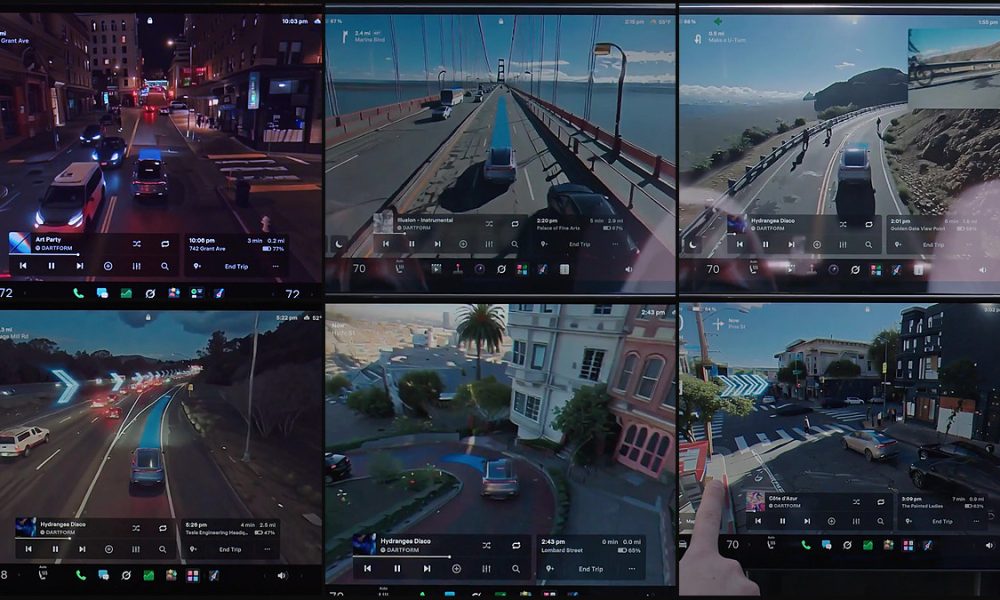
Tesla's rollout of Full Self-Driving version 15 over the weekend introduced what may be the most visually striking interface upgrade in the company's history — a feature called "Reality View" — and within hours, early testers converged on a single, consistent complaint. The immersive new visualization, which renders the vehicle's surroundings in rich, real-time detail on the center display, suffers from noticeable input lag, according to first impressions from drivers who installed the software on Saturday. In characteristic fashion, Elon Musk has already signaled that a fix is on the way.
What Reality View Actually Changes
Reality View represents a meaningful leap beyond the abstract, low-fidelity rendering that Tesla has used for years to depict surrounding traffic, lane lines, and obstacles. The v15 suite rebuilds that visualization around a denser, more photorealistic environment, giving drivers a far clearer window into what the FSD neural network perceives in real time. For a system that still requires human supervision, that transparency matters: the better the display communicates intent and awareness, the easier it is for a driver to trust — or correct — the software. Early adopters praised the fidelity of the new view, but the responsiveness gap between their inputs and the on-screen response quickly became the talking point.
The Lag Problem — and Musk's Answer
Input lag in a driving visualization is more than a cosmetic annoyance. When a driver taps, pans, or adjusts the view while the car is in motion, a delayed response can create a mismatch between what the screen shows and what is actually happening around the vehicle. The complaint surfaced almost immediately after the Saturday release, and Musk's response followed the pattern Tesla watchers know well: acknowledge the issue publicly, then point to an over-the-air remedy. Because Tesla controls both the software stack and the hardware it runs on, the company can tune rendering performance through incremental updates rather than waiting for a model-year refresh — a structural advantage no legacy automaker can easily match.
Why This Matters Beyond One Feature
The episode is a useful window into Tesla's broader software-first strategy. Version 15 arrives as the company faces intensifying scrutiny of its driver-assistance systems from regulators and the public alike, and features like Reality View are partly about building confidence through clarity. A laggy interface undercuts that mission, which explains the speed of the response. It also illustrates the double-edged nature of shipping ambitious software early: Tesla gains real-world feedback at massive scale, but every rough edge plays out in public. Investors should read the fix as routine — over-the-air polish is the norm, not the exception — but one that carries outsized reputational weight while FSD remains central to the company's autonomy narrative.
For Tesla owners, the practical takeaway is straightforward: expect a refinement update in the near term, and treat the first v15 builds as a work in progress. For investors, the Reality View saga is a reminder that Tesla's valuation rests heavily on the perception of its artificial intelligence and autonomy progress. A single lag complaint will not move the stock, but how quickly and cleanly Tesla resolves it — and how polished v15 feels by the time it reaches a wider fleet — will shape the conversation heading into the company's next autonomy milestones.