Tesla’s ambitious retail strategy in Japan is paying off in spectacular fashion. New registration data for April 2026 reveals the automaker delivered 1,041 vehicles in the country, marking a staggering 200% year-over-year increase. This explosive growth signals that Tesla is finally cracking one of the world’s most complex and competitive automotive markets, leveraging a localized approach that goes far beyond simply opening showrooms.
A Localized Approach to Retail
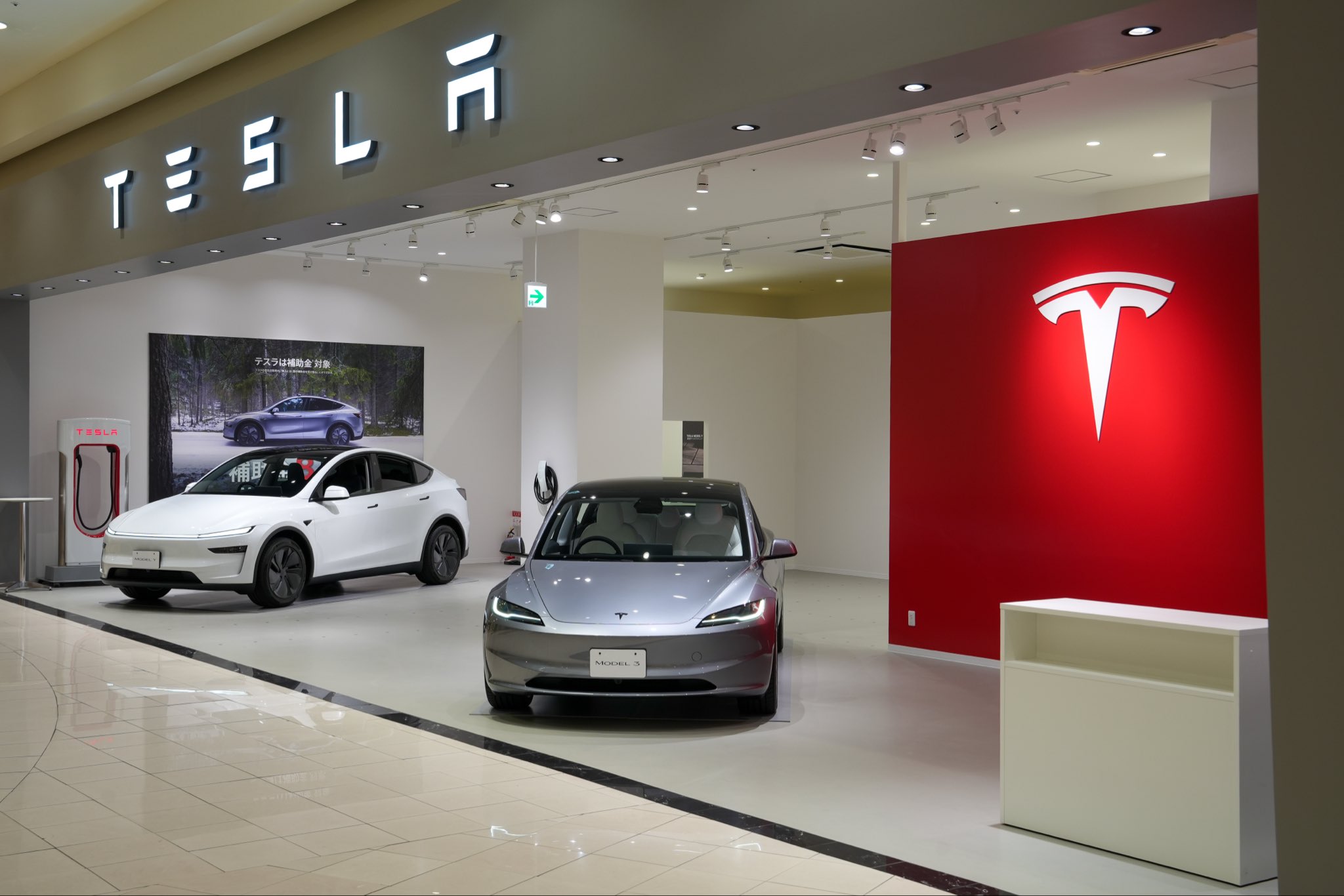
Rather than relying solely on its direct-sales model, Tesla has aggressively expanded its physical footprint in Japan with a focus on high-traffic urban centers. The company opened multiple new “Gallery” locations in Tokyo, Osaka, and Nagoya over the past year, strategically placing them near major train stations and shopping districts. These aren’t just sales points; they are immersive brand experiences where potential buyers can touch, feel, and test-drive vehicles without any sales pressure. This tactile approach is critical in a market where consumers place a premium on in-person evaluation and trust-building before making a high-value purchase like an electric vehicle.
Overcoming Cultural and Infrastructure Hurdles
Japan’s EV market has historically been slow to adopt battery-electric vehicles, hampered by a dense network of keicar micro-cars and robust hybrid offerings from domestic giants like Toyota and Honda. Tesla’s April surge suggests its strategy is effectively neutralizing these obstacles. The company has partnered with local charging networks to expand Supercharger coverage in apartment-dense areas, a key pain point for Japanese drivers who lack private garages. Furthermore, Tesla’s emphasis on over-the-air software updates and Autopilot features resonates with a tech-savvy demographic that values innovation, even as it contends with strict local regulations on autonomous driving.
The 1,041 units delivered in April represent more than just a monthly sales record; it’s a clear signal that Tesla is gaining meaningful traction against established domestic automakers. This volume is particularly impressive given Japan’s overall EV market share remains below 3%. Tesla’s growth is outpacing the broader market by a wide margin, indicating that its targeted retail strategy is converting curiosity into sales at a higher rate than competitors. The Model Y has been the primary driver, benefiting from its status as a globally recognized crossover that fits Japanese parking and road size constraints.
Implications for Tesla Owners and Investors
For current Tesla owners in Japan, this growth means a rapidly expanding service and charging network, reducing range anxiety and wait times for repairs. Investors should view the 200% sales spike as validation of Tesla’s ability to adapt its retail model to unique cultural contexts. It suggests that the company’s global expansion playbook is not a one-size-fits-all template, but a flexible strategy that can be tuned for high-barrier markets like Japan. If this momentum continues, Japan could become a significant contributor to Tesla’s quarterly delivery numbers, offsetting potential slowdowns in other regions and strengthening the case for a sustained premium valuation on the stock. The April data is more than a headline—it is a proof point that Tesla’s retail innovation can drive real, measurable growth even in the most challenging environments.