Tesla's first-quarter delivery report sent a predictable shockwave through the financial markets, with the company posting its first year-over-year decline in deliveries since the pandemic. Wall Street's immediate reaction was a sharp sell-off, framing the figures of 386,810 vehicles delivered as a clear sign of stalling demand in an increasingly crowded electric vehicle market. However, a deeper analysis reveals a more nuanced story—one that suggests CEO Elon Musk's long-term strategic vision is beginning to materialize, precisely as he forecast.
Beyond the Headline Numbers: A Strategic Pivot in Progress
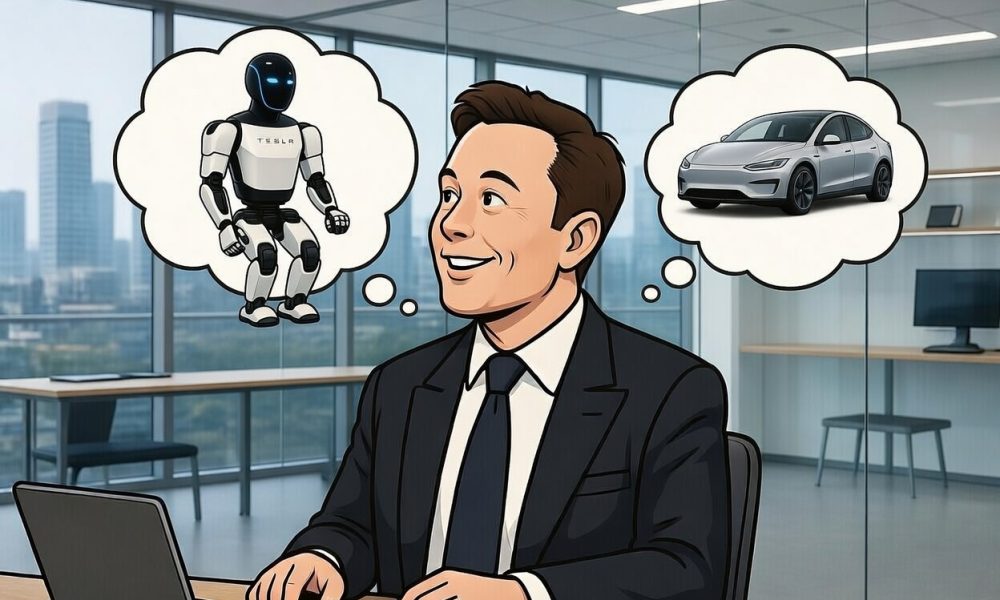
While the delivery dip is real, context is crucial. The quarter was impacted by production constraints related to the updated Model 3 ramp at Fremont, factory shutdowns due to shipping diversions from the Red Sea conflict, and an arson attack at Gigafactory Berlin. More importantly, the figures underscore a fundamental shift Musk has been telegraphing for years. Tesla is no longer a company that can be measured solely by quarterly automotive volume growth. The narrative is expanding beyond the car itself to encompass the ecosystems of artificial intelligence, robotics, and autonomous driving—areas where Tesla is investing billions.
The Validation of a Broader Vision
Musk has consistently argued that Tesla's value should be viewed through the lens of a technology company solving autonomy, not just an automaker selling EVs. The Q1 dynamics, including heightened competition and incentive changes, validate his argument that the traditional auto business is becoming less central. The energy storage division, for instance, deployed a record 4.1 GWh in Q4 2023, a segment growing at a staggering pace. Furthermore, the company's massive compute cluster for Full Self-Driving (FSD) training represents an investment in a software-driven future where revenue is increasingly recurring and high-margin, decoupled from the cyclicality of vehicle production.
This quarter may be remembered as the moment the market was forced to look at Tesla differently. The focus is now intensifying on the imminent Robotaxi unveiling on August 8 and the progress of the next-generation vehicle platform. These are the pillars of Musk's "Tesla as an AI/robotics company" thesis. The automotive division remains the cash engine funding this ambitious leap, but its quarterly fluctuations are becoming a less definitive indicator of the company's overall trajectory and long-term potential.
For Tesla owners and investors, the implications are significant. The company's strategy demands patience, as it navigates a transitional period between two massive growth waves. Owners can expect accelerated development in FSD capabilities and the ecosystem of products around their vehicles. Investors must recalibrate their metrics, looking beyond simple delivery totals to milestones in AI training, FSD adoption rates, and energy business growth. The Q1 delivery report wasn't a story of failure, but a chapter in a larger, more complex story of transformation that Musk has been writing for years.