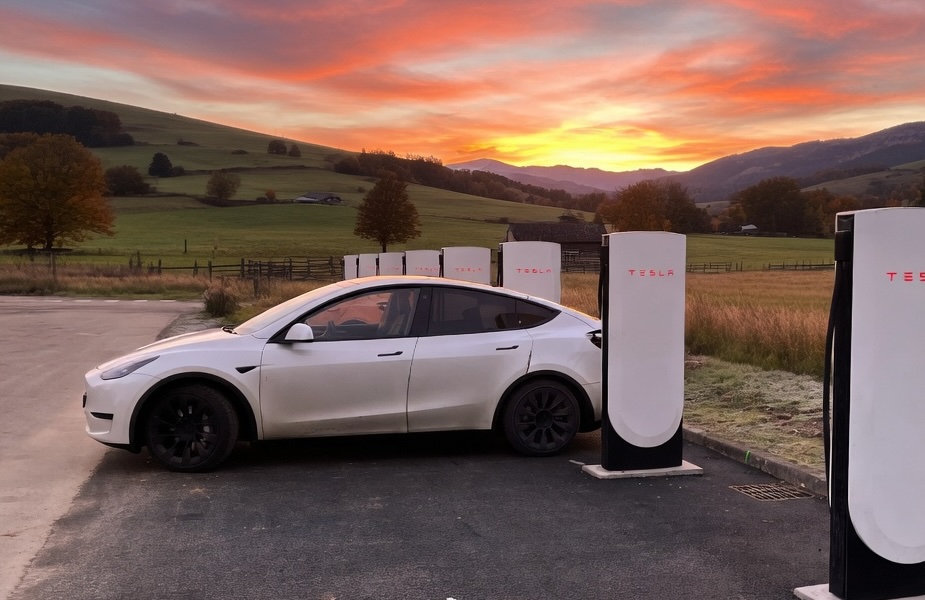
Tesla has pulled back the curtain on the capital required to join its charging empire, revealing a significant but potentially lucrative price of entry for businesses. A newly public configurator for its Supercharger for Business program details that a standard 8-stall V4 Supercharger site carries a total estimated cost of $940,000, with hardware alone accounting for roughly $500,000. This move demystifies the investment for hotels, retailers, and other property owners, transforming Tesla's network expansion from a proprietary project into a scalable partnership model with clear, if variable, financial projections.
The Sticker Shock and the Structure
Breaking down the nearly seven-figure total, the configurator outlines that beyond the half-million dollars in hardware, businesses must budget for substantial "soft costs." These include critical expenses like construction, electrical work, permitting, and ongoing maintenance. The all-in figure solidifies Tesla's position as a premium infrastructure provider and sets a high bar for potential host sites, which will need ample space and robust electrical capacity. This transparent pricing shifts the capital expenditure burden onto partners while allowing Tesla to scale its network footprint without directly financing every new installation.
A Variable ROI and Tesla's Guaranteed Cut
Perhaps more revealing than the upfront cost is the financial return model Tesla presents. The configurator's ROI estimates are highly location-dependent, projecting a payback period as short as 4 years in a high-demand market like San Francisco, stretching to 7 years in Manhattan. Central to this model is Tesla's own revenue share: the company charges partners a flat $0.10 per kilowatt-hour dispensed. This creates a predictable, usage-based income stream for Tesla, effectively monetizing its driver ecosystem and software platform regardless of the local site's profitability timeline for the host.
The program's economics underscore a fundamental truth about the EV charging business: utilization is everything. A site in a coastal urban corridor with a dense concentration of Tesla vehicles will outperform a rural location, making site selection the single most critical factor for a partner's success. Tesla's tool provides essential data-driven projections, but it ultimately places the onus of due diligence on the business partner to ensure their property can attract consistent charging demand.
For the broader electric vehicle industry, this move accelerates the transition to a more distributed and partner-funded charging infrastructure. It also subtly reinforces Tesla's network as a revenue-generating asset, not just a cost center. By inviting third-party capital, Tesla can focus its resources on innovation and high-priority corridors while letting market demand guide expansion in other areas through its partners.
For Tesla owners, this business-facing expansion promises a more rapid and widespread proliferation of reliable V4 Superchargers, particularly at convenient destinations like shopping centers or resorts. For investors, the program crystallizes the monetization potential of the Supercharger network, revealing a high-margin, recurring software and services revenue stream that is directly tied to the growing fleet of vehicles on the road. The success of Supercharger for Business now hinges on convincing enough partners that hosting a station is not just a utility, but a compelling $940,000 investment in the future of mobility.