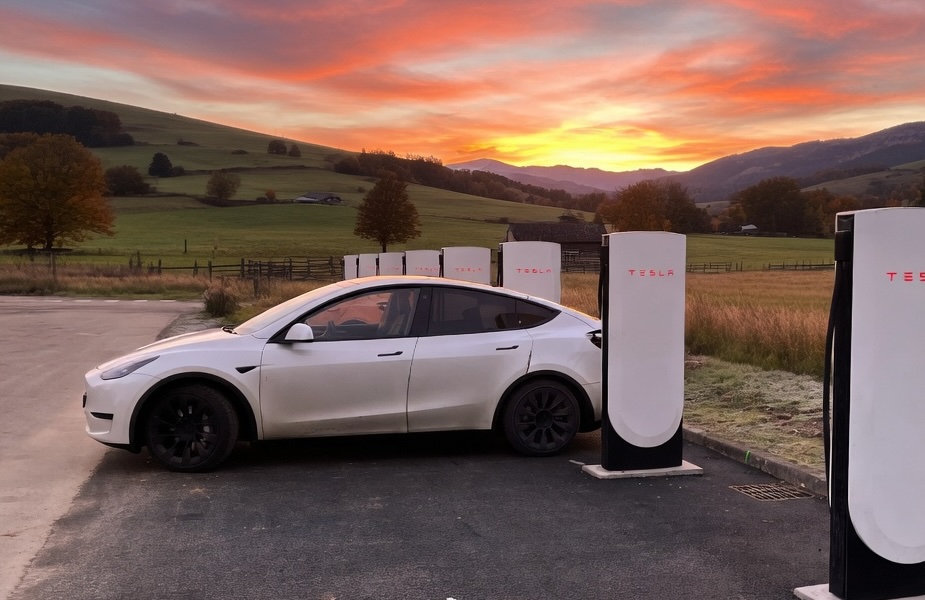
While Tesla has long been the benchmark for electric vehicle charging infrastructure, its competitors are now deploying a surprisingly modern and digital-first strategy to combat one of the most persistent pain points for EV drivers: waiting in line. The charging experience remains the single biggest differentiator in the EV market, and as battery ranges converge, the battle is shifting from kilowatts to convenience. This week, Tesla itself introduced a new Supercharging Queue system that leverages geographic data to assign spots without physical confrontation. However, some of Tesla's biggest rivals are leapfrogging this approach by integrating full reservation systems and wait-time prediction models directly into their native apps, offering a level of predictability that even the Supercharger network currently lacks.
Digital Reservations Replace Physical Lines
The core of this modern approach is the elimination of the physical queue. Instead of drivers jockeying for position or relying on a first-come, first-served scrum, networks like Electrify America and IONITY are testing or deploying systems that allow drivers to reserve a charging spot in advance. This is a fundamental shift from Tesla's current model, which relies on real-time availability but not a hold system. By integrating with vehicle navigation, these rival networks can predict arrival times with high accuracy, ensuring a stall is open when the driver pulls up. This reduces the anxiety of arriving at a station only to find six cars waiting, a scenario that Tesla’s new queue system aims to de-escalate but does not entirely prevent. The key difference is proactive booking versus reactive queuing.
Data-Driven Efficiency and Cost Savings
This move toward reservation systems is not just about customer comfort; it is a sophisticated data play. By analyzing historical usage patterns, these networks can dynamically price charging slots, encouraging off-peak usage and smoothing demand. For the operator, this means higher utilization rates without the need to immediately build more stalls. For the driver, it offers a guaranteed charge time, which is particularly valuable for commercial EV fleets and long-distance travelers. Tesla’s geographic data system is elegant for managing the immediate queue, but the rival approach of pre-booking offers a superior user experience by removing uncertainty entirely. This strategy effectively turns a potential bottleneck—the charging station—into a scheduled asset, much like a parking spot at an airport.
Implications for Tesla Owners and Investors
For current Tesla owners, the immediate benefit remains the sheer density and reliability of the Supercharger network, which still has no equal. However, the writing is on the wall: the future of charging is about time management, not just voltage. Tesla’s new queue system is a necessary patch for a growing problem, but without a reservation feature, it may soon feel outdated. For investors, this signals that the competitive moat around Supercharging is narrowing. The rivals are not just building more chargers; they are building smarter software. The company that can guarantee a seamless, wait-free experience—whether through Tesla’s geographic data or a rival’s reservation system—will ultimately win the loyalty of the mass-market EV buyer. The next 12 months will determine if Tesla integrates a reservation feature or if its rivals’ modern approach becomes the new industry standard.

![Tesla Opens Campbell River Supercharger, Closing Major Gap on Vancouver Island [British Columbia]](https://driveteslacanada.ca/wp-content/uploads/2024/09/V4Supercharger_98-scaled.jpg)