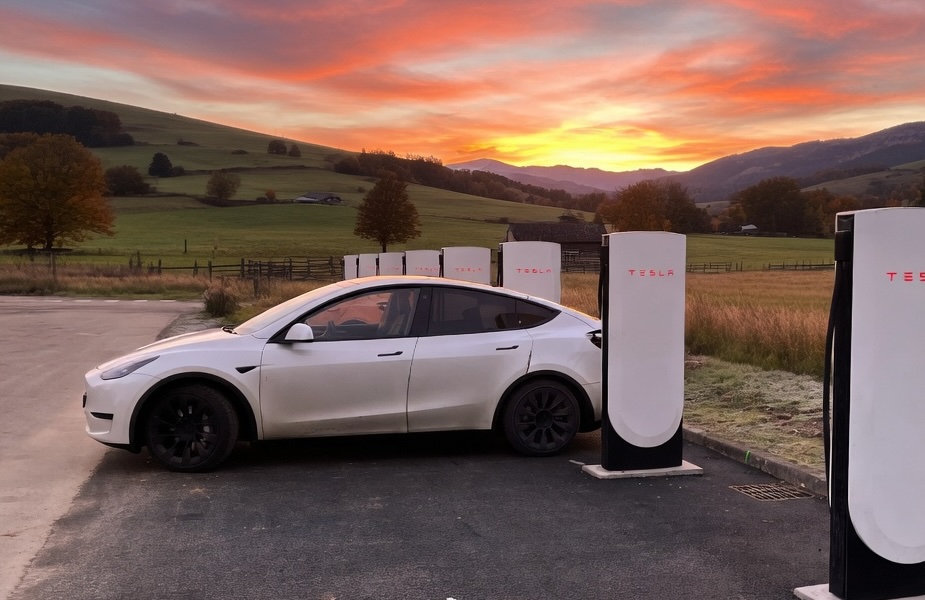
Tesla's Supercharger network, long hailed as its crown jewel and a critical competitive moat, is undergoing a radical transformation behind the scenes. The company is moving beyond simply installing more stalls and is fundamentally re-engineering the construction process itself. Following the success of its Prefabricated Supercharger Units (PSUs), Tesla has unveiled a next-generation design: the "Folding Unit" Supercharger. This innovative approach promises to slash deployment timelines and costs, accelerating the global expansion of the world's most reliable fast-charging network at a pivotal moment in the electric vehicle transition.
From Prefab to Foldable: Engineering for Speed
The new Folding Unit Supercharger represents a logical yet brilliant evolution of Tesla's modular strategy. While PSUs involved constructing major electrical components off-site in a controlled factory environment, the folding design takes prefabrication a dramatic step further. The entire charging stall structure, complete with its power electronics, cabling, and display, is now built as a single, foldable unit that can be transported on a standard trailer. On-site, the unit is simply unfolded, anchored to a pre-prepared foundation, and connected to the main power source. This process eliminates days of complex, weather-dependent assembly work by specialized electricians, turning a multi-week project into one that can potentially be completed in a matter of days.
The Strategic Imperative: Scaling at Warp Speed
This innovation is not merely an engineering exercise; it's a strategic necessity. As Tesla's vehicle deliveries continue to grow and the company opens its network to nearly every other EV manufacturer through the North American Charging Standard (NACS) adoption, demand for reliable fast charging is exploding. Traditional deployment methods are too slow and costly to keep pace. The folding unit design directly attacks the two biggest bottlenecks in infrastructure rollouts: time and labor. By drastically reducing both, Tesla can deploy more chargers with the same capital and manpower, ensuring network density and availability keep ahead of the rapidly increasing fleet of Tesla and non-Tesla EVs relying on it.
The implications for site hosts, from retail chains to highway rest stops, are equally significant. Shorter, less disruptive construction periods make hosting a Supercharger station more appealing, potentially unlocking new, high-demand locations that were previously logistically challenging. This agility allows Tesla to strategically fill gaps in the network map more efficiently, improving the overall user experience and reinforcing the network's reputation for convenience.
Implications for Owners and Investors
For Tesla owners and investors, the rollout of Folding Unit Superchargers is a profoundly positive development. Owners will benefit from a rapidly densifying and more conveniently located network, reducing range anxiety and wait times—especially critical as more vehicles gain access. For investors, this move underscores Tesla's deep expertise in solving core infrastructure challenges that continue to plague competitors. It demonstrates a relentless focus on operational efficiency and capital discipline, ensuring that every dollar invested in the Supercharger network yields a greater return in terms of stall count and strategic value. In the high-stakes race for EV dominance, the battle is won not just on the road, but at the charger. With this latest innovation, Tesla is ensuring its most powerful asset continues to pull further ahead.