Tesla’s latest Full Self-Driving (FSD) update, version 14.3.2, has delivered a dramatic leap forward for the Summon feature—making it arguably the most capable automated parking and retrieval system the company has ever shipped. However, while the car now maneuvers through tight spaces with newfound confidence, the navigation logic that guides it to your location still leaves room for improvement. This update presents a tale of two halves: one where the vehicle’s low-speed control feels almost telepathic, and another where its route planning can still baffle drivers.
Summon’s Quantum Leap in Precision and Control
According to the official release notes for FSD v14.3.2, the Actually Smart Summon (ASS) system received two critical lines of improvement. The first focuses on enhanced path planning at low speeds, allowing the vehicle to navigate around obstacles like shopping carts, tight corners, and pedestrians with far greater accuracy. The second is a new intervention feedback menu that pops up when a driver manually overrides the system. This small but powerful feature lets owners select a reason for their disengagement—such as “navigation error” or “object too close”—directly feeding real-world data back to Tesla’s AI training pipeline. The result is a Summon experience that feels less like a parlor trick and more like a genuine convenience tool, especially in crowded parking lots where every inch counts.
Navigation Stumbles: The Weak Link Remains
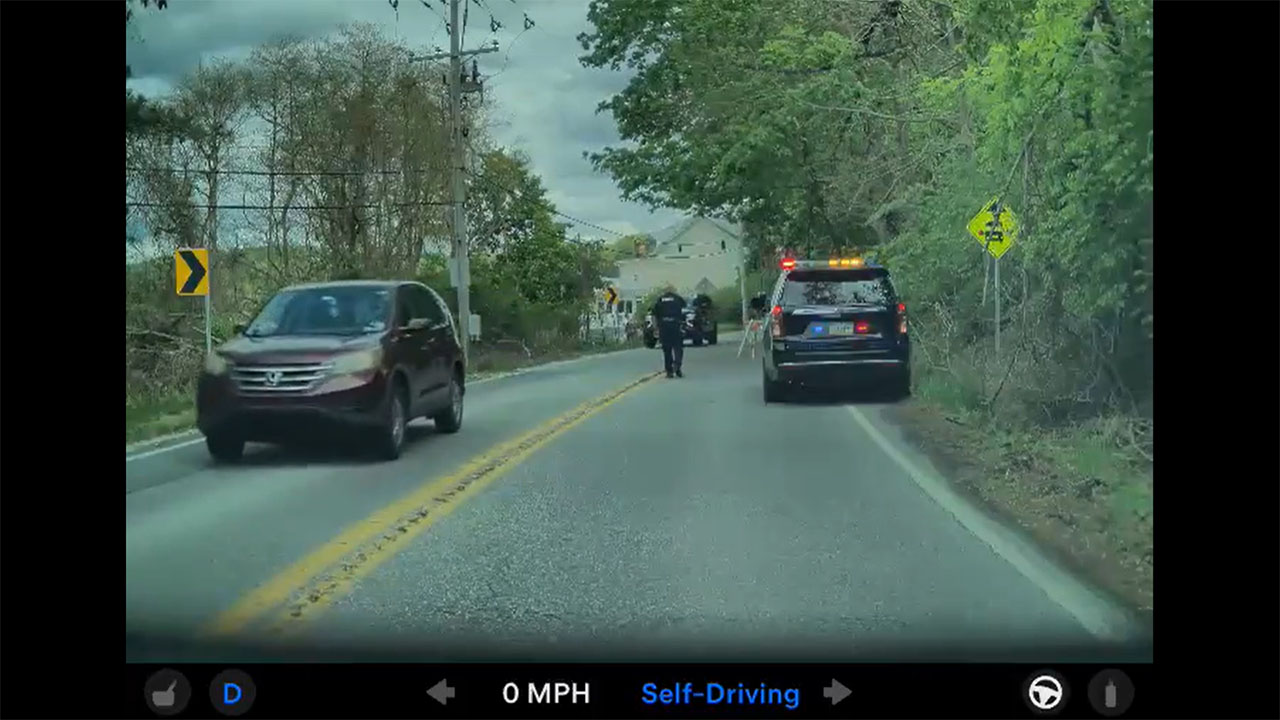
Despite the Summon improvements, FSD v14.3.2 still struggles with high-level navigation, particularly in complex environments. Multiple early testers report that while the car can now creep out of a tight spot flawlessly, it often chooses bewildering routes once it’s on the road. For example, the system might ignore a perfectly good right turn in favor of a three-point maneuver that adds minutes to the trip. This disconnect highlights a fundamental challenge: low-level control (the ability to move precisely) has advanced faster than strategic planning (the ability to choose the optimal path). Tesla’s end-to-end neural network excels at mimicking human reaction times, but it still lacks the contextual awareness to make intuitive routing decisions—especially in unfamiliar suburban or downtown grids.
This disparity is not entirely surprising. The Summon feature operates in a relatively constrained environment—parking lots and driveways—where the rules are simpler and the obstacles are predictable. In contrast, navigation on public streets involves infinite variables: traffic patterns, lane closures, pedestrian flows, and driver intent. The intervention feedback menu is a smart move by Tesla to collect targeted data on exactly where and why the system fails. By asking drivers to categorize their disengagements, the company can prioritize training for the most common navigation errors, potentially closing the gap in future updates.
What This Means for Tesla Owners and Investors
For current Tesla owners, FSD v14.3.2 is a mixed but promising update. If you rely on Summon to retrieve your car from a packed lot, you will notice a significant reduction in hesitation and awkward stops. However, do not expect the car to plan an efficient route to your doorstep—at least not yet. The intervention feedback tool also makes you an active participant in improving the system; every tap on that menu helps train the next version. For investors, this update underscores Tesla’s iterative, data-driven approach to autonomy. The rapid improvement in Summon’s capabilities is a positive signal for the underlying neural network’s flexibility, but the persistent navigation issues remind us that full self-driving at scale remains a work in progress. As Tesla collects more targeted disengagement data, the gap between Summon’s precision and navigation’s confusion should narrow—but for now, keep your hands near the wheel and your eyes on the route planner.