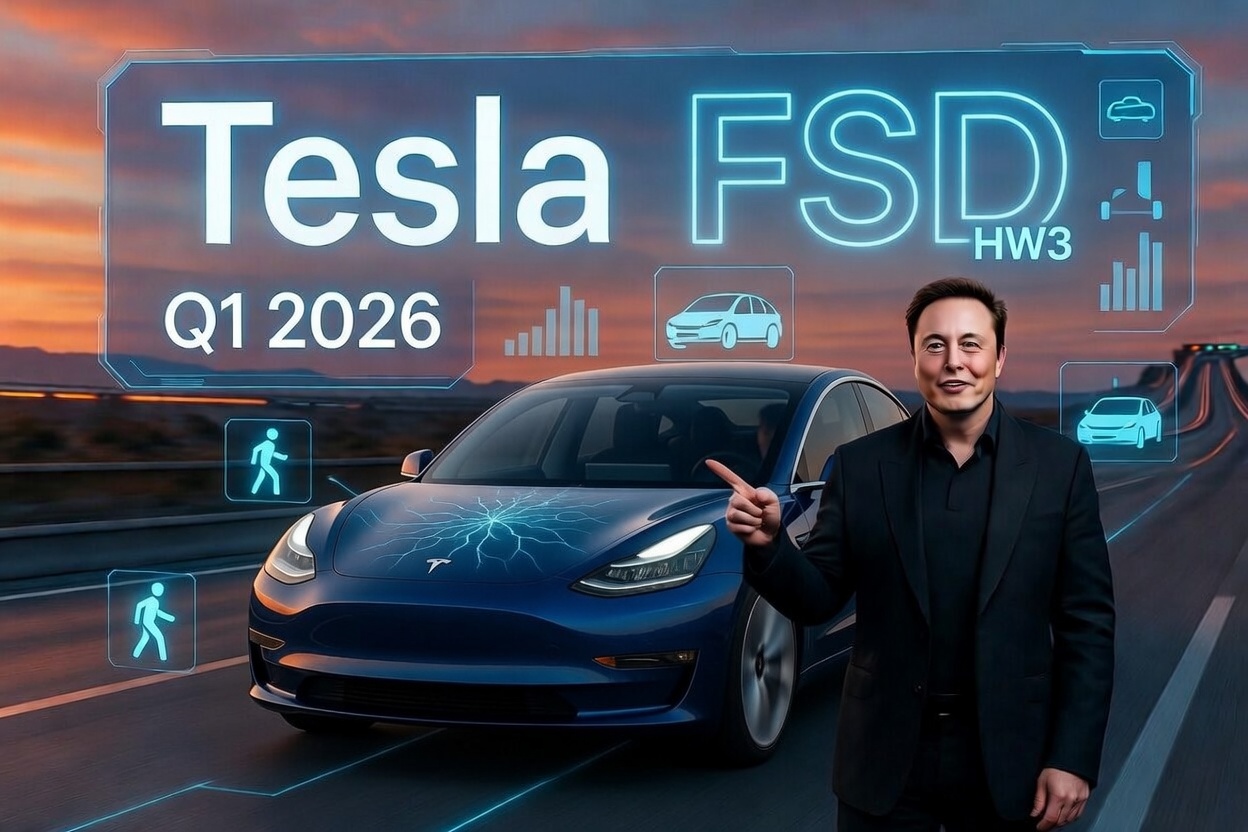
In a moment that many feared was inevitable, Tesla CEO Elon Musk delivered a sobering confirmation during the company’s Q1 2026 Earnings Call. Owners of older Hardware 3 (HW3) vehicles have now heard the definitive word: their cars will never achieve Unsupervised Full Self-Driving (FSD). The admission, though anticipated by the most observant members of the Tesla community, officially draws a hard line in the sand for the company’s autonomous driving roadmap.
The HW3 Hardware Bottleneck
The fundamental issue lies in the computational ceiling of the HW3 (AI3) platform. While these vehicles have been the backbone of Tesla’s fleet for years and have received continuous software updates, the architecture simply lacks the redundancy, processing power, and neural network capacity required for true, unsupervised autonomy. Musk explained that the demands of a robust, safety-critical system that requires zero human intervention cannot be met by the existing hardware on these cars. This means that while HW3 vehicles will continue to receive supervised FSD updates and improvements, they will never reach the promised land of a true robotaxi-capable vehicle where the driver can fall asleep at the wheel.
A New Horizon: FSD v14 Lite
To soften the blow for the broader community and to demonstrate progress, Musk confirmed that FSD v14 Lite is on track for release by June. This upcoming version is designed to be a massive leap forward, but it will be optimized for the newer Hardware 4 (HW4) and AI5 platforms. The “Lite” designation is telling; it suggests a stripped-down or preliminary version of the full v14 stack, likely focused on refining the driving experience and safety metrics before the full-scale rollout. For owners of newer vehicles, this update promises significant improvements in unprotected turns, navigation logic, and overall smoothness, moving them closer to the unsupervised dream that HW3 owners will now have to watch from the sidelines.
Implications for Tesla Owners and Investors
For the millions of HW3 owners, this news is a clear signal to temper long-term expectations regarding vehicle resale value and the specific feature set they paid for. While Tesla has historically promised retrofits, the complexity and cost of upgrading the entire sensor suite and computer on a legacy vehicle are now deemed impractical by the company itself. Investors, however, may view this as a necessary, painful step toward clarity. By officially cutting the cord on HW3 for unsupervised FSD, Tesla can focus its engineering resources entirely on the HW4 and upcoming AI5 platforms, which are the true vehicles of the robotaxi network. The announcement also creates a powerful upgrade incentive, potentially driving a new wave of vehicle sales as loyal customers look to swap their legacy cars for hardware that is actually future-proof. The path to full autonomy is now officially narrower, but for those with the right hardware, it has never been clearer.