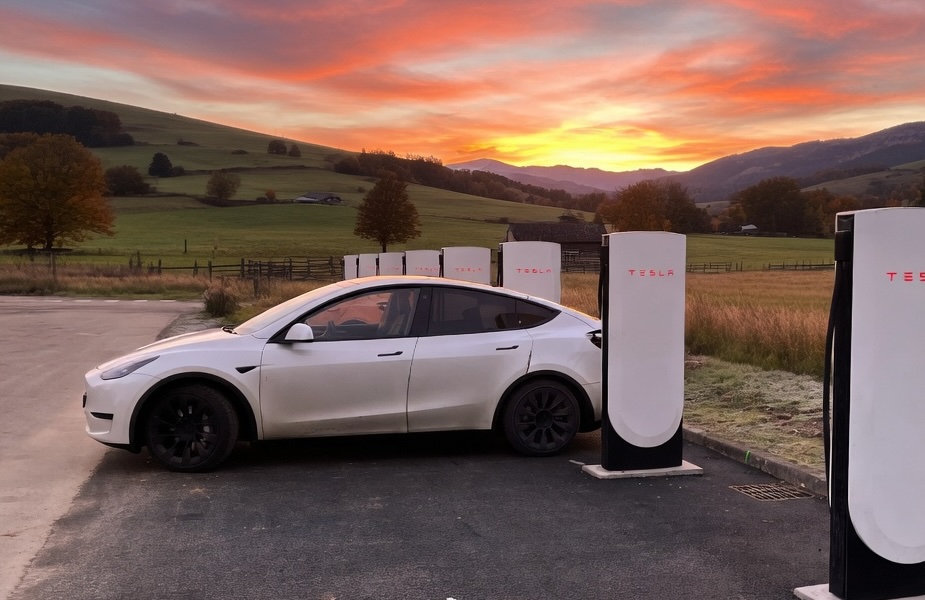
Tesla has issued a subtle but significant update to its official guidance, providing owners with clearer instructions on maximizing the longevity of their vehicle's most critical—and expensive—component: the battery pack. Buried within a recent revision to the Model Y owner's manual, and applicable across its lineup, the company now explicitly advises against daily reliance on its vaunted Supercharger network for routine charging, marking a pivotal shift towards educating consumers on long-term battery stewardship.
The Updated Guidance: AC Over DC for Daily Use
The core of Tesla's new advice centers on the fundamental difference between AC (Alternating Current) and DC (Direct Current) charging. Tesla now recommends that for daily use, owners should prioritize Level 1 or Level 2 AC charging at home or work. The manual specifically states that DC Fast Charging, like that from Superchargers, should be reserved for long-distance travel. This distinction is crucial because while Superchargers provide incredible convenience and speed, the high-power DC current generates more heat and places greater stress on the battery's chemical and physical structure over repeated sessions compared to gentler AC charging.
Understanding the "Why": Battery Chemistry and Longevity
Lithium-ion batteries degrade over time due to factors like cycle count, age, and exposure to high states of charge. However, heat is a primary accelerator of degradation. The rapid influx of energy during DC fast charging produces significant heat, which, if done consistently, can lead to increased resistance and faster capacity loss. Tesla's Battery Management System (BMS) is engineered to mitigate this, but the new guidance acknowledges that physics ultimately prevails. By steering daily users towards slower charging, Tesla is advocating for a regimen that minimizes thermal and chemical stress, thereby preserving the battery's health and the vehicle's range for years longer.
This update is not just technical housekeeping; it reflects Tesla's maturing relationship with a massive, established fleet. With millions of vehicles on the road, real-world data is underscoring the impact of charging behavior. The guidance also implicitly reinforces the value proposition of home charging installation, a key pillar of the Tesla ecosystem. For the company, promoting battery health extends beyond customer satisfaction—it directly impacts future warranty costs, resale values, and the overall perception of EV durability.
Implications for Tesla Owners and Investors
For owners, this is actionable intelligence. Those who have been using a local Supercharger as their primary "gas station" should reconsider their habits to protect their investment. The optimal daily practice is to charge at a lower AC rate, keep the state of charge between 20% and 80% for daily needs, and use Superchargers as intended: for efficient top-ups during road trips. For prospective buyers, it underscores the importance of factoring home charging access into their EV adoption plan.
From an investor perspective, this transparent guidance mitigates long-term risk. By proactively educating owners, Tesla can potentially reduce battery-related warranty claims and bolster its reputation for vehicle longevity. It also subtly shifts the narrative around Superchargers, positioning them as a robust travel network rather than a daily crutch, which may help manage congestion at high-usage urban sites. This focus on sustainability of the product itself aligns with the broader mission and supports the enduring value of the Tesla fleet.