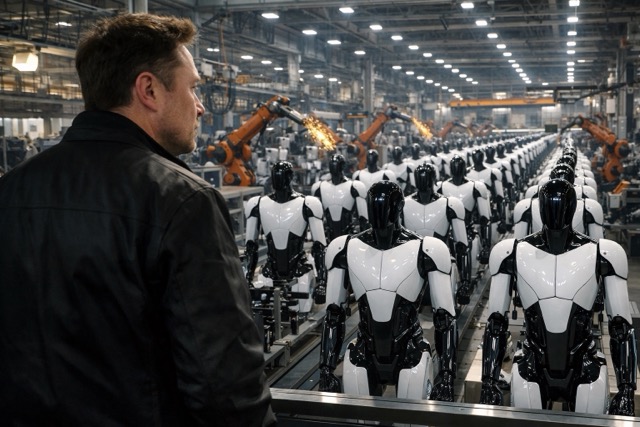
While Tesla's quarterly earnings reports are typically scrutinized for automotive margins and delivery forecasts, the company's latest update delivered a bombshell from an entirely different division. Buried within the financial details was a timeline that could redefine Tesla's long-term identity: a production-ready Optimus humanoid robot is officially on the horizon. This announcement moves the project from the realm of speculative R&D into a tangible product pipeline, signaling Elon Musk's most audacious bet is accelerating toward reality.
From Lab to Factory: The 2026 Production Target
Tesla has declared that the third-generation Optimus, described as the version "meant for mass production," will be unveiled in the first quarter of 2026. This marks a critical transition from the development and prototype phases of the earlier Bumblebee, Optimus Gen 1, and Gen 2 models. The forthcoming robot will feature "major upgrades from version 2.5," with a specific callout to its "latest hand design," a component crucial for dexterity and performing useful work. Perhaps most tellingly, Tesla stated it is already "making preparations for the first production" line, indicating that engineering efforts are now paralleled by serious manufacturing planning.
The Strategic Rationale Behind the Humanoid Push
Elon Musk has long framed the Optimus project not as a side quest, but as the potential cornerstone of Tesla's future valuation, arguing its economic impact could eventually dwarf the EV business. The logic hinges on creating a general-purpose, bipedal robot capable of performing repetitive or unsafe tasks across global industries, from manufacturing and logistics to home assistance. By leveraging its core competencies in artificial intelligence, battery technology, and advanced manufacturing, Tesla aims to solve the humanoid robotics challenge at scale and cost points previously deemed impossible. This move is a direct challenge to established players in industrial automation and a field of well-funded startups.
The announcement timing is also strategic. As growth in the core automotive segment faces increased competition and cyclical pressures, highlighting progress on Optimus serves to remind investors of Tesla's long-term, high-margin potential beyond car manufacturing. It reinforces the company's narrative as a disruptive technology conglomerate rather than just a electric vehicle maker. However, the path is fraught with immense technical hurdles, from achieving reliable real-world autonomy to navigating complex and untested regulatory environments for humanoid robots in workplaces.
Implications for the Tesla Ecosystem
For Tesla owners and investors, the Optimus timeline introduces a new variable into the investment thesis. Success could unlock a multi-trillion dollar addressable market, creating an entirely new revenue stream and justifying a significant premium on Tesla's stock. For early adopters and brand loyalists, it opens a future where Tesla's ecosystem expands from their garage and charging network into their home or business via robotic assistance.
Yet, the 2026 target also sets a clear benchmark for accountability. Tesla will now be measured against its own public deadlines for a functional, producible robot. Delays or underwhelming capabilities upon reveal could test investor patience, especially if automotive execution stumbles. The next two years will be a critical proving ground, transforming Optimus from a captivating showpiece into a product that must meet the harsh realities of cost, utility, and safety. The race to build the world's first viable humanoid robot workforce has entered its most decisive phase.