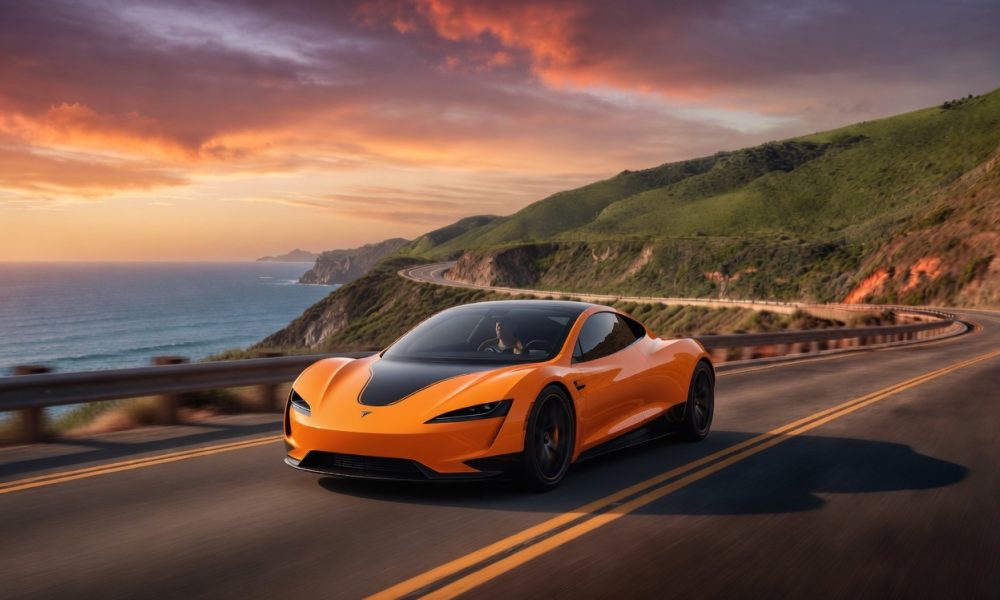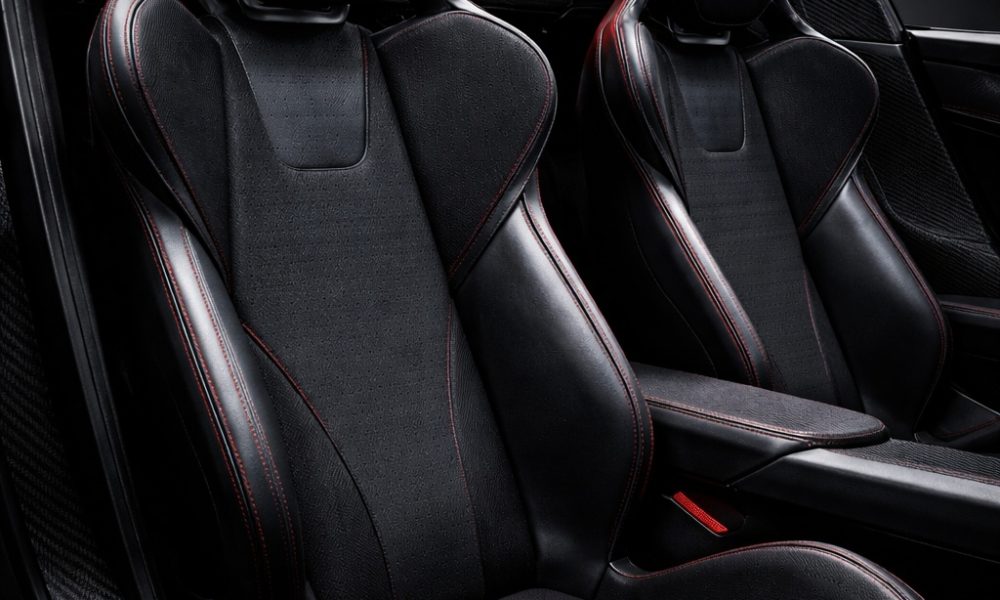
A newly unearthed patent filing from Tesla has sent a jolt through the automotive world, providing the most tangible evidence in years that the mythical next-generation Roadster is transitioning from vaporware to verifiable engineering. The document, detailing a revolutionary seat architecture, suggests Elon Musk's team is not merely iterating on existing designs but is fundamentally rethinking the cockpit experience for what promises to be the brand's ultimate halo car.
A Monobloc Marvel: The Anatomy of a New Seat
The core of the patent, numbered US 20260061898 A1 and published on March 5, 2026, is a "vehicle seat system" constructed from a single continuous composite frame. This monobloc approach eliminates the traditional labyrinth of dozens of welded steel pieces, replacing it with a unified structure likely made from advanced carbon fiber or similar materials. The result is a seat that is simultaneously lighter and stronger, a critical duality for a hyper-performance electric vehicle where every kilogram saved translates directly into acceleration, handling, and range benefits. This design philosophy mirrors aerospace principles, treating the seat not as an isolated component but as an integral, load-bearing part of the vehicle's safety cell.
Beyond Weight Savings: The Performance and Production Calculus
While mass reduction is a headline gain, the implications run deeper. A simpler, one-piece frame could streamline manufacturing, addressing a perennial Tesla focus. More intriguingly, the patent hints at integrated functionality directly into the seat's skeleton, potentially for ventilation, heating, or even structural battery integration. This radical redesign signals that the new Tesla Roadster is being engineered to a standard that justifies its repeated delays; it must not only shatter performance records but also showcase a leap in automotive design and manufacturing intellect. The seat is no longer just a place to sit—it's a statement of technological ambition.
The timing of this patent publication is perhaps as telling as its contents. With a public reveal anticipated in the near future, this filing acts as a strategic teaser, demonstrating tangible progress and sophisticated innovation to a patient but skeptical audience. It reinforces that the project is alive, well, and pushing boundaries. For a vehicle boasting staggering specs like a 0-60 mph time under 1 second and a 620-mile range, such foundational innovations in seemingly mundane components are precisely what will be required to make those numbers a reality.
For Tesla owners and investors, this patent is a multi-faceted signal. It validates that the company's advanced R&D pipeline continues to operate at a high level, with trickle-down potential to future high-volume models like the Model S Plaid or a prospective premium sports car. The focus on radical weight reduction and manufacturing efficiency underscores a mature engineering ethos that benefits the entire EV lineup. Most importantly, it reaffirms Tesla's commitment to its aspirational roadmap, using the Roadster as a technological spearhead to burnish the brand's image and prove its capability against the world's fastest supercars, both electric and gasoline-powered.