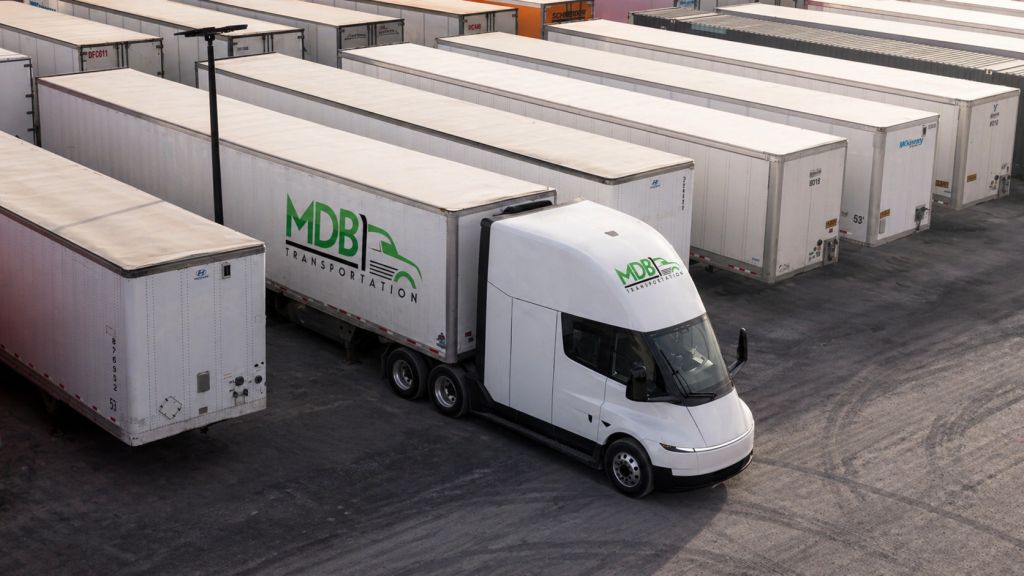
After five years of anticipation, speculation, and high-profile testing with major partners, Tesla has pulled back the final curtain on the production version of its revolutionary electric semi-truck. With the first customer deliveries to PepsiCo imminently beginning, the company has updated its official Tesla Semi webpage with concrete, certified specifications that move the vehicle from a dazzling concept into a tangible competitor for the freight industry. The finalized numbers not only meet but in several key areas exceed the ambitious promises made back in 2017, signaling Tesla's confidence in a product poised to disrupt a cornerstone of the global economy.
From Prototype Promise to Production Reality
The core specifications reveal a machine engineered for staggering efficiency and performance. Tesla confirms the Semi achieves 1.7 kWh per mile energy consumption, a critical figure that underpins its economic case. This exceptional efficiency enables a massive 500-mile range on a single charge, even with a full 82,000 lb gross vehicle weight. Furthermore, the Semi's tri-motor powertrain delivers shocking performance for a Class 8 vehicle: it can maintain highway speeds up a 5% grade, a task that saps momentum from diesel counterparts, and hit 0-60 mph in just 20 seconds when fully loaded. These are not incremental improvements but foundational shifts in what a heavy-duty truck is capable of.
The Evolution of Design and Charging Infrastructure
Key evolutions from the 2017 prototype are now confirmed. The production Semi features a central driving position, a radical departure from traditional truck design that offers unparalleled visibility. It also utilizes Tesla's latest 4680 battery cell format and a 1,000-volt architecture, enabling incredibly fast charging. Tesla states the Semi can recover up to 70% of its range in just 30 minutes using Tesla's purpose-built "Semi Chargers." This addresses the paramount concern of uptime in the logistics sector, though the rollout of this dedicated Megacharger network remains a critical hurdle for widespread adoption beyond initial fleet customers.
The implications for fleet operators are primarily financial. Tesla emphasizes that the Semi can provide over $200,000 in fuel savings over its first three years of operation and boasts a 2-year payback period based on diesel cost comparisons. This compelling total cost of ownership argument is bolstered by far lower projected maintenance costs associated with the simplified EV drivetrain. However, the significant upfront purchase price and the current reliance on Tesla's own charging ecosystem present substantial barriers to entry for smaller operators.
Strategic Implications for Tesla and the EV Market
The Semi's arrival is a strategic masterstroke that extends Tesla's influence beyond consumer vehicles into commercial transportation. Success in this segment would open a massive new revenue stream and deeply embed Tesla's technology into supply chains. Furthermore, the Semi acts as a real-world proving ground for the company's 4680 cells and high-voltage architecture under the most demanding conditions, technology that will eventually trickle down to Cybertruck and future passenger vehicles. It positions Tesla not just as a carmaker, but as a broad-spectrum energy and transportation technology leader.
For Tesla investors, the Semi represents a high-margin potential growth engine, though its near-term financial impact will be limited by gradual production ramp-up. For the industry, it sets a new benchmark that legacy truck manufacturers must now scramble to meet. For Tesla owners and advocates, the Semi's success validates the company's core mission by targeting one of the most significant sources of transportation emissions. The road from prototype to production has been long, but the final specs confirm the Tesla Semi is ready to haul not just freight, but the entire trucking industry toward an electric future.