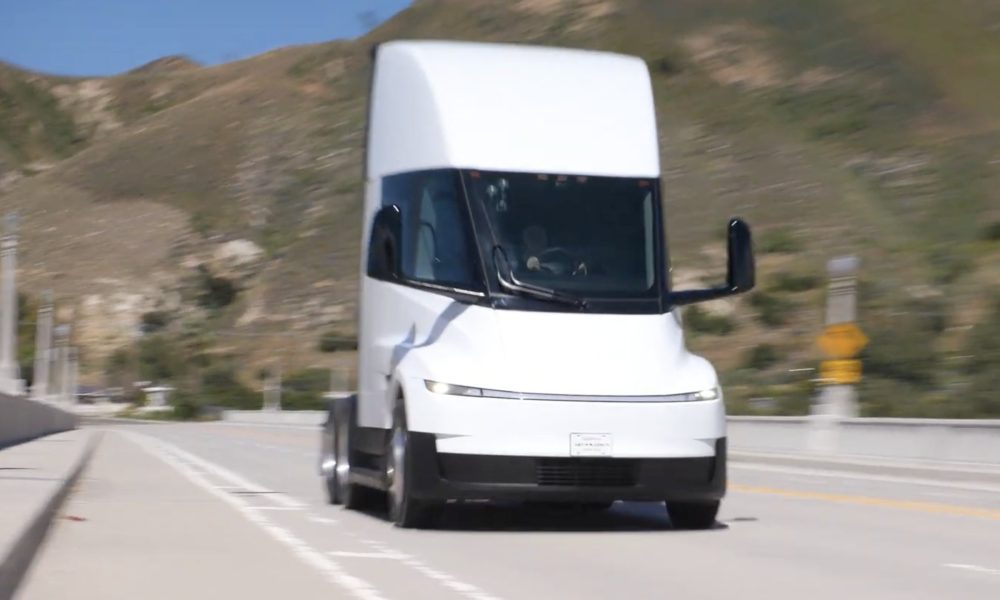
Tesla Semi’s long-awaited ramp-up has officially shifted into overdrive. With mass manufacturing now hitting what the company calls “Plaid Mode,” Tesla is not just accelerating production—it is simultaneously unveiling a new charging product designed to support the electric truck’s unique operational demands. This dual announcement signals that the electric vehicle maker is no longer treating the Semi as a niche prototype, but as a core pillar of its commercial transportation strategy.
Mass Manufacturing Hits Plaid Mode
After years of delays and limited pilot deliveries, Tesla’s Gigafactory in Nevada is now running at high throughput for the Tesla Semi. The term “Plaid Mode” is more than a marketing flourish; it describes a production cadence that has doubled output in recent weeks, allowing the company to begin fulfilling orders for major fleet customers like PepsiCo and Sysco. Sources indicate that Tesla is targeting 50,000 units annually by 2026, a volume that would make the Semi the best-selling Class 8 electric truck in North America. This ramp is critical for Tesla to capture a slice of the $30 billion heavy-duty truck market and to demonstrate that battery-electric long-haul transport is commercially viable.
New Basecharger Expands Charging Ecosystem
Alongside the production surge, Tesla has launched the Basecharger, a dedicated charging solution for the Semi that complements the existing 1.2 MW Megacharger. While the Megacharger handles quick 30-minute en-route boosts for urgent deliveries, the Basecharger serves as a reliable overnight solution for longer dwell times at warehouses, distribution centers, fleet yards, and even, potentially, homes. This strategic two-tier approach addresses the biggest barrier to electric truck adoption: charging infrastructure. Fleet operators can now choose between high-speed highway charging and lower-cost depot charging, optimizing both uptime and energy costs. The Basecharger’s lower power output reduces grid strain and installation complexity, making it accessible to smaller operators who cannot afford megawatt-level upgrades.
Implications for Tesla Owners and Investors
For current Tesla owners, the Semi’s mass manufacturing and charging ecosystem expansion signal a broader network effect. The Megacharger network, initially built for trucks, could eventually support future Tesla Cybertruck towing or high-demand passenger vehicles, improving overall charging infrastructure density. For investors, the move from pilot to mass production is a pivotal milestone. The Semi’s success will directly impact Tesla’s energy business, as each truck consumes roughly 1.5 MWh per charge, creating massive demand for Tesla’s Megapack and solar products. If Tesla hits its production targets, the Semi could generate over $15 billion in annual revenue by 2028, diversifying the company beyond passenger EVs. The Basecharger launch also opens a new recurring revenue stream from charging hardware and software services. For fleet operators, the message is clear: the electric truck revolution is no longer theoretical—Tesla is delivering the hardware and the charging ecosystem to make it work at scale.