In a quiet but significant shift to its driver-assistance strategy, Tesla has removed the standard Autopilot package as a default or included feature on new vehicle orders. The change, first spotted on the company's online configurator, means every new Tesla now comes standard with only Traffic-Aware Cruise Control (TACC) and basic lane-keeping, a notable step back from the previous base offering. This move has sparked immediate discussion among the EV community, prompting CEO Elon Musk to personally clarify the rationale behind the decision on his social media platform, X.
Musk's Rationale: Simplifying the Autopilot Narrative
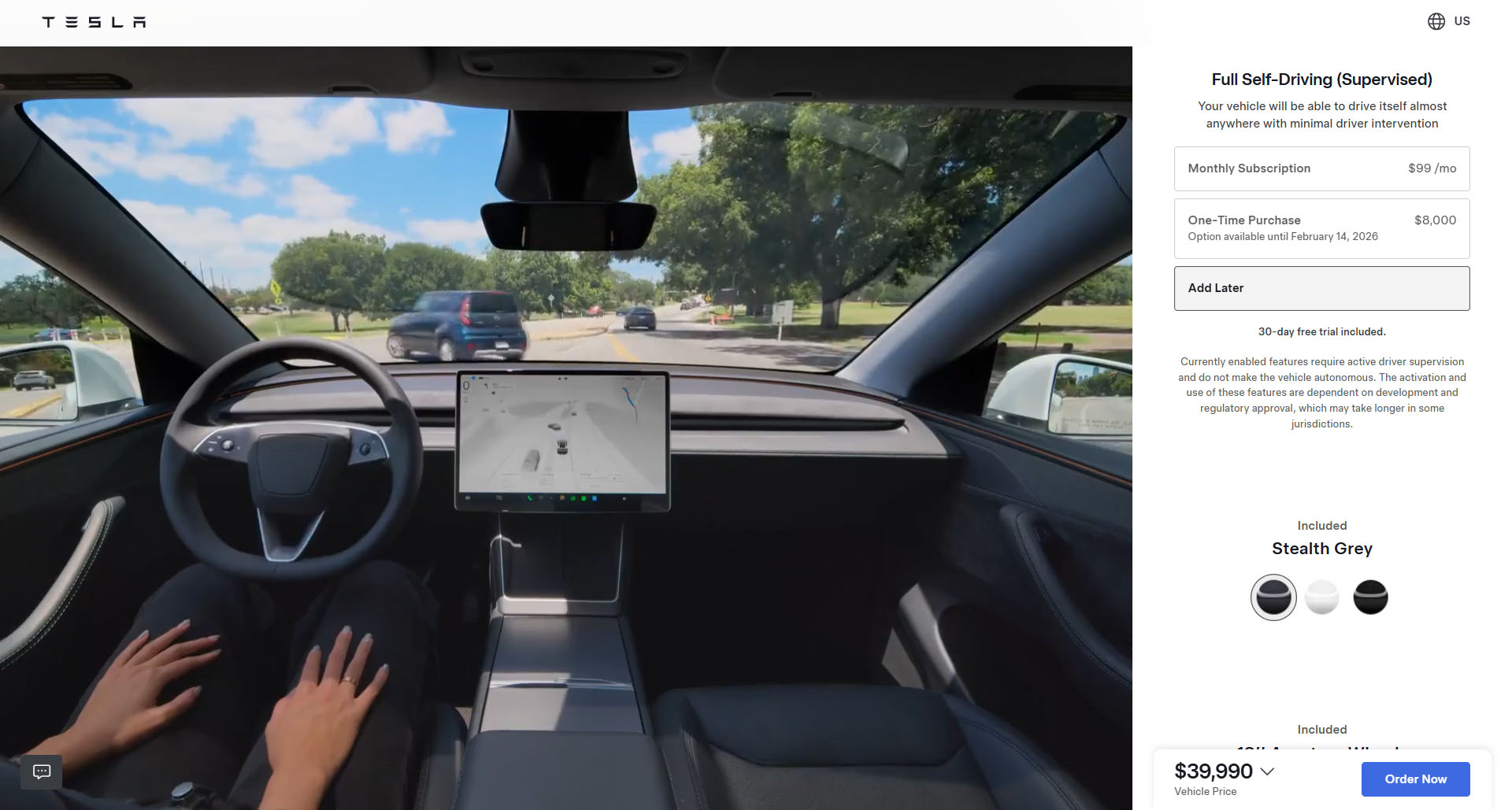
Elon Musk stated that the primary goal is to eliminate confusion between the capabilities of the included driver-assist features and the more advanced, paid Full Self-Driving (FSD) suite. The standard Autopilot name, he suggested, created a "false expectation" of autonomous capability for a system designed purely as a driving aid. By relegating the base offering to TACC and Autosteer, Tesla is drawing a clearer, more definitive line in the sand. This strategic renaming and restructuring reframes the included technology as a sophisticated cruise control system, implicitly positioning the $12,000 FSD or $199/month FSD Subscription as the true path to advanced automation.
The Technical and Regulatory Landscape
This shift does not represent a technical downgrade of the vehicles' hardware, as all Teslas continue to ship with the necessary sensor suite. Instead, it's a software and marketing recalibration. The decision arrives amidst increased regulatory scrutiny on driver-assistance systems globally, with authorities demanding clearer communication about system limitations. By making the base system's name more descriptive and less suggestive, Tesla may be proactively aligning with a stricter regulatory environment. Furthermore, it allows the company to more aggressively market FSD's evolving capabilities, like autonomous city street driving, as a distinct and premium product tier without the semantic overlap of a "standard" Autopilot.
The immediate implication for new buyers is a change in perceived value; the entry price for a Tesla remains unchanged, but the standard feature set is now described in more conservative terms. Existing owners with the standard Autopilot package will retain their features, but the move signals a future where advanced driver-assist is increasingly monetized. For Tesla's business model, it sharpens the upsell funnel directly toward the high-margin FSD software, which remains a critical component of the company's long-term profitability narrative.
For Tesla owners and investors, this is a multifaceted signal. Owners should view it as Tesla hardening its software-tier strategy, making the subscription or purchase of FSD more essential for those seeking substantive automation. Investors will see a company streamlining its product messaging and potentially fortifying its recurring revenue stream from software. The success of this move hinges on whether the clarified branding reduces regulatory friction and accelerates FSD adoption, turning what appears to be a feature reduction into a catalyst for higher software attach rates and a stronger market differentiation for Tesla's core autonomous ambition.