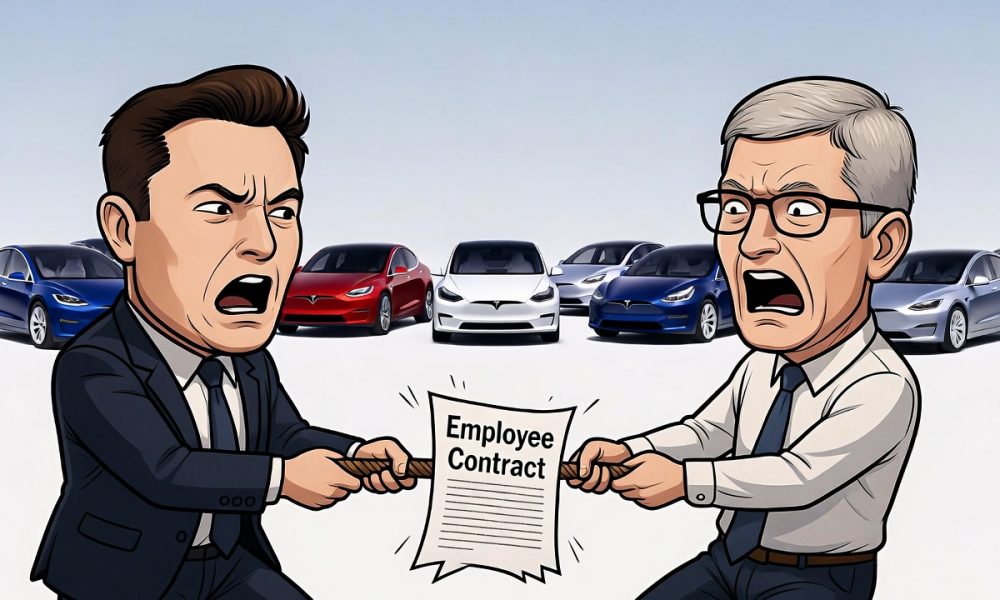
In the high-stakes race to dominate the electric vehicle landscape, a fascinating tale of corporate espionage and talent poaching has emerged from the ashes of Apple's canceled car project. Sources familiar with the matter reveal that during the peak of Apple's secretive "Project Titan" development, Tesla engineers were inundated with recruitment calls from the tech giant—calls they systematically deflected on a daily basis. This persistent campaign, which intensified throughout 2022 and 2023, underscores the fierce competition for elite EV talent and highlights Tesla's formidable position as the industry's benchmark.
The Silicon Valley Talent War Heats Up
Apple's ambitious foray into the automotive sector, Project Titan, was one of the most closely guarded secrets in tech. With ambitions to launch a vehicle by 2028 featuring a revolutionary fully autonomous driving system, Apple needed to rapidly build expertise. Naturally, they targeted the company with the most proven track record in integrated hardware and software for EVs: Tesla. The recruitment blitz was relentless, aiming to lure away key personnel with deep knowledge in battery technology, drivetrains, and, most critically, autonomous software. However, Tesla's engineering corps, deeply embedded in CEO Elon Musk's mission-driven culture, largely resisted the overtures.
Why Tesla's Engineers Stayed Put
Analysts point to several reasons for the failed poaching attempt. First, Tesla's compensation packages, heavily weighted in stock options, have created significant wealth for long-tenured employees, fostering loyalty. Second, the company's "first principles" engineering culture and vertically integrated approach offer a unique and appealing challenge for top-tier talent. Finally, during the period in question, Tesla was in the throes of its own massive scaling efforts with the global rollouts of the Model Y and Cybertruck, providing engineers with unparalleled real-world project scale that a nascent program like Apple's could not match. The deflected calls became a testament to Tesla's entrenched position as the destination for EV innovation.
The context of this talent struggle makes Apple's eventual decision to shutter Project Titan in early 2024 all the more significant. Despite its vast resources and hiring prowess, Apple confronted the immense complexity of automotive manufacturing, supply chain logistics, and regulatory hurdles—challenges Tesla spent two decades solving. The inability to secure a critical mass of seasoned EV veterans from the industry leader may have been a contributing factor in Apple's strategic retreat, signaling that capital and brand power alone cannot shortcut the deep, systemic expertise required to build a car.
Implications for Tesla's Future and the EV Sector
For Tesla, this episode reinforces its role as the de facto academy for the electric vehicle industry. The company's ability to retain its core engineering talent against one of the world's most formidable competitors is a strong indicator of institutional strength and cultural resilience. For investors, it underscores Tesla's enduring "moat" in human capital, a critical asset as the company pushes forward with advancements in AI, robotics, and next-generation vehicle platforms. The failure of Project Titan also narrows the field of potential "disruptors," solidifying Tesla's lead against both legacy automakers and tech entrants.
For Tesla owners and enthusiasts, the outcome validates the ecosystem they've invested in. The continuous refinement of Autopilot and Full Self-Driving (FSD) capabilities relies on retaining the engineers who understand its evolution intimately. The fact that these teams remained intact during a major poaching assault suggests that the pace of software innovation and vehicle improvement is likely to remain in the hands of those most committed to Tesla's long-term vision, ensuring the brand's cutting-edge trajectory continues unabated.