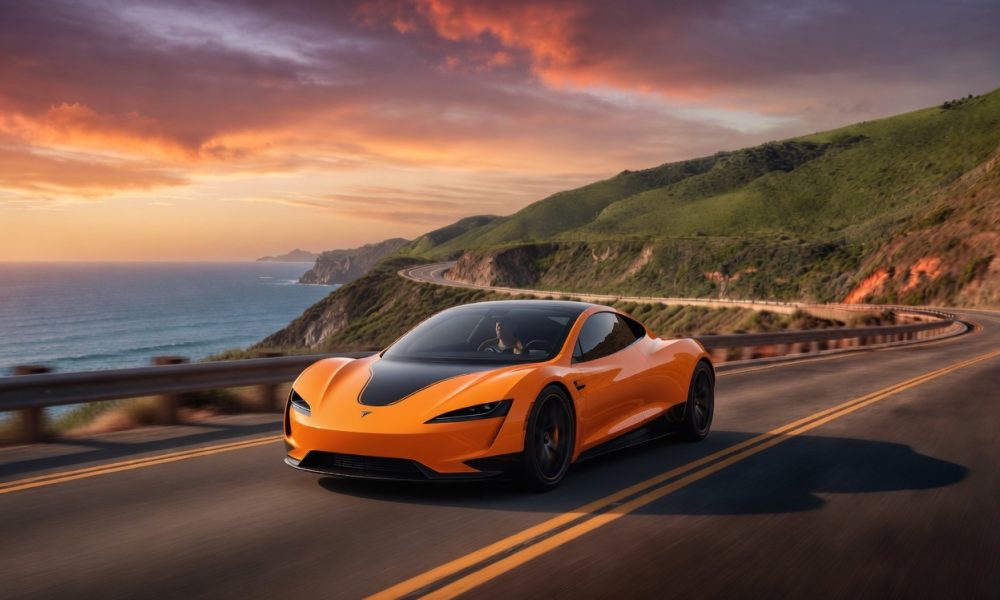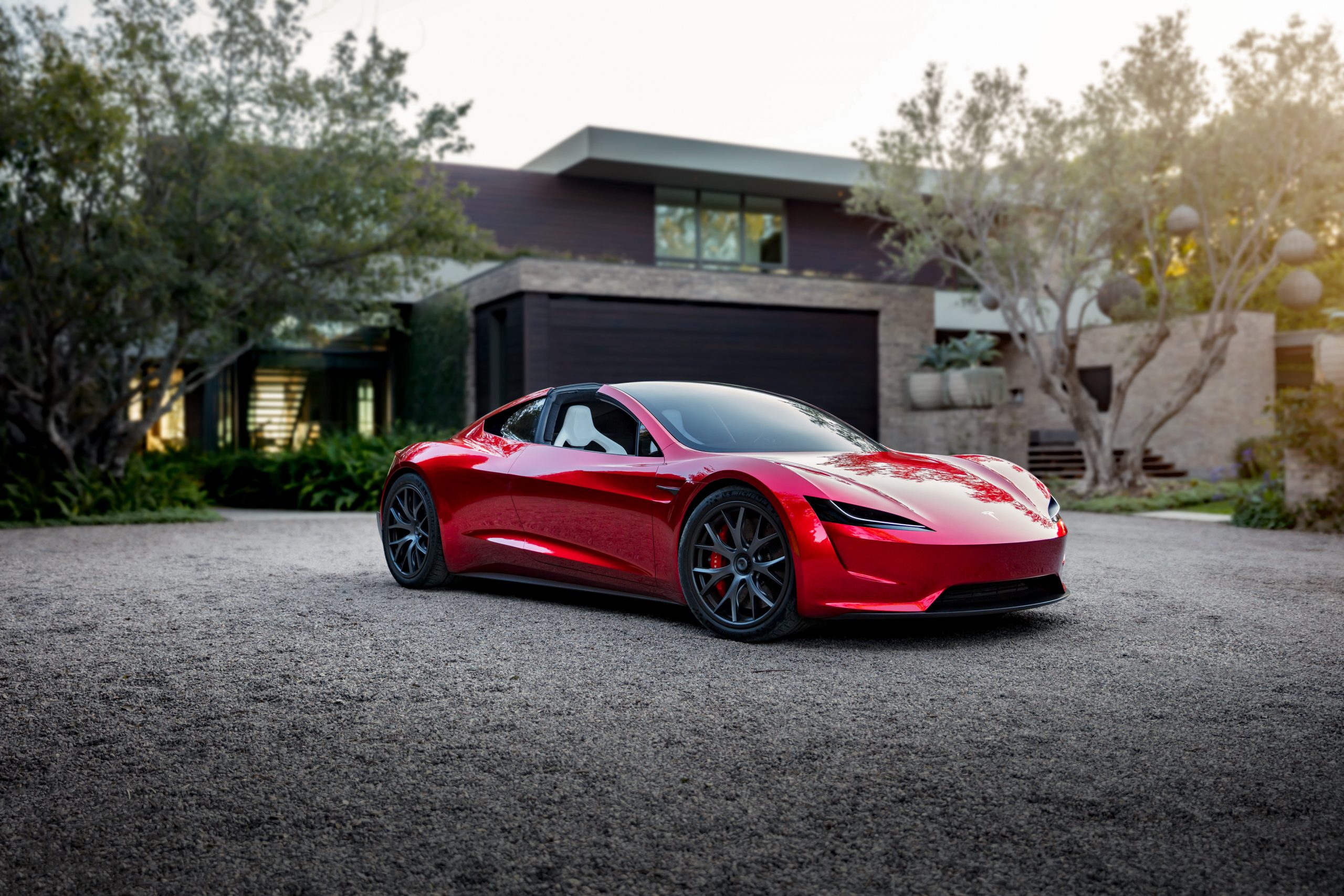
While the automotive world eagerly awaits the next tangible update on the delayed Tesla Roadster, a newly published patent application offers a compelling glimpse into the minimalist engineering philosophy that could define the hypercar's interior. The document, filed with the United States Patent and Trademark Office, details a revolutionary one-piece composite seat frame that promises to slash weight, reduce parts complexity, and potentially redefine cabin space. This isn't just an incremental improvement; it's a fundamental rethinking of a component that has seen little radical change for decades, signaling that Tesla's next flagship is being engineered from the ground up with an uncompromising focus on performance and efficiency.
The Anatomy of a Minimalist Marvel
The patented design departs radically from traditional seats, which are assemblies of numerous stamped metal parts welded or bolted together. Tesla's innovation centers on a single, continuous frame molded from a composite material, likely a high-strength polymer or carbon fiber-reinforced plastic. This monolithic structure integrates the seat back, base, and side bolsters into one cohesive unit. The design eliminates dozens of individual components, fasteners, and adjustment mechanisms, leading to a significant reduction in weight—a critical factor for any vehicle, but especially for a high-performance EV targeting unprecedented acceleration and range. The patent suggests the seat could be produced via injection molding or additive manufacturing, aligning with Tesla's push for scalable, cost-effective manufacturing breakthroughs.
Implications for Performance and Production
The benefits of this integrated seat frame extend far beyond simple weight savings. A lighter vehicle improves everything from 0-60 mph acceleration and handling dynamics to overall energy consumption. Furthermore, the simplified assembly process dovetails with Tesla's overarching goals of manufacturing efficiency, reducing robot assembly steps and potential points of failure. Perhaps most intriguingly for a car like the Roadster, the slimmer profile of a one-piece seat could free up precious cabin space, allowing for more creative interior packaging or a lower seating position to enhance the sports car driving experience. This move echoes the company's work with its "gigacasting" underbody techniques, applying similar principles of parts consolidation to the interior.
For Tesla investors and enthusiasts, this patent is a potent signal that behind-the-scenes development on the next-generation Roadster remains intensely active. It reinforces the narrative that Tesla continues to invest in fundamental electric vehicle innovation, even in areas often overlooked by legacy automakers. A successful implementation would not only be a standout feature for the Roadster but could eventually trickle down to other models in the lineup, offering a tangible competitive edge in vehicle efficiency and production cost. For prospective Roadster owners, it underscores that the wait may yield a machine engineered with a level of integration and lightness that justifies its ambitious performance targets and premium positioning.