A newly published Tesla patent has sent a clear signal to the industry: the era of the monolithic, hard-to-upgrade vehicle computer may be coming to an end. The detailed filing, titled "Modular Computing Assembly," reveals a sophisticated blueprint for a next-generation Full Self-Driving (FSD) system built from swappable, specialized components. This move suggests Tesla is not just iterating on its silicon but fundamentally re-architecting its hardware strategy to prioritize long-term upgradability and manufacturing efficiency, a potential game-changer for vehicle longevity and technological evolution.
Decoding the Modular FSD Blueprint
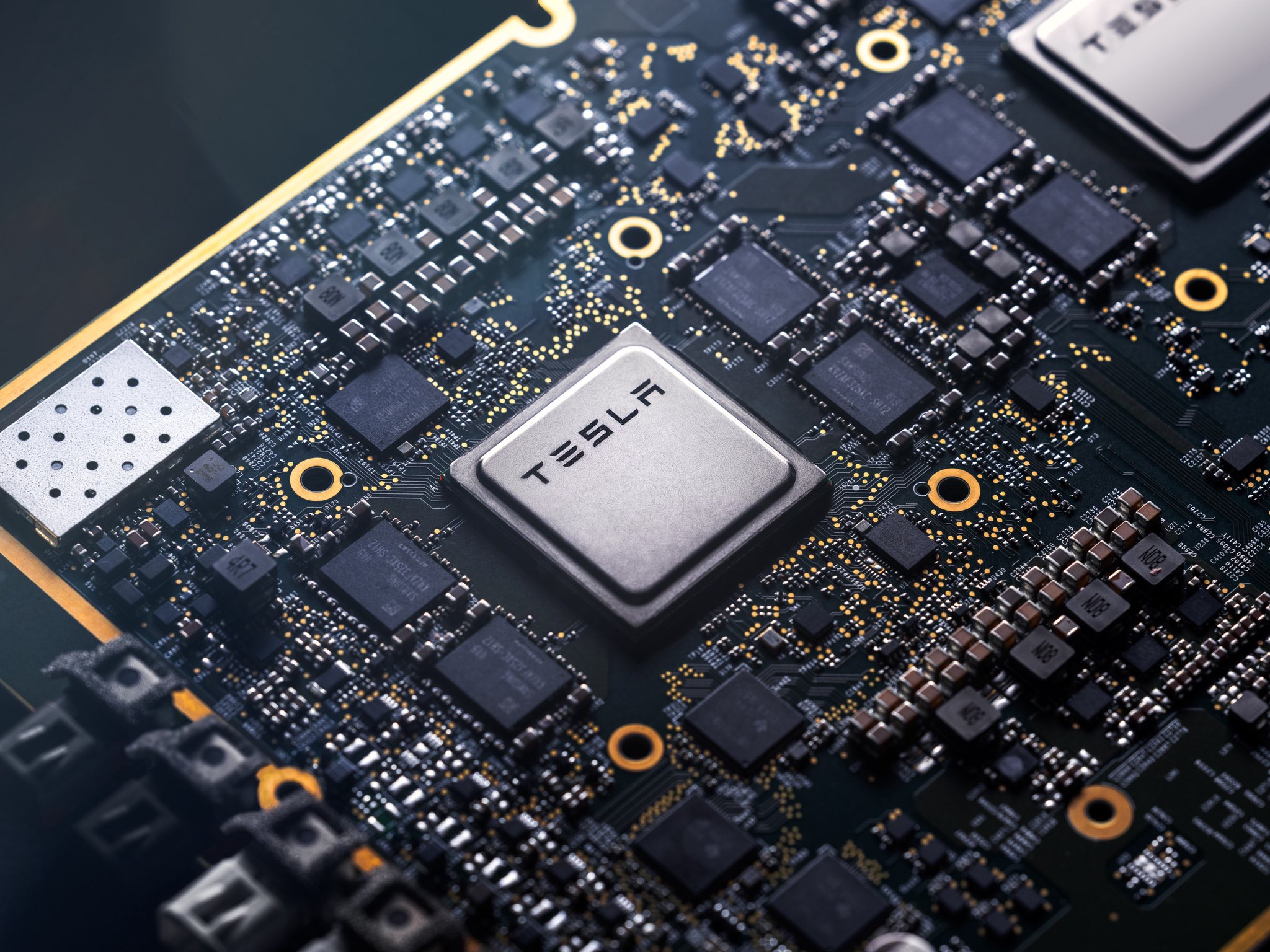
The patent illustrates a computing assembly where key processing units—like the FSD Computer, Autopilot computer, and media control unit—are housed as discrete modules on a common board or enclosure. These modules connect via a standardized, high-bandwidth interface, likely a variant of PCIe (Peripheral Component Interconnect Express), which is common in upgradable desktop PCs. Crucially, the design includes a centralized crossbar switch that acts as a traffic director, allowing any processor to communicate with any other system component, such as cameras, sensors, or vehicle networks, without being hardwired to a specific function. This architectural shift from an integrated system-on-chip to a modular system-on-board provides the foundational flexibility Tesla has historically lacked in its hardware.
Strategic Implications for Manufacturing and Longevity
This modular approach is a strategic masterstroke with dual benefits. For manufacturing, it simplifies production and service. A fault in one computing component, such as the media unit, would no longer require replacing the entire and expensive FSD computer assembly, reducing warranty costs and repair complexity. More significantly, it future-proofs the vehicle. As Tesla develops more powerful processors or new specialized chips for AI or connectivity, they could theoretically be offered as plug-in upgrades for existing owners. This directly addresses a longstanding criticism of Tesla's rapid hardware iterations, which have previously rendered older vehicles incapable of running the latest autonomous driving features, preserving residual value and customer satisfaction.
The patent also hints at a more agile response to the blistering pace of innovation in silicon. Instead of a multi-year redesign cycle for an entirely new computer, Tesla's engineers could develop and deploy upgraded single-module replacements, accelerating the implementation of breakthroughs in neural net processing or sensor fusion. This modularity could extend beyond the FSD system to include other vehicle domains, creating a unified, upgradable computing backbone for everything from infotainment to battery management, setting a new standard for the software-defined vehicle.
What This Means for Tesla Owners and Investors
For current and prospective Tesla owners, this patent is a promising indicator of a more sustainable investment. The potential for cost-effective hardware upgrades could dramatically extend the usable life and capability of their electric vehicles, making the initial purchase more defensible. It reinforces the vision of the car as a platform that improves over time, not just through software updates but through tangible hardware enhancements. For investors, this move underscores Tesla's deepening vertical integration and operational savvy. A modular system means lower long-term service costs, higher parts commonality across models, and a potential new revenue stream from upgrade programs. It positions Tesla to better manage component shortages and iterate faster than competitors with fixed architectures, strengthening its lead in the critical race for advanced autonomy.
While patents do not guarantee a product's arrival, this filing is a logical and powerful evolution of Tesla's technology stack. It demonstrates a mature focus on the entire vehicle lifecycle, from the assembly line to a decade on the road. If realized, this modular FSD computer could be the key that unlocks true, continuous hardware evolution, ensuring that today's Tesla remains at the cutting edge well into tomorrow.