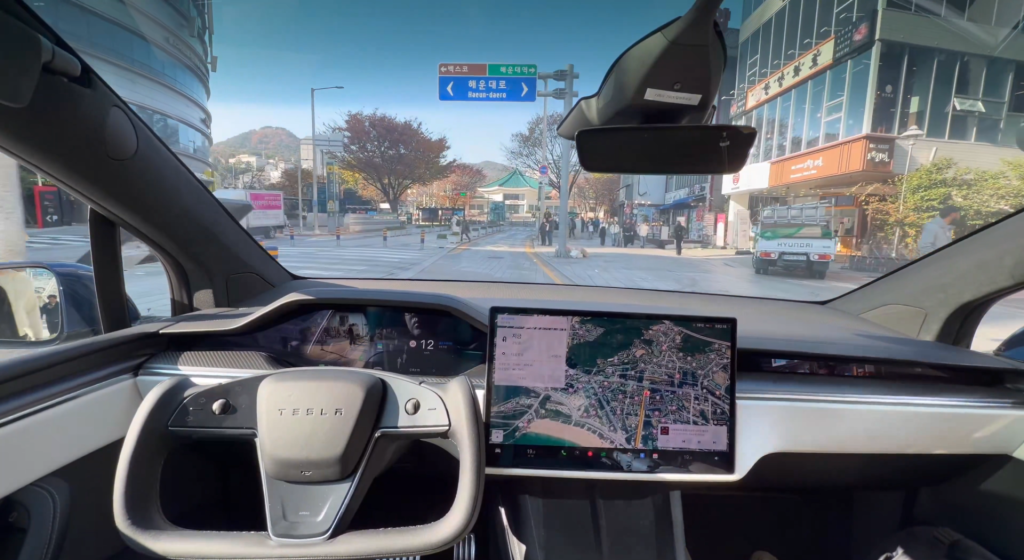
In a powerful demonstration of both technological adoption and market enthusiasm, Tesla's Full Self-Driving (Supervised) system is taking South Korea by storm. New data reveals that within a mere 100 days of its official rollout, South Korean Tesla owners have collectively driven more than 8 million kilometers with the advanced driver-assistance system engaged. This rapid accumulation of real-world data is not just a milestone; it's a critical stress test for FSD's capabilities in one of Asia's most dense and complex driving environments.
A Rapid Adoption in a Challenging Landscape
The Korean peninsula presents a unique proving ground for any autonomous driving technology. Urban centers like Seoul are famed for their intricate alleyways, aggressive driving etiquette, and complex traffic patterns. The fact that FSD (Supervised) has been activated for over 8 million km in such a short period speaks volumes about the local owner community's eagerness to engage with the technology. This isn't passive acceptance; it's active, high-volume usage that provides Tesla's AI with a firehose of invaluable data specific to East Asian driving conditions. The speed of this adoption suggests a high level of confidence from early users, who are essential in refining the system through their supervised interactions.
What 8 Million Kilometers Means for the FSD Neural Net
Every kilometer driven with FSD engaged is a data point for Tesla's massive neural network. The 8 million km logged in South Korea represents a dense cluster of highly specific scenarios—from navigating tight *jjokbangs* (narrow alleys) to interpreting local signage and pedestrian behavior. This regional data is gold dust for Tesla's engineers. Unlike generic highway miles, these urban and suburban kilometers are rich with "edge cases"—unusual or difficult situations that the AI must learn to handle. The rapid accumulation of this distance accelerates the iterative learning cycle, allowing Tesla to push out more nuanced and location-aware software updates, potentially improving the system's global performance in similar dense urban settings.
Implications for Tesla's Strategy and the Global EV Market
South Korea's explosive embrace of FSD (Supervised) serves as a compelling case study for Tesla's broader autonomous driving ambitions. It validates the company's iterative, data-driven approach in a major automotive market known for its tech-savvy consumers and strong domestic auto industry. For Tesla investors, this metric is a tangible key performance indicator, demonstrating significant software engagement and potential future revenue streams from the FSD suite. For Tesla owners globally, the Korean data surge promises faster, more robust improvements to the FSD system as the AI learns from a wider array of international driving cultures. Ultimately, this success in a challenging new market strengthens Tesla's position not just as an electric vehicle leader, but as the frontrunner in the race to deliver scalable, real-world autonomous driving technology.