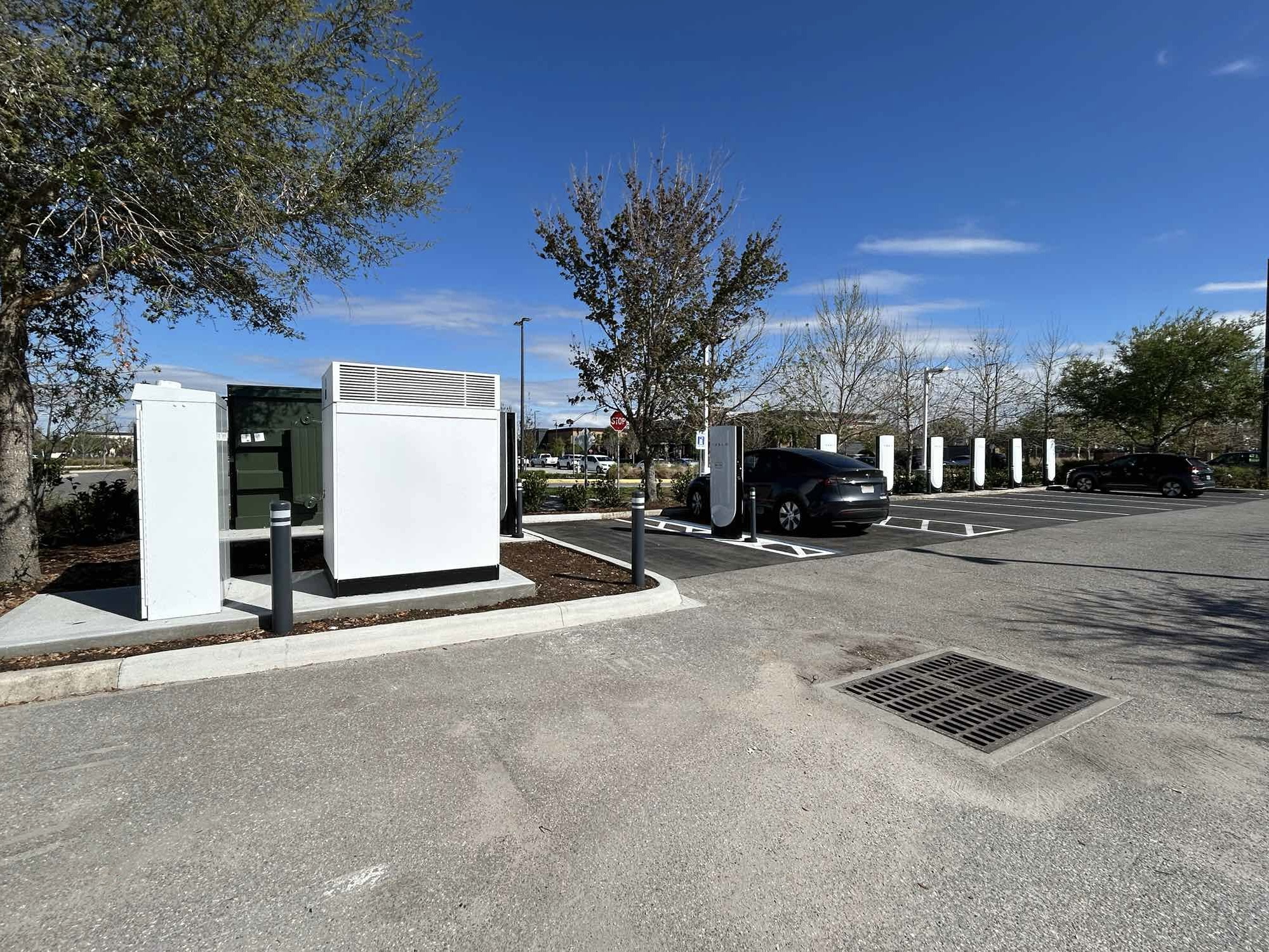
Tesla's next-generation charging architecture is making its strategic march across the United States, with the latest deployment marking a significant geographic expansion. The company has quietly activated its fourth 500 kW V4 Supercharger station on American soil, this time in Kissimmee, Florida. This installation is notable not just for its impressive power output but for its location, serving as the first true V4 site on the U.S. East Coast and signaling a clear acceleration of the high-capacity hardware's rollout beyond initial test markets.
The Kissimmee Site: A Glimpse Into the Charging Future
Located at a Wawa convenience store, the new Kissimmee station embodies the core physical upgrades of the V4 design. It features the taller, sleeker stalls with significantly longer cables that alleviate the parking challenges some non-Tesla EV drivers face. While the hardware is capable of delivering the headline 500 kW of power, current vehicles, including Tesla's own lineup, cannot yet accept that full rate. The real-world benefit today is more consistent high-speed charging, especially on a depleted battery, and future-proofing for coming models like the Cybertruck and next-generation platforms. The choice of a high-traffic travel corridor in Florida demonstrates Tesla's intent to place these premium chargers where they are needed most.
Beyond Speed: The Strategic Importance of V4 Rollout
The expansion to Florida is more than a simple infrastructure upgrade; it's a multi-faceted strategic play. First, it directly supports Tesla's growing fleet, ensuring that vehicles with larger batteries can recharge rapidly. Second, and critically, the V4 standard is the cornerstone of Tesla's open charging strategy. With its Magic Dock CCS adapter integration and payment reader, these stations are fully equipped to service the broader North American Charging Standard (NACS) coalition, which now includes nearly every major automaker. By deploying V4 along key routes, Tesla is building the de facto premium charging network for all EVs, creating a substantial new revenue stream.
This measured but clear expansion from initial sites in the West to the East Coast suggests Tesla is moving past the pilot phase. The company is likely stress-testing the hardware in diverse climates and traffic conditions while simultaneously laying the groundwork for a seamless experience for drivers of Ford, GM, Rivian, and other brands that will gain Supercharger access in 2024 and 2025. Each new V4 stall strengthens Tesla's network advantage just as the competitive landscape intensifies.
Implications for Owners and Investors
For Tesla owners, the growing V4 footprint means gradually improved reliability and a better charging experience, even if peak power gains are still on the horizon. The longer cables alone are a major quality-of-life improvement. For future owners of other EV brands, it promises access to the industry's most reliable high-speed network. For investors, the continued deployment is a tangible sign of Tesla executing on a high-margin, recurring revenue business that is no longer tied solely to its own vehicle sales. It validates the company's strategy of building infrastructure ahead of demand, a move that now locks in a competitive moat as the entire auto industry pivots to electric. The network itself is becoming a central pillar of Tesla's value proposition and financial durability.