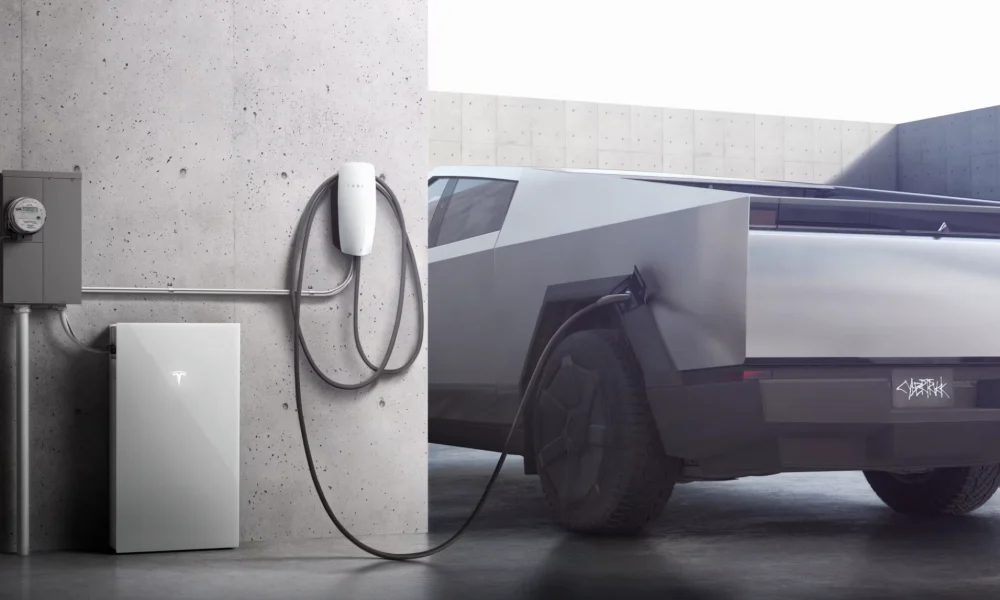
Tesla has taken a decisive step toward turning its most radical vehicle into a mobile power hub, announcing a pilot Vehicle-to-Grid (V2G) program exclusively for Cybertruck owners in Texas. The initiative, revealed by the official Tesla Energy account on X, marks the first time the company is actively exploring bidirectional charging with customers, transforming the angular electric pickup from a mere transport vehicle into a dynamic asset for both home energy resilience and grid stability.
From Concept to Texas Reality: The Cybertruck as a Power Plant
While bidirectional charging capability has been a long-anticipated feature of modern EVs, Tesla has been characteristically cautious in its rollout. The Cybertruck, with its massive battery pack and robust electrical architecture, is the logical first platform for this technology. The Texas pilot program is a controlled real-world test, allowing Tesla to gather critical data on cycle degradation, software management, and user behavior. Participants will be able to use their trucks to power their homes during outages or sell stored energy back to the grid during peak demand periods, effectively turning the vehicle into a lucrative, rolling power wall.
The Strategic Importance of Texas as a Testing Ground
The choice of Texas is no accident. The state's independent ERCOT grid is known for its vulnerability to extreme weather events and subsequent power instability, creating a perfect environment to demonstrate the Cybertruck's value proposition as a backup power source. Furthermore, Texas has a high concentration of early Cybertruck adopters and a regulatory environment that is increasingly accommodating to distributed energy resources. This pilot allows Tesla to prove the system's reliability in high-stakes scenarios while navigating the complex regulatory and utility partnerships necessary for widespread V2G integration.
This move also positions Tesla Energy more directly as a comprehensive provider. By integrating the Cybertruck's capabilities with products like the Powerwall and Solar Roof, Tesla is building a seamless ecosystem where energy generation, storage, and consumption are all managed within its walled garden. The data from this pilot will be invaluable for refining the software and hardware needed to eventually deploy V2G across its entire future fleet, a potential game-changer for grid infrastructure.
Implications for Owners and the Broader EV Market
For Cybertruck owners in Texas, this program significantly enhances the vehicle's utility and potential return on investment. Beyond off-road prowess and acceleration, the truck becomes a critical component of home energy security and a potential source of revenue. For Tesla investors, the pilot is a tangible signal that the company is moving to capture the immense value of its collective vehicle battery capacity, opening up new revenue streams in energy services and strengthening its product ecosystem's lock-in effect.
The successful scaling of this technology could redefine the electric vehicle's role in society. If Tesla can prove a reliable, large-scale V2G model, it pressures competitors to accelerate their own bidirectional offerings and provides a compelling argument for utilities to incentivize EV adoption. The Cybertruck's Texas pilot is more than a feature test; it's the first major step toward a future where a fleet of millions of EVs acts as a decentralized, stabilizing force for the world's power grids.