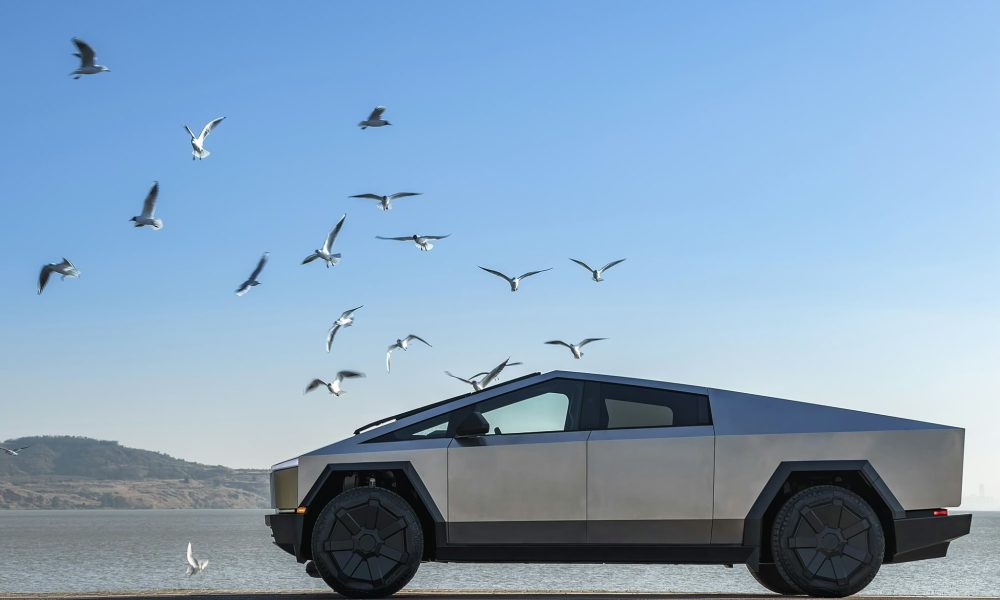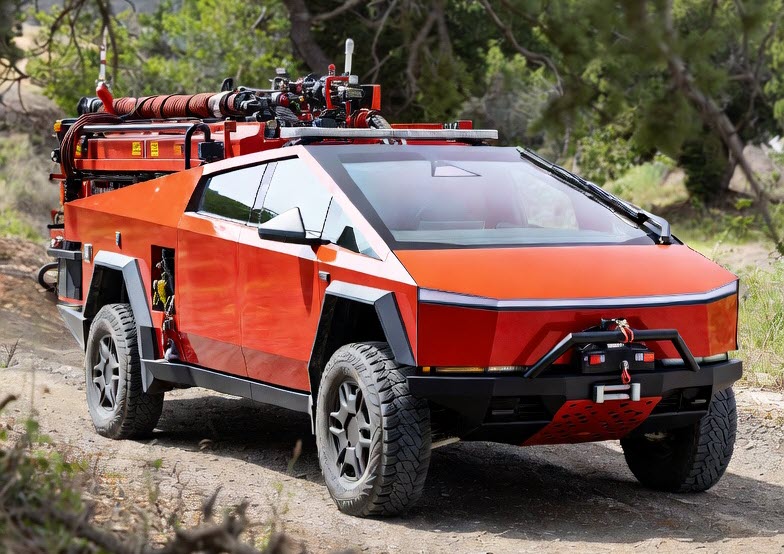
In a move that underscores the electric vehicle's transition from consumer novelty to specialized municipal tool, a Tesla Cybertruck is set to become an official emergency response vehicle. The city of Lake Alfred, Florida, has approved the purchase of a Cybertruck for its fire department, marking one of the first known instances of the angular EV being formally integrated into a firefighting fleet. This decision follows earlier adoptions by police departments but represents a new frontier, positioning the Cybertruck as a brush truck for combating wildfires and navigating rough terrain.
From Police Cruiser to Firefighting Tool
While the Cybertruck has previously been acquired by police departments in places like Fremont, California, and Westport, Connecticut, its adaptation for fire service is a distinct evolution. A brush truck is a critical piece of equipment designed for off-road capability, carrying water, pumps, and gear to fight fires in wildland-urban interface areas—exactly the kind of challenging environment common in Florida. Lake Alfred officials are betting the Cybertruck's stainless-steel exoskeleton, elevated ground clearance, and touted durability will make it a capable platform for this demanding role, potentially replacing a traditional internal combustion engine vehicle.
Practicality and Public Relations
The approval highlights a dual calculation: practical utility and community engagement. Fire Chief Richard Smith pointed to the vehicle's potential for public education and recruitment, seeing it as a high-profile tool to connect with the community and attract a new generation of firefighters. The decision also involves financial pragmatism; the city plans to use a combination of municipal funds and a donation from a local non-profit, the Lake Alfred Fire Department Enhancement Fund, to cover the estimated $100,000 cost. This approach mitigates the upfront budget impact while allowing the department to test the EV's real-world efficacy in emergency scenarios.
However, significant questions remain unanswered. The department has not yet detailed specific modifications, such as how it will integrate water tanks, pumps, emergency lighting, and equipment storage into the Cybertruck's unique design and electrical system. Furthermore, the logistics of charging infrastructure during extended wildfire operations, where access to Superchargers may be nonexistent, and the vehicle's absolute range under heavy load in off-road conditions are untested variables in a life-safety context.
For Tesla owners and investors, this move is more than a quirky news item. It represents a tangible expansion of the Tesla fleet business into a new, mission-critical government sector, validating the vehicle's rugged marketing claims in a very public way. A successful deployment could open a lucrative niche market for Tesla, similar to how Ford dominates the police interceptor segment. Conversely, any high-profile operational failures could impact public perception. Ultimately, the eyes of municipal fleets nationwide will be on Lake Alfred, watching to see if this stainless-steel EV can truly hold its own when the heat is on.