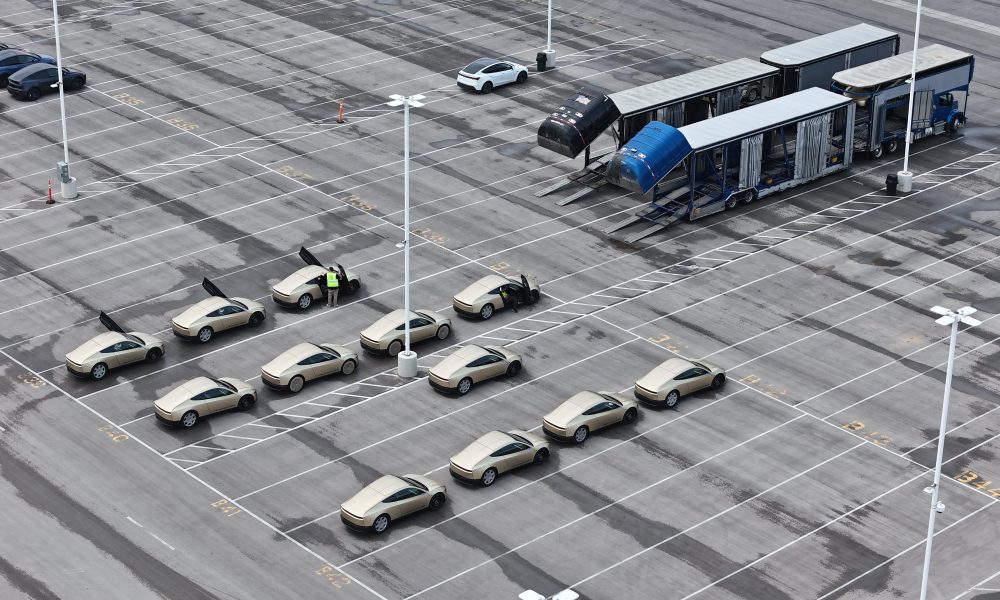
In a move that signals a significant ramp-up in its autonomous ambitions, Tesla has assembled a substantial fleet of its anticipated "Cybercab" robotaxis at its Gigafactory Texas facility. Aerial footage captured by renowned Tesla observer Joe Tegtmeyer reveals dozens of uniquely designed, van-like vehicles clustered together, offering the clearest and most tangible evidence yet of the company's progress toward a driverless future. This visual confirmation moves the Cybercab from a concept in Elon Musk's master plans to a physical product seemingly ready for real-world deployment.
From Vision to Reality: The Cybercab Takes Physical Form
The vehicles spotted in Tegtmeyer's drone footage are unmistakable. They feature a distinctive, one-box design optimized for passenger transport, lacking a traditional steering wheel and pedals as previously promised by CEO Elon Musk. Their presence in such numbers at Giga Texas—a hub for Tesla's most innovative manufacturing—suggests the company is entering a critical pre-production or validation phase. This fleet gathering is not for a staged event but appears to be a logistical or testing procedure, indicating that the foundational hardware is moving off the engineering line and into a coordinated fleet operation.
The Strategic Imperative Behind the Fleet Buildup
This accumulation of Cybercabs is a direct execution of Musk's recent pronouncements. With Tesla's core electric vehicle sales facing market pressures, the company has sharply pivoted its focus toward artificial intelligence and autonomy. The robotaxi platform represents a potential paradigm shift, transforming Tesla from a carmaker into a mobility service provider. By building a fleet, Tesla is preparing for the next step: real-world testing and validation of its "Full Self-Driving" (FSD) software on a dedicated vehicle platform. This fleet is the physical backbone required to launch a commercial robotaxi network, a cornerstone of Tesla's astronomical valuation.
The timing is also crucial. Musk has announced a dedicated Robotaxi unveiling event on August 8, 2024. The gathering of a visible, sizable fleet months in advance serves multiple purposes: it validates internal progress to investors, generates immense public and media buzz, and suggests the August event will showcase more than just a prototype. It demonstrates Tesla's confidence in moving toward a manufacturable product, aiming to solidify its lead in the autonomous EV race ahead of competitors.
Implications for the Tesla Ecosystem
For Tesla investors, the visible fleet is a bullish signal, providing concrete evidence that capital is being deployed toward its high-margin, software-driven future. Success in autonomy could unlock a recurring revenue stream far exceeding vehicle sales. For current owners, it reinforces the potential long-term value of the FSD software they have invested in, as the technology matures toward its ultimate application. However, it also underscores a strategic shift where new, dedicated autonomy platforms may eventually take precedence over personal vehicle development.
The road ahead remains fraught with regulatory, technical, and operational hurdles. Yet, the image of dozens of Cybercabs at Giga Texas is a powerful statement. It transforms Tesla's autonomous aspirations from a software update into a tangible, scalable hardware reality, setting the stage for the most consequential product launch in the company's history this summer.