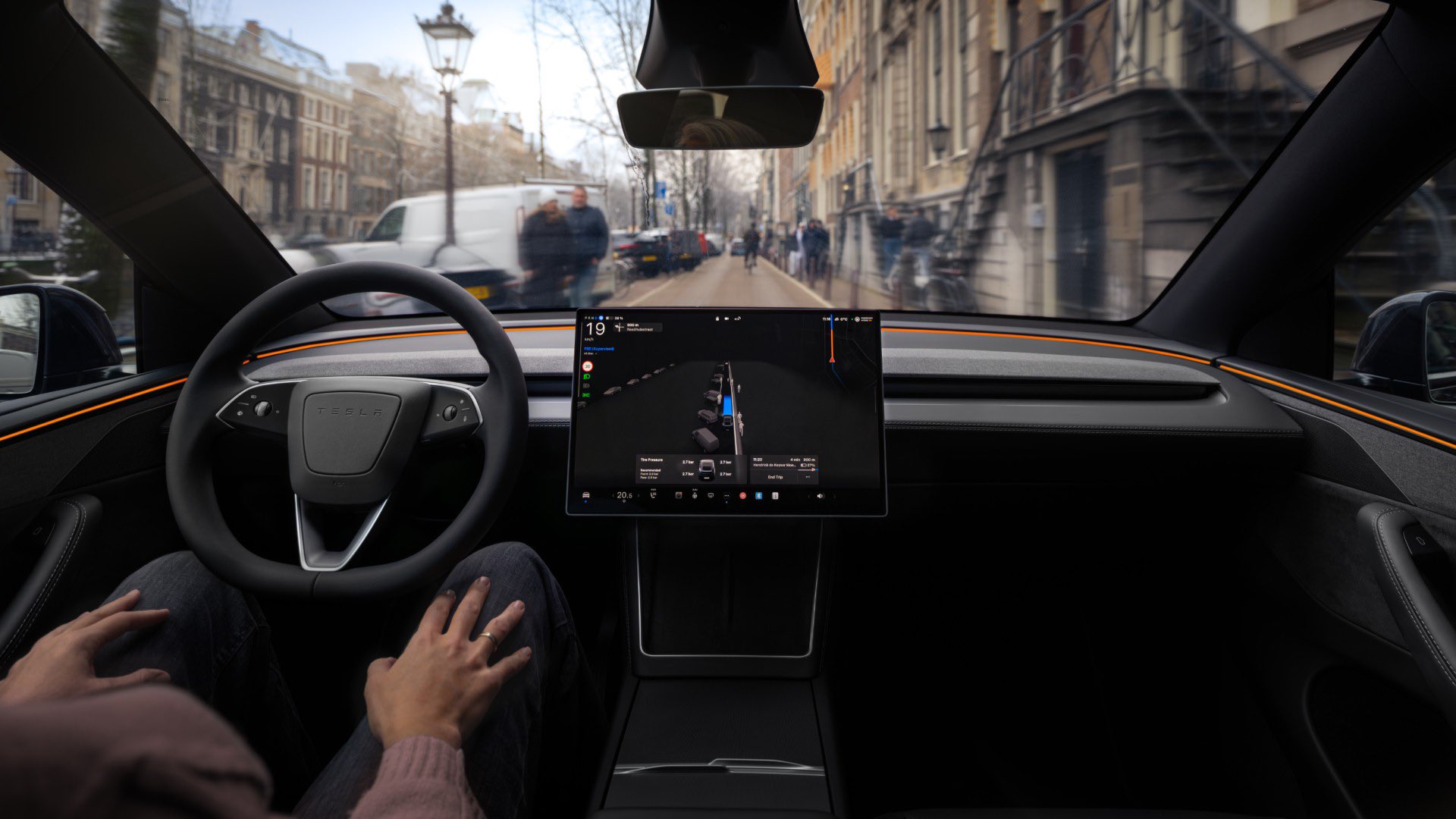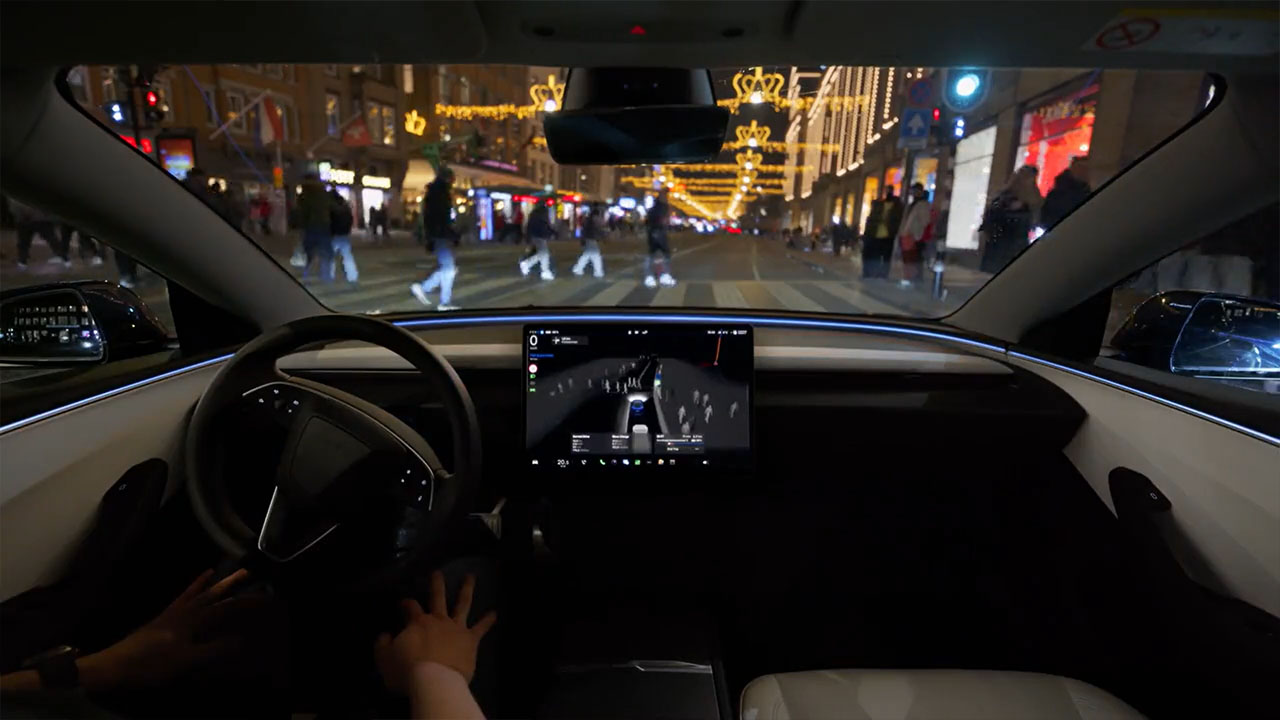
In the heated debate over autonomous driving, skeptics often point to the chaotic, narrow roads of Europe as a domain where human intuition remains irreplaceable. Tesla's Full Self-Driving (FSD) system has just delivered a powerful counter-argument. A newly surfaced video from the rural Netherlands captures the Beta v12.3 software executing a complex, unscripted maneuver that demonstrates a leap in spatial reasoning and decision-making, challenging long-held assumptions about the system's capabilities outside North America.
A Masterclass in Negotiating Unforgiving Terrain
The footage shows a Tesla equipped with FSD navigating a single-lane road obstructed by parked vehicles, a common European scenario. With oncoming traffic present, the system did not simply halt. Instead, it assessed the gap, initiated a cautious creep onto the opposing lane's shoulder, and allowed the approaching car to pass before seamlessly resuming its path. This maneuver required precise calculation of width, prediction of other drivers' actions, and controlled off-road traversal—a combination of tasks that represents a significant evolution from earlier highway-centric Autopilot functions. The calm, deliberate execution in real-world, unstructured conditions highlights the neural net's growing proficiency in handling edge cases.
The Significance of the European Showcase
This demonstration is particularly resonant because European roads present a unique gauntlet of tight spaces, complex signage, and varied right-of-way rules. Success here is a strong validator for Tesla's vision-based "end-to-end neural net" approach, which processes raw camera input to control steering and acceleration, much like a human brain. Unlike geofenced autonomous projects, Tesla's system must generalize across continents. A smooth performance in a Dutch village suggests the underlying AI is learning universal driving principles, not just memorizing American road patterns. This incident acts as a tangible data point against critics who claim FSD is solely optimized for wide, marked roads.
For Tesla owners and investors, this European vignette is more than a viral moment; it's a signal of accelerating progress. Each successful complex drive feeds valuable data back to Tesla's training fleet, creating a compounding improvement loop. For owners, especially in Europe, it builds confidence that the substantial investment in FSD capability will translate to usable, daily utility in their local environment. For investors, it underscores Tesla's lead in real-world AI training scale—a moat that widens with every mile driven. As regulatory scrutiny intensifies globally, demonstrable competence in diverse driving cultures becomes a critical asset for approval processes.
The road to full autonomy remains long, with regulatory and technical hurdles ahead. However, by silently navigating a Dutch bottleneck that would give many drivers pause, Tesla's FSD has done more than complete a turn. It has turned a corner, providing a compelling glimpse into a software-driven future where the car's perception and planning increasingly mirror, and perhaps one day surpass, human capability in the most demanding settings.