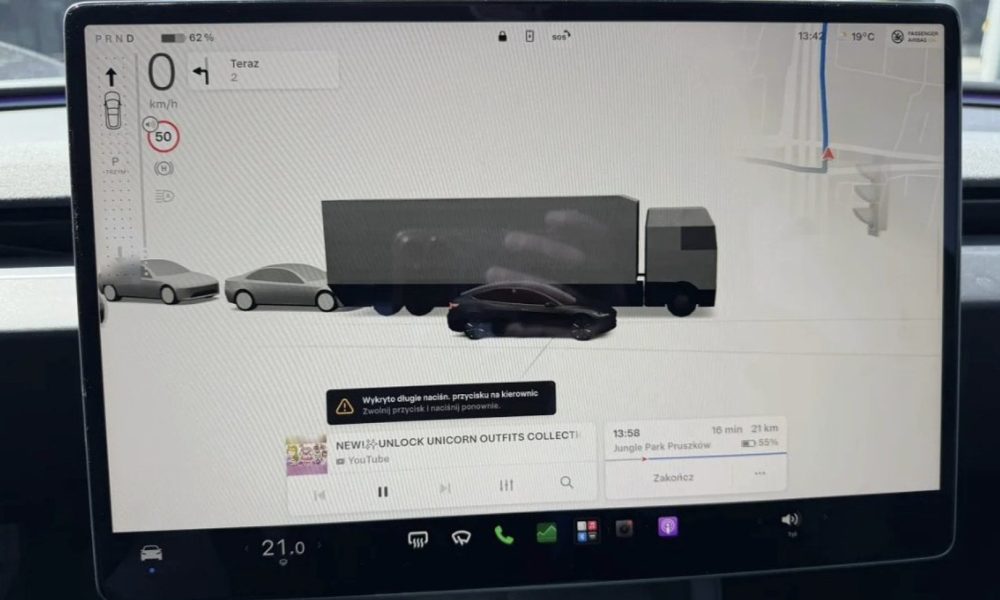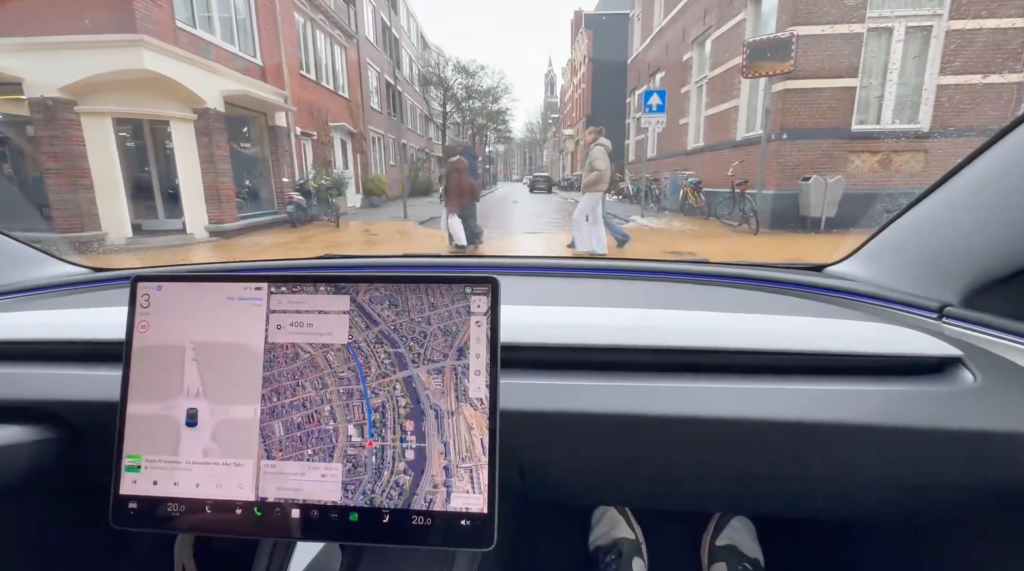
In a landmark validation of its autonomous driving technology, European Tesla owners have collectively racked up an astonishing 10 million kilometers on Full Self-Driving (FSD) in just one month. This milestone, reported by Tesla (TSLA), comes roughly a month after the company first deployed FSD v14 in Europe, with the Netherlands serving as the pioneering approval market. The achievement is not merely a number; it represents a critical real-world stress test of Tesla’s software on dense European road networks, narrow city streets, and complex roundabouts—conditions far removed from the wide boulevards of North America.
Netherlands Leads the Charge for FSD in Europe
The Netherlands became the first European country to officially approve FSD (Supervised), setting the stage for this rapid adoption. Within weeks, Dutch Tesla owners—driving primarily Model 3 and Model Y vehicles—accumulated the 10 million kilometer figure, converting roughly 6.2 million miles into the European metric. Early test videos and reviews emerging from Amsterdam, Rotterdam, and The Hague show the system navigating tram tracks, bicycle lanes, and pedestrian-heavy intersections with surprising competence. However, reviewers consistently note that the system still requires active supervision, particularly when merging onto highways or handling unmarked rural roads, where the software can hesitate at critical decision points.
Real-World Performance and Initial Reactions
Independent testers have praised FSD v14 for its improved smoothness and decision-making logic compared to earlier beta versions seen in the U.S. One widely shared review from a Dutch Tesla owner documented a 45-minute commute through Utrecht with zero disengagements, a feat that would have been unthinkable just six months ago. Yet, the system is not flawless. Several videos highlight moments where FSD misjudges the speed of oncoming cyclists or fails to recognize temporary construction zones. The 10 million kilometer data set is therefore invaluable, feeding Tesla’s neural network with European-specific edge cases that no simulation could replicate, accelerating the path toward a more robust geofenced deployment.
Implications for Tesla Owners and Investors
For current Tesla owners in Europe, this rapid mileage accumulation signals that FSD is becoming a functional, albeit supervised, tool for daily driving—not just a novelty. The regulatory win in the Netherlands is likely to pressure other EU nations, such as Germany, France, and Sweden, to expedite their own approvals, potentially unlocking a massive addressable market of over 2 million Teslas on European roads. For investors, the 10 million kilometer data point is a tangible proof-of-concept that Tesla’s “data flywheel” works globally. Each kilometer driven improves the autonomous stack, directly impacting the company’s long-term valuation thesis around robotaxi networks and software revenue. If FSD can maintain this momentum in Europe, Tesla’s competitive moat in the EV industry will widen significantly, making it a critical metric to watch in the coming quarters.