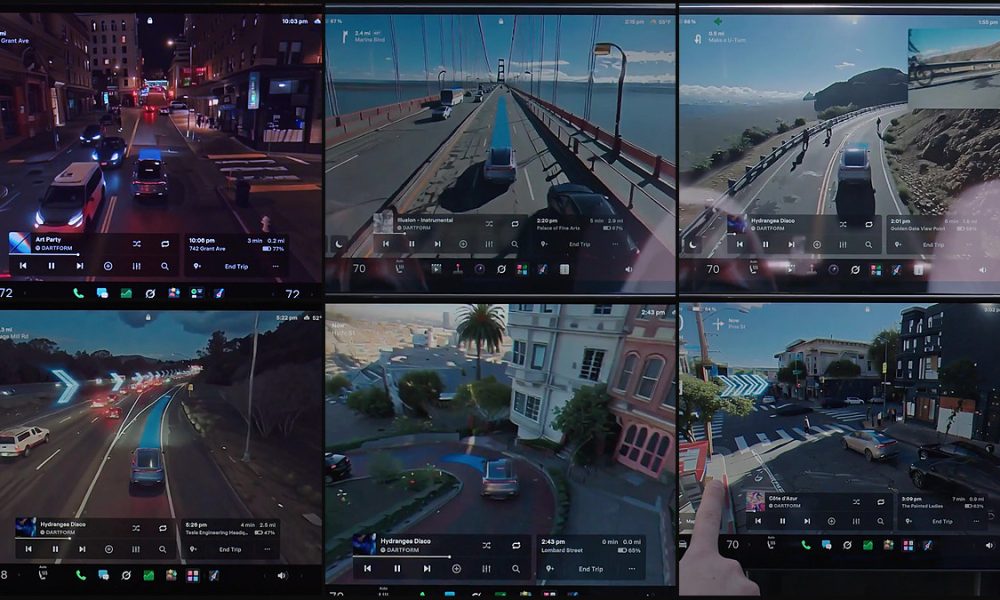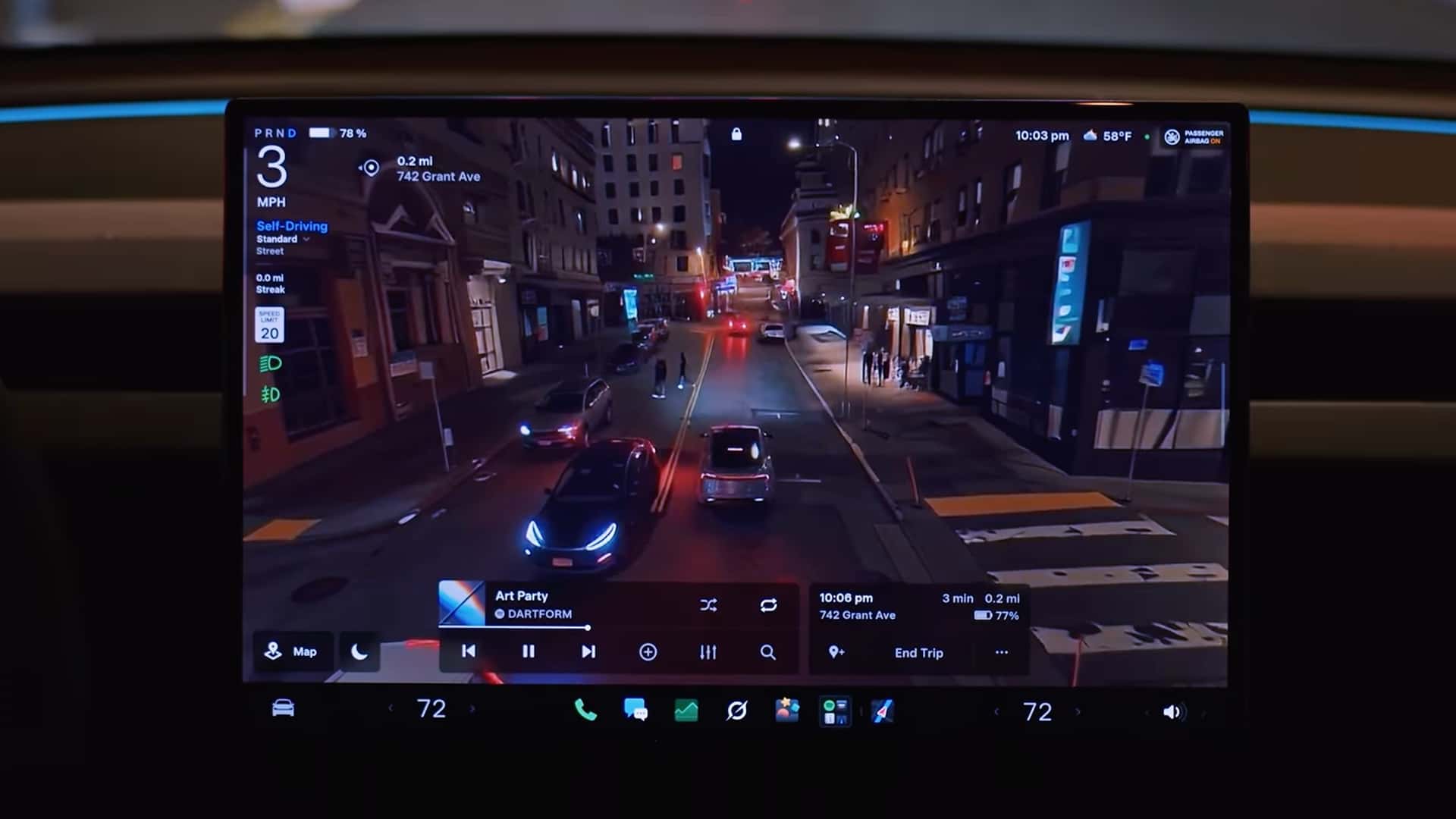
Tesla has quietly rolled out one of the most visually striking updates to its Full Self-Driving suite in years, and it borrows a page from the gaming world. The latest iteration of FSD introduces a new follow camera view that renders the vehicle's surroundings with a cinematic, video-game-like perspective — an aesthetic that early testers have already compared to Grand Theft Auto. But beneath the flashy presentation lies a far more serious claim: Tesla says its autonomous system now handles critical safety situations 25 times better than before.
A Camera That Changes How You See the Road
The redesigned follow camera does more than look pretty. It displays not only where the Tesla is heading but also a rich visualization of everything around it — neighboring vehicles, lane boundaries, pedestrians, and obstacles — rendered in real time on the center display. The effect is immersive, giving drivers and passengers an almost third-person view of the journey, much like watching a character navigate a sprawling open-world map. For a company that has long treated its screen interface as a signature feature, this is a deliberate move to make autonomy feel intuitive and, crucially, trustworthy.
The visual upgrade arrives at a moment when public confidence in self-driving technology remains fragile. By showing drivers exactly what the electric vehicle perceives in its environment, Tesla is effectively turning its neural network's decision-making into something visible and legible. That transparency could prove just as valuable as any raw performance metric.
The 25x Safety Claim Under the Microscope
Tesla's assertion that FSD now handles critical safety situations 25 times better is the headline number investors and regulators will scrutinize most closely. The company frames the improvement around edge cases — the rare, high-stakes scenarios where autonomous systems have historically struggled, such as unprotected turns, sudden pedestrian appearances, and complex intersections. A 25-fold improvement in these corner cases, if verified, would represent a meaningful leap rather than an incremental tune-up.
Skeptics will rightly ask for the underlying data: miles driven, disengagement rates, and the methodology behind the comparison. Tesla has a history of publishing selective statistics, and independent verification of FSD safety claims remains limited. Still, the framing signals that Tesla wants the conversation to shift from "does it work?" to "how much safer is it than a human?" — a rhetorical pivot that matters as the company pushes toward broader deployment.
Why the Gaming Aesthetic Is Strategic, Not Just Stylish
Comparing an EV's driving visualization to Grand Theft Auto might sound like a throwaway compliment, but the design choice carries weight. Gamified interfaces lower the cognitive barrier to understanding complex systems. When a driver can glance at the screen and instantly grasp the car's intent and surroundings, the mental load of supervising an autonomous system drops. Tesla appears to be betting that familiarity with game-like visuals will make owners more comfortable — and more willing — to let the car take control.
That comfort matters commercially. Full Self-Driving is a premium software product, and Tesla's valuation leans heavily on its autonomy ambitions. Every improvement that increases adoption, engagement, and trust feeds directly into that narrative.
What It Means for Owners and Investors
For Tesla owners, the update promises a more informative and engaging driving experience, though it also raises expectations: a prettier visualization invites closer scrutiny of every decision the car makes. For investors, the real story is the safety claim. If Tesla can substantiate the 25x improvement with credible data, it strengthens the case for robotaxi expansion and regulatory approval. If the claim remains unverified, it risks becoming another talking point that critics can dismiss. Either way, the follow camera ensures one thing — everyone will now be watching the road exactly as Tesla sees it.