Tesla has initiated a critical new phase in its autonomous driving journey with the first wave of Full Self-Driving (Supervised) v14.3 deployments. While the release notes highlight incremental improvements, the true revolution is a foundational software overhaul that Tesla claims delivers a 20% faster reaction time. This leap in performance stems not from new hardware, but from a complete rewrite of the AI's core computational engine—a move that could redefine the capabilities of every Tesla on the road today.
The MLIR Engine: A Silent Rewrite for a Faster Mind
At the heart of FSD v14.3 is a profound technical shift: Tesla has rewritten its AI compiler and runtime from scratch using MLIR (Multi-Level Intermediate Representation). For owners, this translates to the promised 20% quicker reactions. For the industry, it marks Tesla's first public acknowledgment of leveraging the compiler infrastructure created by Chris Lattner, a pivotal figure who briefly led Tesla Autopilot in 2017. MLIR acts as the brain's neural translator, optimizing how the vehicle's silicon processes the immense data from its cameras and sensors. By rebuilding this layer, Tesla squeezes significantly more efficiency out of existing Hardware 4 (HW4) computers, proving that software, not just silicon, remains the primary bottleneck and opportunity in the EV autonomy race.
Visible Refinements and a Nod to Safety
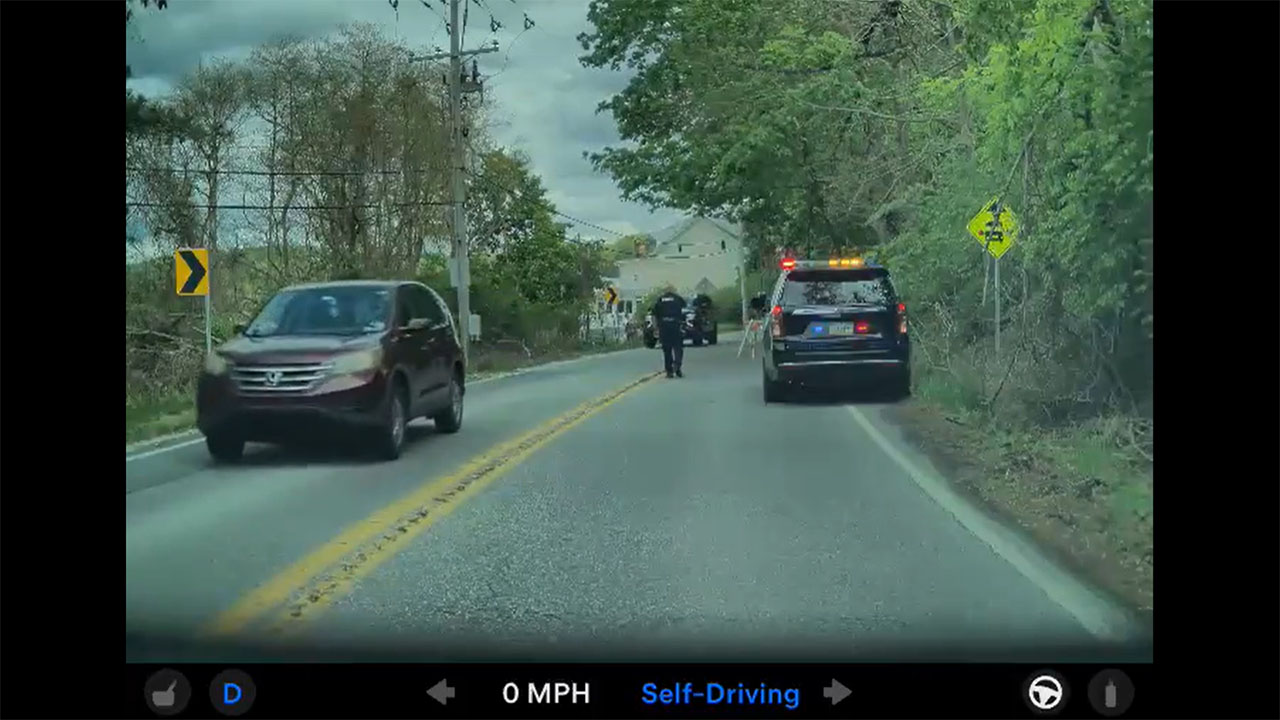
Shipping as software version 2026.2.9.6 to HW4 vehicles, the update also introduces several user-facing enhancements that signal Tesla's focus on practical usability and safety. A new parking spot pin on the map aids in navigation and recall, while improved behaviors around emergency vehicles and school buses address specific, high-concern scenarios for regulators and the public. These refinements, though incremental, are essential steps in building trust and demonstrating the system's growing contextual awareness. They represent the tangible outcomes enabled by the underlying MLIR rewrite, which frees up computational headroom for more complex decision-making in dynamic environments.
The strategic implications of this update are substantial. By achieving a 20% performance gain through software alone, Tesla effectively extends the lifespan and capability of its current hardware suite, protecting its fleet's value and delaying the need for costly hardware upgrades. This move underscores a core Tesla philosophy: the car you buy today is designed to improve tomorrow. Furthermore, the adoption of MLIR, a modern and widely supported compiler framework, suggests Tesla is positioning its AI stack for greater long-term flexibility and potentially easier validation—a crucial factor as the company continues its global regulatory push for more advanced autonomous features.
For Tesla owners and investors, FSD v14.3 is a watershed moment. The reaction time improvement should make the driving experience feel noticeably smoother and more confident, directly impacting user perception of the technology's worth. Investors should see this as a masterclass in software monetization and vertical integration, where deep technical investments yield performance dividends across millions of vehicles instantly. This update reinforces that Tesla's lead in the electric vehicle sector is increasingly defined by its prowess in artificial intelligence and software optimization, creating a moat that competitors reliant solely on hardware advancements will struggle to cross. The race is not just about batteries anymore; it's about the speed of the mind controlling the machine.