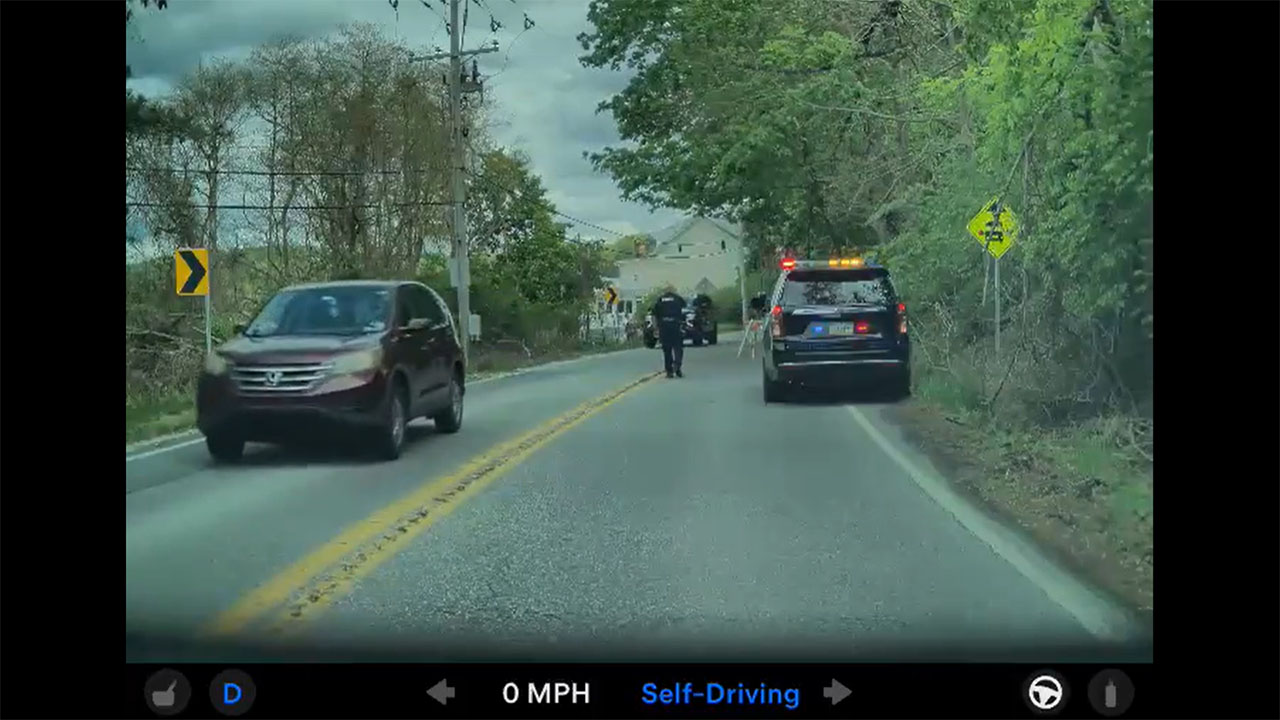
Elon Musk has once again set the automotive and tech worlds abuzz, announcing that Tesla's Full Self-Driving (FSD) v14.3 is imminent. In a statement today, the CEO revealed the update is in final employee beta and will "probably go to wide release end of week." The boldest claim, however, is that this iteration represents the "last piece of the puzzle," a version so advanced it will make the vehicle "feel like it is sentient." For a community of owners and investors accustomed to a decade of iterative promises, this proclamation walks a fine line between groundbreaking potential and familiar hyperbole.
A Decade of Promises Meets a Critical Juncture
The history of Tesla's autonomous driving ambitions is punctuated by optimistic timelines. Musk has, for roughly ten years, suggested the "next update" would be the transformative leap. This context is crucial, as the immediate predecessor, FSD v14.2
While a truly sentient car remains in the realm of science fiction, Musk's phrasing hints at a target for the neural network-driven system. The goal is likely a radical improvement in perception, prediction, and planning. In practice, this could translate to an EV that navigates complex urban environments with human-like fluidity: understanding subtle driver cues from other vehicles, handling unprotected left turns with confidence, and managing rare "edge case" scenarios without disengagement. The shift from a rules-based, coded approach to a holistic, AI-interpreted driving experience is the core thesis of Tesla's vision. Version 14.3 is positioned as the update where this theory finally coheres into a consistently polished reality on every street. The technical path to this point has been all-consuming. Tesla's abandonment of radar and reliance on a "vision-only" system powered by massive neural network training represents a high-risk, high-reward strategy. Every software update is a snapshot of the AI's learning, trained on billions of real-world video miles from the fleet. If v14.3 delivers, it would validate this controversial architectural bet, proving that cameras and silicon can achieve a level of driving intelligence that rivals or surpasses sensor-fusion approaches used by competitors. The company's entire robotaxi and future mobility strategy hinges on this software's reliability. For Tesla owners, a successful v14.3 rollout would dramatically enhance the value proposition of the FSD package, a multi-thousand-dollar investment many have held faith in. A smooth, confident driving assistant that significantly reduces stress on daily commutes would shift the narrative from a beta experiment to a mature product. For investors, the implications are even more profound. Validated, scalable autonomy is the linchpin for Tesla's elevated valuation, enabling potential new revenue streams from software subscriptions and a future autonomous network. Conversely, if v14.3 fails to live up to its billing and continues the regression seen in recent updates, it could trigger renewed skepticism about the timeline and ultimate feasibility of Tesla's self-driving goals. This week's release isn't just another update; it's a pivotal test of credibility and technological execution.What "Sentient" Could Actually Mean for the Driving Experience
Implications for the Tesla Ecosystem