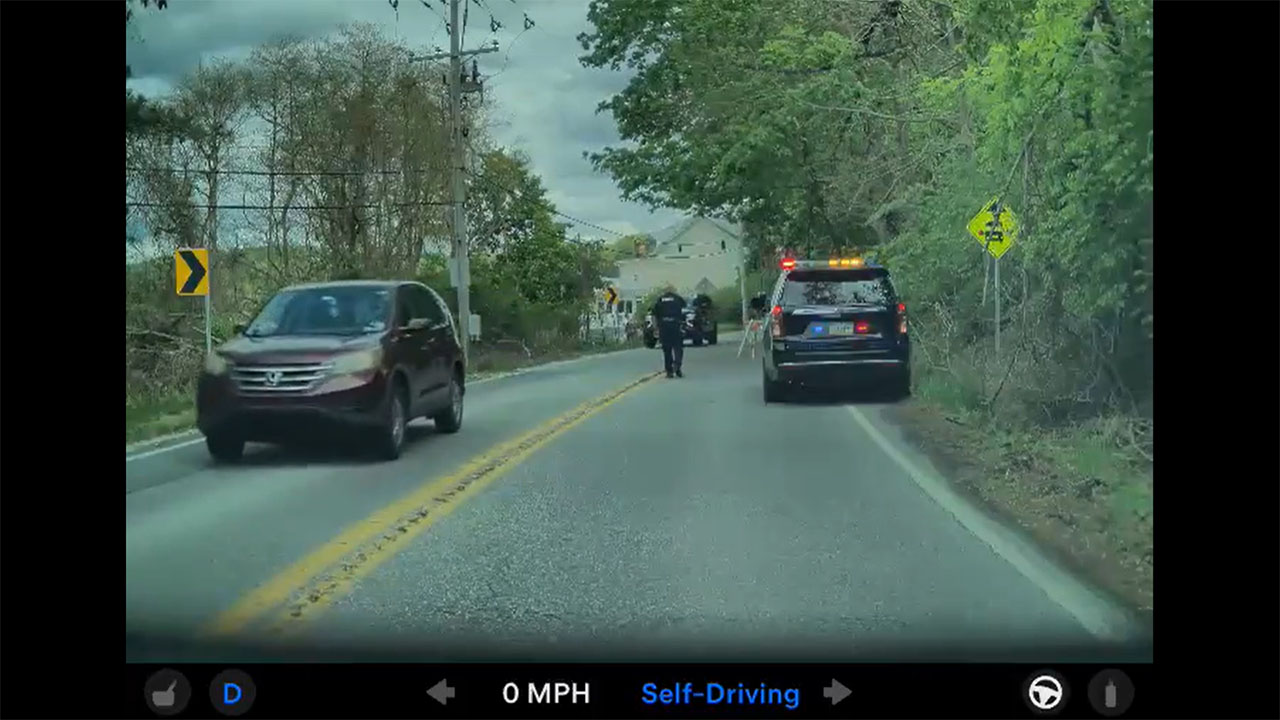
In a surprising turn that validates its controversial "vision-only" approach, Tesla's Full Self-Driving (FSD) system has reportedly outperformed competing technologies in a private, internal benchmark conducted by one of its largest rivals. According to a recent report, Hyundai Motor Group pitted Tesla FSD against other autonomous driving stacks using a standardized dataset and metrics, with Elon Musk's company emerging as the clear leader. This independent, albeit internal, validation from a legacy automotive powerhouse signals a potential inflection point in the race for software-defined vehicle supremacy.
Hyundai's Benchmark: A Rare Glimpse into the Real-World AI Race
The details of Hyundai's evaluation remain confidential, but the implications are profound. For a major OEM to conduct a head-to-head comparison using the same dataset and methodology is a rigorous form of testing that removes many variables. It suggests that Tesla's FSD Beta 12.3+, with its end-to-end neural network architecture, is delivering superior performance in core autonomous tasks like perception, prediction, and planning. This isn't a marketing claim from Tesla, but a data-driven assessment from a competitor with skin in the game, who is undoubtedly evaluating which technological path to pursue for its own next-generation vehicles.
Vision-Only vs. Sensor Fusion: The Debate Gets New Data
The result strikes at the heart of a long-standing industry debate. Most automakers, including Hyundai, have heavily invested in sensor fusion systems combining cameras, radar, and lidar for redundancy. Tesla, however, has bet its future on a pure "vision-only" system, arguing that if it can achieve autonomy with cameras and AI alone, the solution will be more scalable and ultimately superior. Hyundai's test, while not public, provides compelling evidence that Tesla's massive real-world data pipeline and neural network training are paying off. The performance gap indicates that sheer computational intelligence and software sophistication may now be overcoming the perceived hardware advantages of multi-sensor setups.
For Tesla, this external validation is a powerful tool. It counters criticism that its system is perpetually "beta" and unsafe, providing ammunition to regulators and a skeptical public. More critically, it underscores the immense value of Tesla's fleet of over 5 million vehicles collecting edge-case data. This feedback loop, which competitors cannot easily replicate, appears to be accelerating FSD's development at a pace traditional automakers struggle to match, turning every Tesla into a data-gathering research vehicle.
Implications for Owners and the EV Market Landscape
For current and prospective Tesla owners, this news reinforces the investment in FSD, either as a purchase or subscription. It suggests the software asset they own is not only improving but is considered state-of-the-art. For investors, it validates Tesla's core thesis as a software and AI company first, and a carmaker second. The potential for licensing this leading-edge autonomy software to other manufacturers—a possibility Elon Musk has frequently mentioned—becomes far more credible and valuable. If Hyundai's own tests show Tesla is ahead, why wouldn't others consider a partnership?
The broader implication is a potential reordering of competitive dynamics. Legacy automakers now face a dual challenge: perfecting competitive electric vehicles while also developing complex autonomous software. Hyundai's test result is a stark reminder that catching up in battery and motor technology is only half the battle. The real, defensible moat is being built in the data centers, and as of now, Tesla appears to hold a commanding lead. This could accelerate consolidation, partnerships, or a strategic pivot for those who find the software race too costly or time-consuming to run alone.