A viral video showcasing a split-second intervention by Tesla's Full Self-Driving system is reigniting the debate over machine versus human reaction times. The clip, which emerged on social media, captures a Tesla equipped with FSD Beta anticipating and avoiding a near-collision caused by another vehicle, turning a potential tragedy into a powerful demonstration of proactive driving AI.
The Incident: A Predictive Avoidance Maneuver
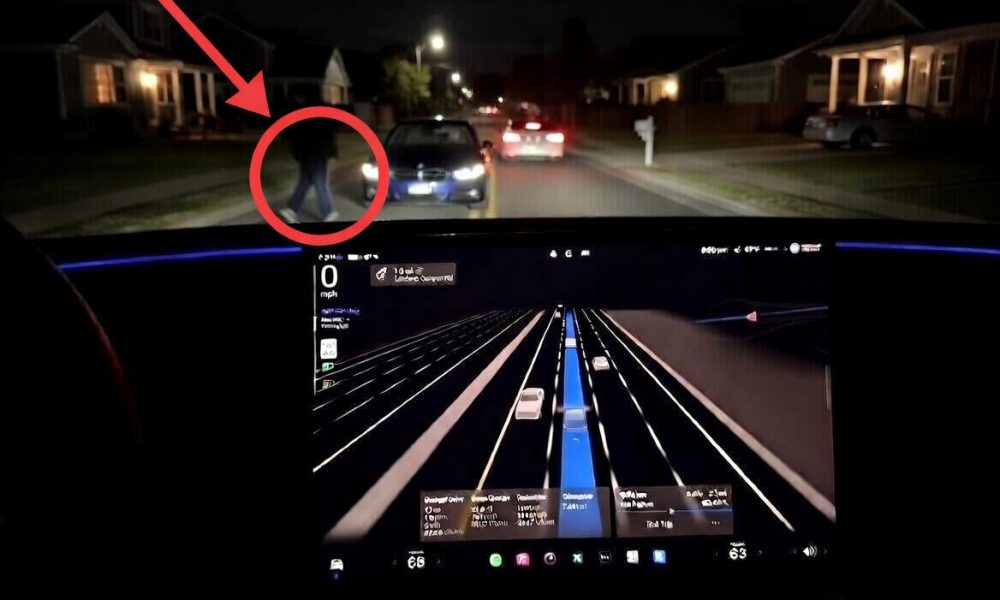
The scenario is chillingly common: a pedestrian begins to cross a multi-lane road. As the Tesla approaches, a BMW in the adjacent lane suddenly drifts into the Tesla's path, clearly failing to notice the person in the crosswalk. Before the Tesla's human driver can even react, the FSD system has already assessed the threat. It executes a swift, smooth steering input to move away from the drifting BMW, maintaining a safe buffer. The AI didn't just react to the BMW's movement; it seemingly predicted the encroachment and the resulting danger to the pedestrian, orchestrating a preventative evasion.
Context: The Evolution of Proactive Safety
This event underscores a fundamental shift in automotive safety technology. Traditional systems like automatic emergency braking are reactive, responding to an impact that is already imminent. Tesla's FSD, powered by a neural network trained on millions of real-world video clips, aims for a proactive and predictive driving model. It continuously analyzes the vector and behavior of all objects on the road—vehicles, cyclists, pedestrians—to forecast potential conflicts seconds before they unfold. This incident is a tangible example of that capability moving from theory to potentially life-saving reality.
While the driver-assist system performed admirably here, it is crucial to frame this within the current technological landscape. Tesla's Full Self-Driving remains a Level 2 driver-assistance system, requiring full driver supervision and readiness to take over at any moment. The company's approach, however, suggests that layering increasingly sophisticated AI on top of its vast sensor suite is the path to eventually achieving higher levels of automation. This video provides a compelling data point for that developmental journey.
Implications for Owners and the EV Market
For Tesla owners and investors, this viral moment is more than just a win in brand perception. It validates the core investment thesis behind Tesla's data-driven, software-updatable vehicle platform. Every such intervention adds to the collective experience of the neural network, theoretically making the entire fleet smarter. It reinforces the potential for Tesla's FSD package, once a controversial add-on, to become a defining and monetizable technological moat that extends far beyond basic transportation.
The broader implication is a raising of the bar for what constitutes safety in an electric vehicle. As the industry pivots to electrification, this incident highlights that the next frontier is not just the powertrain, but the silicon brain behind the wheel. Competitors are now tasked with matching not only Tesla's range and performance, but also its accelerating advancements in artificial intelligence and real-world, predictive collision avoidance. For consumers, the promise is a future where the vehicle is an active guardian, capable of compensating for the mistakes of others—human or machine.