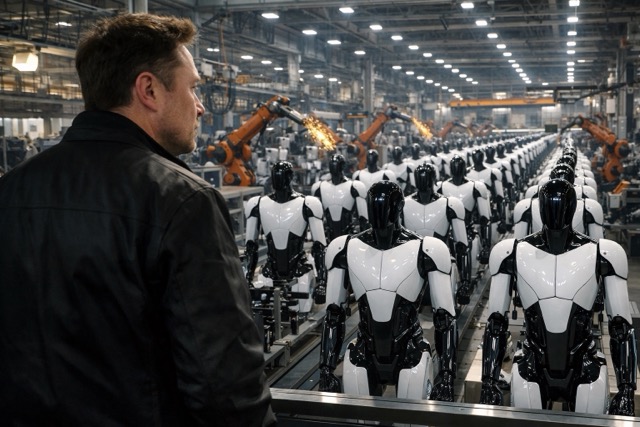
In a move that signals a seismic shift in its core business strategy, Tesla CEO Elon Musk announced today that the company will discontinue its flagship Model S sedan and Model X SUV. The final production run for these iconic electric vehicles is slated for the second quarter of 2026, clearing the assembly lines at Tesla's Fremont factory to make way for the future: mass production of the Optimus humanoid robot.
The End of an Era for Tesla's Flagships
The Model S and Model X are not just any vehicles; they are the pillars upon which Tesla's modern brand was built. The Model S, launched in 2012, redefined public perception of electric vehicle performance and luxury, while the Model X introduced groundbreaking features like falcon-wing doors. Their discontinuation marks the end of a foundational chapter. Musk's rationale, delivered during an investor earnings call, was starkly pragmatic: "It's time to basically bring the Optimus robot into volume production," he stated, indicating that the factory space and engineering resources dedicated to these lower-volume vehicles are needed for the company's next ambitious bet.
Fremont Factory to Become a "Robotics Hub"
The strategic pivot centers on Tesla's original Fremont, California plant. This facility, which currently produces the Model S, Model X, Model 3, and Model Y, will be reconfigured to prioritize Optimus. This transition underscores the immense manufacturing scale Tesla envisions for its robotics division. The company has previously suggested a potential market for Optimus numbering in the millions of units, far exceeding the annual production volume of its flagship cars. Retooling an existing factory, rather than building new, is a capital-efficient method to accelerate this timeline, but it comes at the direct cost of the vehicles that established Tesla's premium cachet.
This decision reflects Musk's long-stated belief that the value of Tesla's Optimus robot program could ultimately eclipse that of its entire automotive business. By freeing up Fremont, Tesla is putting its most critical manufacturing asset behind that vision. The move raises immediate questions about the future of Tesla's high-margin vehicle segment, as the Model S and X have historically commanded higher prices than the mass-market Model 3 and Y. Their departure leaves a gap in the luxury EV lineup that the Cybertruck and upcoming Roadster may not fully address in the near term.
Implications for Owners and the Investment Thesis
For current and prospective Tesla owners, this announcement creates a dynamic of heightened exclusivity and potential long-term service concerns. The models will become collector items overnight, but support and parts availability beyond the standard warranty period will be a key concern for buyers. For investors, the calculus is profound. Tesla is deliberately trading known, high-margin automotive products for the uncertain, but potentially astronomical, upside of a new robotics industry. The success of this bet now hinges entirely on Tesla's ability to deliver a functional, cost-effective Optimus at scale—a monumental engineering and manufacturing challenge. The coming years will test whether this radical prioritization secures Tesla's position as a leader in the age of automation or leaves it vulnerable in an increasingly competitive global electric vehicle market.